Non-Alcoholic Wedding Bar Ideas for 2026

The best non-alcoholic wedding bar ideas for 2026 have nothing to do with a sad pitcher of lemonade parked at the end of the buffet. I ran catering for a major hotel chain for six years, and I can tell you the zero proof bar has gone from an afterthought to the thing guests photograph. Vogue's 2026 wedding trend report flat out said it: NA drinks will officially have a seat at the bar this year, with catering companies building full mocktail programs, course pairings and all. The planners are not making this up. Couples are asking for it, guests are drinking it, and the bars that ignore it feel dated the second the doors open.
So let's build you one that actually works. Not a token option. A real beverage program that your sober guests, your pregnant guests, your designated drivers, and honestly half your drinking guests around hour four will line up for. I'll cover what it costs, how to stock it, and the operational stuff nobody tells you until the ice runs out at 9pm.
Quick Navigation
- Why Zero Proof Owns the 2026 Wedding Bar
- What a Non-Alcoholic Wedding Bar Costs
- Six Mocktail Bar Ideas Guests Will Remember
- How to Stock a Zero Proof Bar: The Real Math
- Pairing Zero Proof Drinks With Your Menu
- Running a Mocktail Bar at a Private Estate
- Service Tips From the Operations Side
- Zero Proof Bar Mistakes I Keep Seeing
Key Takeaways
- Guests order non-alcoholic drinks at two to three times the rate couples expect, so plan 4 to 5 per guest.
- A full zero proof bar with dedicated bartender runs $8 to $14 per person, while a DIY setup costs $250 to $500 for 100 guests.
- Replacing the open bar with a fully dry program typically lands 60% to 75% below a comparable open bar spend.
- Distilled non-alcoholic spirits cost $25 to $40 per bottle, but each pours about 16 drinks so 4 to 6 bottles cover 100 guests.
- Vogue's 2026 trend report and The Knot's survey of nearly 17,000 couples both confirm mocktail programs with course pairings are now standard requests.
Why Zero Proof Owns the 2026 Wedding Bar
Here's what happens behind the scenes when a trend is real versus when it's a magazine inventing something to write about. A real trend shows up in the order sheets. And for the last two seasons, the order sheets have been shouting.
Vogue's 2026 trends piece quoted planners Lynn Easton and Dawson Mitchell saying catering companies are now taking cues from restaurant hotspots and offering strong mocktail programs with full course pairings. Zero proof is "making a splash and coming to a custom bar sign near you." That matches exactly what I see consulting on private estate weddings: couples are treating the non-alcoholic menu with the same care as the cocktail menu, sometimes more.
The guest math backs it up. The Knot's 2025 Real Weddings Study surveyed almost 17,000 couples, and 58% said food and beverage were the most important wedding elements to them during planning. Even more telling: 72% of couples said their top goal was making sure guests were taken care of and had a good time. Now think about who's at your wedding. Pregnant friends. People on medications. People in recovery. Teenagers. Your college roommate who quit drinking two years ago and is tired of asking the bartender to "just make something" while everyone watches. A great zero proof bar takes care of all of them without making anyone announce themselves.
Real talk: the couples who nail this aren't doing it to be trendy. They're doing it because hospitality means every single guest gets a drink worth holding.
And one more operational truth from my kitchen years. Alcohol consumption at weddings peaks early and tapers. Around hour three, a chunk of your drinking guests quietly switch to water. Give them something better than water and the party's energy holds. The dance floor at 11pm is powered by hydrated people, not by the fourth gin and tonic.
What a Non-Alcoholic Wedding Bar Costs
Let's talk numbers, because this is where the zero proof bar earns its keep.
The Knot's data puts average wedding catering at $80 per person nationally, with a regional range of $62 to $123 per person. Alcohol is a big driver of the top end. When I priced bar packages at the hotel, the standard open bar package typically added $15 to $45 per person depending on tier and hours. That's the backdrop for these numbers.
Here's my working math from estate weddings I've consulted on, for a 100-guest reception:
- DIY zero proof bar, self-stocked: $250 to $500 total. Syrups, fresh juice, sodas, garnishes, and two or three NA spirit bottles. This works when your venue lets you buy your own beverages.
- Caterer-run mocktail program, added to an existing bar: roughly $3 to $6 per person. So $300 to $600 for 100 guests. You're mostly paying for prep labor and better ingredients.
- Full zero proof bar with a dedicated bartender and 3 to 4 signature drinks: $8 to $14 per person, or $800 to $1,400 for 100 guests. This is the restaurant-quality program Vogue is describing, with real technique and real glassware.
- Fully dry wedding replacing the open bar entirely: you'll typically land 60% to 75% below a comparable open bar spend. That's thousands of dollars back in the budget for the same guest count.
Confession time: I messed this up early in my career. I once quoted a couple a "mocktail addition" and stocked it like a kiddie station, cheap juice and grenadine. The bar got hammered with requests for the good stuff we didn't have, and I spent the reception sending a runner to the store. Twice. Budget for the zero proof bar like adults will drink from it, because they will. In my experience the non-alcoholic drinks get ordered at two to three times the rate couples expect.
One warning on the NA spirits themselves. Bottles of distilled non-alcoholic spirits run $25 to $40 each, which surprises people. You're paying for the distillation process, not the alcohol. You don't need many bottles (more on the math below), but don't expect them to cost like soda.
Six Mocktail Bar Ideas Guests Will Remember
Your guests will remember a drink with a name and a story. They will not remember "sprite with cranberry." Here are the formats that consistently get the reaction.
1. The signature zero proof pairing. Take your two signature cocktails and build a zero proof twin of each, same glass, same garnish, same name on the bar sign. Nobody's drink outs them as a non-drinker, which is the entire point. This is the single highest-impact move on this list and it costs almost nothing extra.
2. The espresso martini station, decaffeinated and not. The espresso martini refuses to die, so lean in. A zero proof version with cold brew, vanilla, and oat cream shakes up beautifully and looks identical to the boozy one. Run it after dinner and watch the line form. The kitchen reality is you need a dedicated shaker person here, because these are labor-heavy. Staff accordingly.
3. A garden spritz bar. Set out three house-made syrups (think rosemary honey, strawberry black pepper, cucumber mint), sparkling water, NA sparkling wine, and a garnish garden of herbs and citrus wheels. Guests build their own. It doubles as decor, which matters in 2026 where, as planner Bryan Rafanelli told Vogue, food is now part of the visual language of the wedding.
4. The zero proof speakeasy. If your venue has a lounge, a cellar, a library, any tucked-away room, turn it into a dedicated NA cocktail den with a short menu of three stirred, spirit-forward zero proof drinks. Dark glassware, big ice, low light. I did this at an estate wedding last year and the "secret bar" had a longer line than the main bar. People love a room they think they discovered.
5. Regional sodas and shrubs. Shrubs (drinking vinegars) sound weird and taste incredible, and they've jumped from restaurant menus to wedding bars. Batch two flavors ahead. They hold for weeks, they're cheap, and they photograph like jewels in a coupe glass.
6. The nightcap cart. Wait, I should mention this one because nobody does it and it's my favorite. Around 10pm, roll out a cart with spiced hot cider, decaf cafe de olla, or hot chocolate with a toasted marshmallow. As the night cools down, especially at outdoor estate weddings, this cart becomes the most popular vendor at the party. I've watched 200 guests demolish a cocktail hour spread in 12 minutes flat when the timing gapped, so trust me when I say: late-night warm drinks disappear even faster.

How to Stock a Zero Proof Bar: The Real Math
I've served thousands of wedding guests, and shortages almost always trace back to guessing instead of counting. So let's count. For 100 guests over a five-hour reception:
- Plan 4 to 5 zero proof drinks per guest. Yes, really, even with an alcohol bar running next to it. Every guest drinks something non-alcoholic during the night, and your non-drinkers are having all their drinks here.
- Sparkling water: 6 to 8 cases. It's the base of half your builds and people drink it straight.
- House syrups: 3 flavors, about 2 quarts each. One quart yields roughly 30 drinks at a standard pour.
- Fresh citrus: around 50 lemons and 50 limes, juiced the morning of, not before. Day-old juice is how a $12-quality mocktail tastes like a $2 one.
- NA spirits: 4 to 6 bottles total across two styles (one juniper-forward, one amaro-style). Each bottle pours about 16 drinks.
- NA sparkling wine: 1 case if you're offering a zero proof toast option. Pour it at the table like the real thing.
- Ice: double whatever you think. Then add a bag. A busy bar burns 1.5 to 2 pounds of ice per guest, and mocktails are ice-hungry because of all the shaking and crushed-ice builds. Ice is the number one thing I've been sent to the store for in my career. It is never anything glamorous. It is always ice.
- Garnish: herbs bruise and citrus wheels dry out, so prep garnish last, in the final two hours before service.
Okay, so that list looks long, but here's the thing: almost all of it can be bought or prepped two to three days out except the juice and garnish. That makes the zero proof bar one of the most DIY-friendly stations at a wedding, if your venue allows outside beverages. A dedicated bartender still beats self-service for anything shaken. For build-your-own spritz formats, self-service works fine with one attendant restocking.
Pairing Zero Proof Drinks With Your Menu
This is where 2026 weddings are genuinely different from 2023 weddings. The restaurant world normalized zero proof pairings, and now, per the planners Vogue interviewed, they're showing up beside course menus at weddings with the pairings printed right on the menu card.
You don't need a sommelier. You need three rules from the catering side:
Match weight, not flavor. A rich short rib course wants a drink with body, like a dark cherry shrub with cola bitters, not a light citrus spritz. A crudo course wants something bright and thin. If the food is heavy and the drink is heavy, guests fade before the toasts.
Acid is your engine. The reason wine works with food is acid. Shrubs, verjus, and citrus do the same job. When a pairing feels flat, it needs acid, not sugar. Write that on your prep sheet. (I typed "acidic" as "asidic" three times drafting this... acidic. My spell check has seen things.)
Serve pairings in wine glasses. Presentation drives perception. The same drink reads as a kids' beverage in a mason jar and as a considered pairing in a stemmed glass. At plated dinners, pour zero proof pairings tableside exactly like wine service. Guests who opted out of alcohol get the full ritual, which is the hospitality moment they'll tell people about.
And connect it to your dessert plan. A spiced NA amaro build next to the cake table, or a cold brew tonic beside a late-night donut wall, finishes the arc. The couples who think about the beverage story from cocktail hour through last dance are the ones whose receptions feel designed instead of assembled.
Running a Mocktail Bar at a Private Estate
Here's why I mostly work estate weddings now: control. At a hotel or a traditional venue, the bar program is whatever the in-house beverage contract says it is, priced per person whether your guests drink it or not. At a private estate rental, you build the bar you want, buy the ingredients you want, and keep the savings.
A few properties on WedStay show how much the venue itself can do for a beverage program.
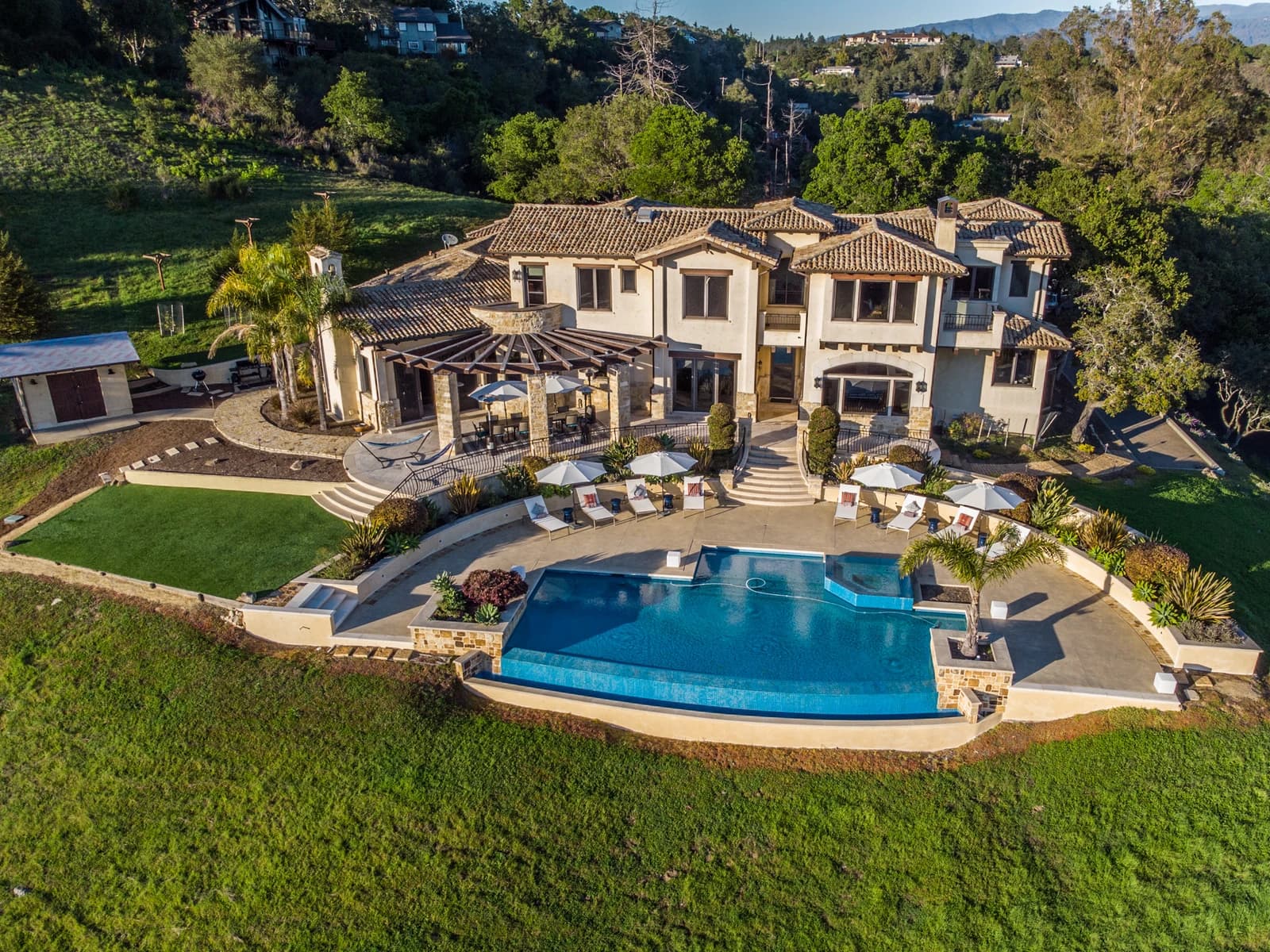
If you want the zero proof speakeasy from my list above without building one, book a venue that already has the room. This wine country hacienda in Fallbrook comes with an actual speakeasy lounge and San Diego vineyard views, and it sleeps 13. Put your three-drink stirred NA menu in that lounge and you have the most talked-about corner of the wedding before the DJ plays a single song.
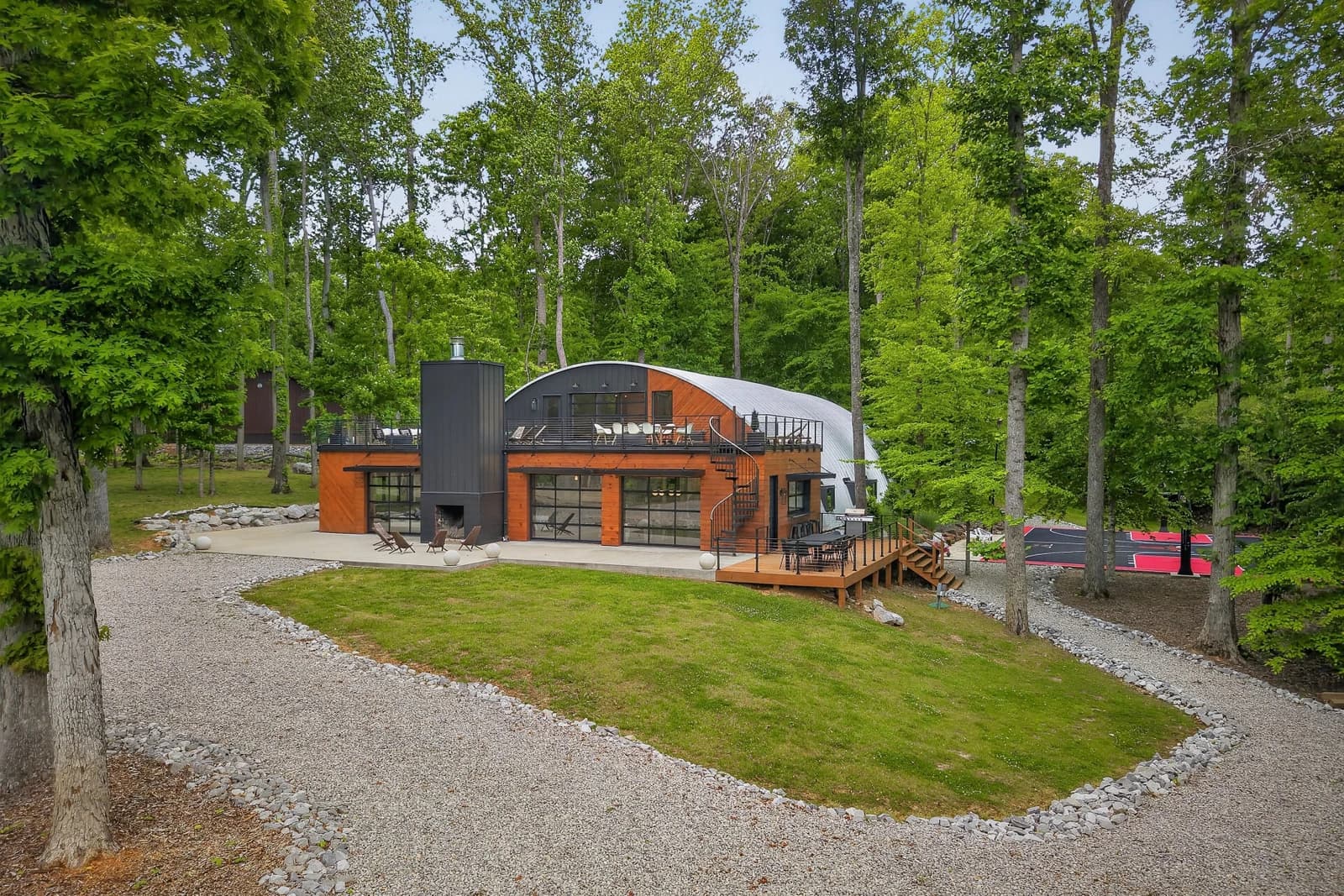
For my Atlanta people: this 28-acre recreation retreat in Fayetteville hosts up to 150 for a reception, sleeps 16, and starts at $8,019 for a two-night minimum. That two-night structure is the quiet superpower for a DIY bar: you batch syrups and shrubs Friday afternoon in a real kitchen, chill everything overnight, and Saturday your bar team only juices and garnishes. The 45-minute scramble simply doesn't happen.
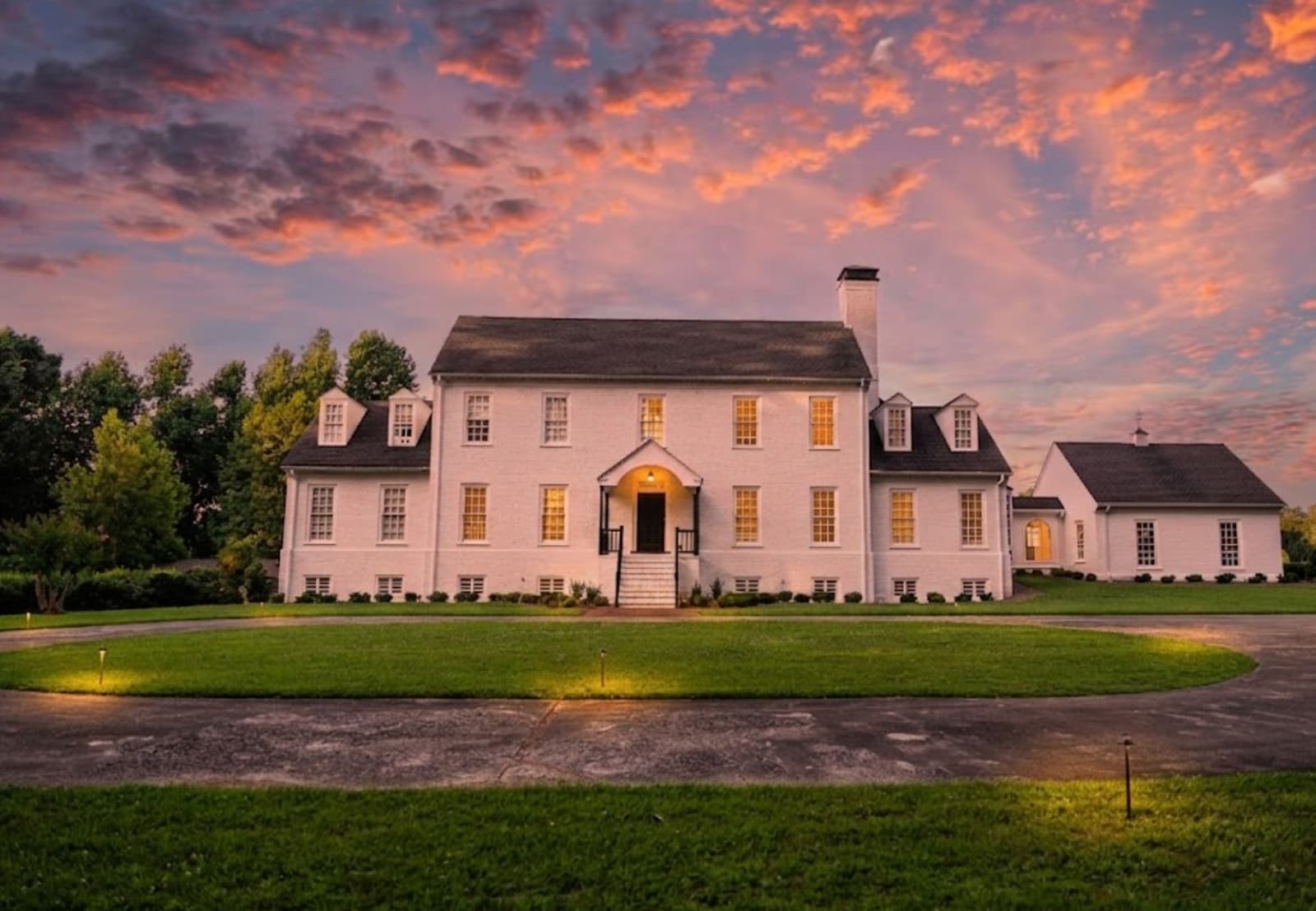
And for a weatherproof plan, this 65-acre contemporary lake estate in Monrovia, Indiana has a glass atrium with a resort-style indoor pool, hosts up to 150, and starts at $7,875 for a two-night minimum. A spritz bar in a glass atrium at golden hour does half your decor budget's job for free.

One catch to check before you fall in love with the DIY plan: every rental has house rules about events, vendors, and beverage service, and some require licensed bartenders even for non-alcoholic service (smart ones do, honestly, for the insurance). Read the listing's event terms and confirm in writing what your beverage plan looks like. Ten minutes of reading saves you a week of renegotiation.
Service Tips From the Operations Side
Here's what happens behind the scenes at a smooth bar versus a chaotic one. It's never the recipes. It's the setup.
Batch everything batchable. Any drink that isn't shaken to order should be pre-mixed in gallon containers, labeled, and lined up under the bar. A bartender pouring from a batch serves a guest in 20 seconds. A bartender building from scratch takes two minutes. Across 100 guests, that's the difference between a line and no line.
Give the zero proof menu equal billing. Same sign, same fonts, same placement as the cocktail list. The moment you print the NA drinks in small type at the bottom, you've told your sober guests where they rank. Planners are already making custom bar signs for zero proof menus this year, and it's the cheapest status upgrade in weddings.
Position matters. Put the mocktail station on the opposite side of the space from the main bar. Two service points split the crowd, keep traffic moving, and stop the classic clump by the bar that kills a dance floor. If you've got outdoor zones, the spritz bar goes where the golden-hour light is. I promise your photographer will find it.
Staff one bartender per 60 to 70 guests when mocktails are shaken to order. The standard one-per-100 ratio assumes beer, wine, and simple pours. Shaken drinks are slow. Understaffing the bar is the most common service failure I saw in six years of hotel catering, and it's completely predictable.
Protect your ice and your fruit. Assign one person, a planner's assistant, a caterer runner, anyone, to check ice and garnish every 45 minutes. The bar never runs out of what someone is actually watching.
Zero Proof Bar Mistakes I Keep Seeing
Let me save you from the greatest hits of things going sideways.
Making it a kids' station. Shirley Temples and juice boxes on a folding table. Your 34-year-old friend in recovery does not want a Shirley Temple with a curly straw. Build adult drinks with bitterness, acid, and complexity. The sugar-bomb bar is the number one reason zero proof programs flop.
Under-ordering because "most people will drink alcohol." Covered above, but it bears repeating because it's the mistake I've watched the most: NA drinks get ordered far beyond the headcount of non-drinkers. Plan for 4 to 5 per guest, full stop.
Skipping the tasting. You'd never pick your entree without a tasting, and 63% of couples told The Knot that price was their top factor in picking a caterer, which tells me plenty of couples are booking beverage programs sight unseen and taste untested. Taste the mocktails. A bad NA drink is somehow more memorable than a bad cocktail, because the drink is all there is.
Announcing it. No signage that says "for our non-drinking guests!" No toast explaining the dry bar. The whole craft of 2026 zero proof service is that it's simply part of the bar, available to everyone, othering no one. The best compliment your mocktail program can get is a drinking guest who orders one, likes it, and never realizes it was the NA menu.
Forgetting the toast. If even one person at the head table doesn't drink, have NA sparkling wine poured and ready in the same flutes as everyone else. Nothing deflates a toast like someone scrambling for a water glass while 150 people raise champagne. It's a $15 fix. Do it.
The bar is where your wedding's hospitality shows its hand. Feed people well, give every single guest a drink worth raising, and they'll be telling stories about your reception for years. That's the whole job, and in 2026, the zero proof bar is finally getting treated like the headliner it deserves to be.
Free Tools to Build Your Vendor Team
Finding the right vendors for a private property wedding takes specialized expertise. WedStay makes it simple.
🎯 Start PlanningBrowse Vetted Vendors, Only 15% of applicants accepted. 500+ vetted professionals across photographers, planners, caterers, and 8 more categories.Wedding Budget Planner, See exactly how much to allocate per vendor category based on your location and guest count.Wedding Venue Cost Calculator, Includes vendor add-on pricing for catering, DJ, flowers, hair & makeup, and more by region.Get the Free WedStay App, browse venues, plan, and book on the go.
- A Private Estate Wedding House Just Outside Nashville, Complete with an Event Barn, Scenic Views, and Room to Celebrate All Weekend Long
- 10 Things Every Couple Should Talk About After Getting Engaged (Before You Pick the Cake)
- Why Falling in Love with Someone Who Has a Child Might Be the Best Thing That Ever Happens to You
Frequently Asked Questions
Do I still need a licensed bartender for a zero proof wedding bar?
Usually no license is required since nothing alcoholic is being served, but check your venue contract, many require any bar station to be staffed by their approved catering team regardless of what is poured. Insurance is the other angle, some venues want a certificate of insurance from anyone serving beverages. If your zero proof menu includes shaken drinks like the espresso martini style builds, hire a bartender anyway for speed and quality, roughly one per 75 guests. Self-serve spritz stations can run with a single attendant restocking ice and garnish.
What are the best non-alcoholic spirit brands to stock for a wedding?
Stick to two styles like the post suggests, one juniper-forward and one amaro-style. Widely available juniper options include Seedlip Grove or Garden, Ritual Gin Alternative, and Monday Gin. For the bitter, stirred category, look at Ghia, Pathfinder, or Wilderton Bittersweet. Expect $25 to $40 a bottle with about 16 pours each, so 4 to 6 bottles covers 100 guests. Taste before you buy a case, NA spirits vary far more than regular liquor, and a brand that shines in a stirred drink can disappear in a spritz.
How far in advance can I batch mocktails for a wedding?
Batch the shelf-stable components, not finished drinks. Syrups and shrubs hold two to three weeks refrigerated, so make them the weekend before. Combine spirit-style bases, syrup, and shrub into pre-mixed batches up to 48 hours ahead, but leave out anything carbonated and all citrus juice. Juice lemons and limes the morning of the wedding, day-old juice goes flat and slightly bitter. Add sparkling water or NA sparkling wine only at service, per drink. Garnish gets prepped in the final two hours so herbs stay perky and citrus wheels do not dry out.
Is it rude to have a completely dry wedding with no alcohol at all?
Not rude, but it lands better with clear communication and a real beverage program. Put a line on the wedding website or invitation, something like a note about a chosen zero proof bar, so guests are not surprised at the reception. Then spend some of the 60% to 75% you save versus an open bar on making the drinks genuinely good, signature drinks with names, wine-glass service, a late-night warm drink cart. Guests mostly remember whether they were taken care of, not what was in the glass. Timing dinner earlier and keeping music strong helps the energy too.
How many drink stations do I need for 150 to 200 guests?
Plan one full-service bar point per 75 to 100 guests, so two service points for that size, plus one self-serve station like a garden spritz bar to absorb overflow during cocktail hour, which is the crush period. If you are running the 4 to 5 zero proof drinks per guest math from a stocking plan, scale everything up proportionally, that is 9 to 12 cases of sparkling water and 250 to 400 pounds of ice for 200 guests. Splitting stations by drink type, shaken drinks at the staffed bar and build-your-own elsewhere, keeps lines moving better than duplicating identical bars.
What glassware do I need to rent for a mocktail bar?
Rent the same glassware you would for a cocktail bar, that is the whole trick to making zero proof drinks read as real drinks. For 100 guests plan roughly 150 coupes or martini glasses for shaken drinks, 150 rocks glasses for stirred and shrub builds, and wine glasses for tableside pairings, about 1.5 per guest per glass type since not everything gets washed mid-event. Skip mason jars entirely. If budget is tight, prioritize stemmed glasses for the pairing courses and toast, then use quality rocks glasses everywhere else. Rental runs about 50 to 90 cents per glass.
Sources
1. 10 Nail Trends to Try on Your Wedding Day · nytimes.com
2. Biggest Wedding Planning Mistakes to Avoid · theknot.com
3. The Perfect Getting-Ready Timeline for Your Wedding Day · brides.com
4. Make-up dos and don'ts for destination weddings · harpersbazaar.com
5. The Complete Guide to Planning a Wedding · brides.com
6. What to Include on Your Wedding Website + How to Write It · zola.com