Wedding Industry Trends and What They Mean for Short-Term Rental Owners

Weddings have changed shape over the past several years. More couples want a setting with character, a celebration that runs across a weekend, and a place where their closest guests can stay together. Those preferences line up with what many vacation rentals and private estates already offer. This guide looks at the trends that matter most for short-term rental owners and managers, and what each one means in practice.
The Wedding Market in Numbers
The Knot 2026 Real Weddings Study, which surveyed 10,474 US couples married in 2025, gives a useful baseline:
- Average wedding cost: $34,200
- Average venue cost: $12,900
- Average guest count: 117
- Destination weddings: 17 percent of weddings
The venue is one of the largest single costs of a wedding, and couples weigh it carefully. According to The Knot, 76 percent of couples say price is the most important factor when choosing a venue.
1. Weddings That Run Across a Weekend
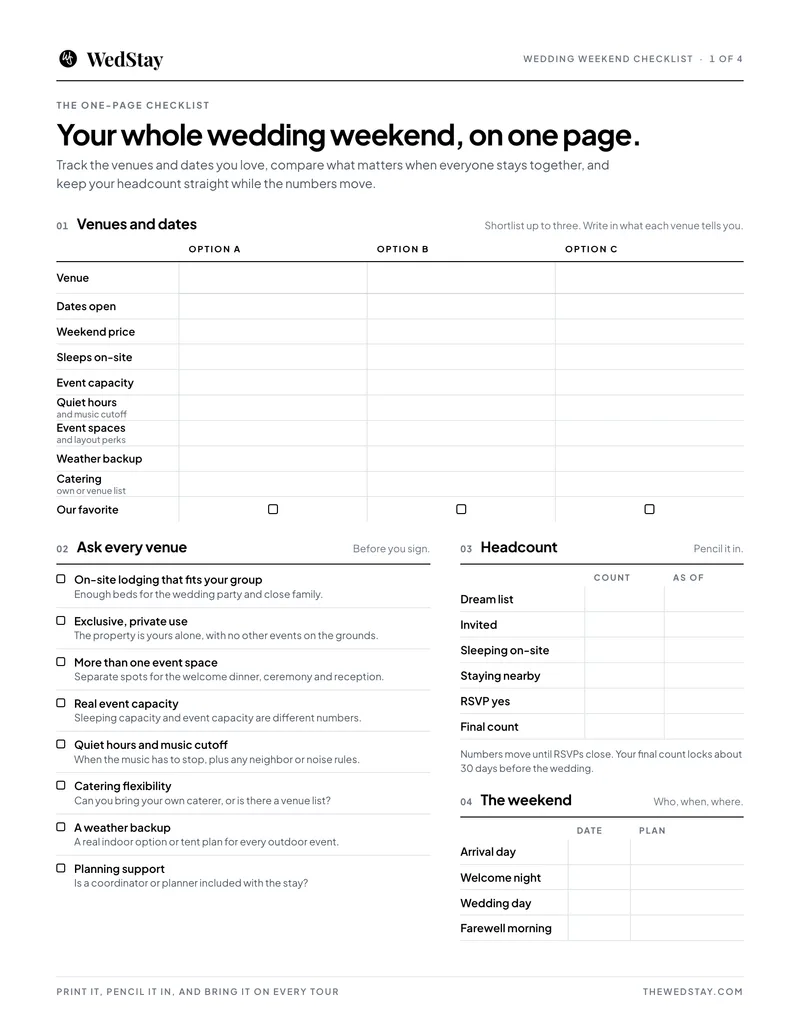
Many couples now plan a weekend rather than a single evening: a welcome dinner, the ceremony and reception, and a brunch the next morning. That shape suits a rental well.
- Whole property stays. Wedding groups often want exclusive use of the house or estate, so the events and the lodging stay private.
- More nights per booking. A wedding weekend often covers the setup day and the morning after, not just the wedding night.
- Getaway feel without the flight. Destination weddings are 17 percent of weddings in The Knot study. A property within driving distance of a major city can offer a similar sense of escape for couples who want their guests to travel less.
2. Venues With Character
Couples increasingly look past standard banquet halls toward places that feel personal: a farmhouse, a lakeside estate, a mountain lodge, a historic home. A rental with a distinct setting and room to host can stand out against traditional venues.
What this means for owners:
- Show the event, not just the bedrooms. Photos of the ceremony spot, the reception area and the layout help couples picture the day.
- Be clear about what is included. Tables, chairs, power, parking and setup time all affect a couple's budget and their decision.
- Plan for weather. Outdoor ceremonies need a backup, whether that is an indoor room, a covered porch or a space for a tent.
3. Lodging and Celebration in One Place
Arranging lodging for out of town guests is a real planning burden. A property that sleeps the wedding party or close family solves part of it, and guests do not need to travel between a hotel and the venue.
For owners, sleeping capacity is often the feature that sets a rental apart from a traditional venue. It is worth stating clearly in your listing: how many guests can stay overnight, how many can attend the event, and whether those numbers differ.
4. Smaller Weddings Still Spend
Not every property can host a large wedding, and it does not need to. In The Knot's data, couples with 1 to 50 guests spend $6,500 on the venue on average, couples with 51 to 100 guests spend $10,400, and couples with 101 or more spend $16,000. A property suited to an intimate wedding can still serve a meaningful part of the market.
5. Clear Pricing Wins
With price at the top of the list for most couples, the properties that do well tend to make pricing easy to understand. A clear event fee, the minimum stay, the deposit and what each one covers let couples compare options quickly. If you manage bookings yourself, our guide to vacation rental software for event venues compares common platforms on minimum stays, deposits, event fees and turnover.
What It Means for Owners and Managers
Set Your Rules Before the First Inquiry
Noise limits, guest capacity, vendor hours, parking and cleanup all need clear answers. Local ordinances, permits and insurance requirements vary, so check them before you market event use. If you list on Airbnb, note that its Community Disturbance Policy does not allow disruptive gatherings of any size or listings advertised as party friendly. Put your event terms in a written agreement with the couple.
Decide How Much of the Wedding Business You Want to Run
Wedding bookings involve more conversation, more coordination and more contract detail than a normal stay. Some owners handle all of it. Others prefer a partner.
WedStay is a curated portfolio of wedding friendly vacation rentals and private estates. Owners apply to join, and every property is reviewed by video walkthrough or an in person visit. WedStay builds the listing and a pricing calculator, markets the property to couples, handles the conversations with couples and secures bookings with deposits. Owners keep their own brand and their other rental channels.
There are three partnership tiers: WedStay Collection, Weddings by WedStay and WedStay Signature. WedStay earns a commission on bookings. Tiers 1 and 2 also carry an annual portfolio fee, and if WedStay has not brought you a booking during a term, you can take a refund of that term's fee or credit it toward the next year. Full details are on the property owners page, and the Weddings by WedStay partner guide explains how WedStay can manage every wedding lead for your property, whatever its source.
Putting the Trends to Work
The trends point the same way: couples want distinctive places where they can celebrate and stay together, and they want to understand the price. If your property offers that, wedding weekends can become a valuable part of your calendar. For a closer look at the revenue side and the work involved, read how wedding weekends can add to your short-term rental income. To apply, visit the WedStay property owners page.
Sources
- The Average Wedding Cost, According to The Knot Data (The Knot 2026 Real Weddings Study)
- The Average Wedding Venue Cost (The Knot)
- The Knot Real Weddings Study 2026, data readout (The Knot)
- Community Disturbance Policy (Airbnb)