How to Choose a Private Estate Wedding Venue
To choose a private estate wedding venue, evaluate five things in this order: how many guests can sleep onsite, whether the pricing is a transparent total for the full stay, how much of the weekend you actually control, what event infrastructure exists on the property, and which costs the rental price does not cover. Get clear answers to those five questions and the right estate reveals itself quickly. Skip them and you end up planning a beautiful disaster.
I have spent over a decade placing couples in luxury venues, from Tuscan villas to Hudson Valley manors, and I can tell you the private estate wedding venue search fails for one predictable reason. Couples tour estates the way they tour banquet halls. They look at the lawn, picture the ceremony arch, and sign. An estate is not a banquet hall. It is a home, a hotel, and an event space rolled into one booking, and you have to vet all three.
This guide walks you through the full process, step by step, with real pricing from real properties. No teaser rates, no vague "starting at" games.
Quick Navigation
- What Makes a Private Estate Different
- How to Choose a Private Estate Wedding Venue
- Start With the Sleeping Arrangements
- Get Estate Pricing in Writing
- Weekend Flexibility Is the Whole Point
- The Hidden Costs Most Couples Miss
- Questions to Ask Before You Sign
- Three Estates That Show the Range
Key Takeaways
- Private estates averaged $22,000 cheaper than hotels across 30 real wedding budgets, since the rental covers venue and lodging.
- A 35-acre Lake Lanier estate starts at $6,565 for two nights, versus $8,000 to $15,000 Georgia banquet halls with no lodging.
- Vet estates on five factors: overnight capacity, transparent total pricing, weekend control, event infrastructure, and excluded costs.
- Demand one written total for the 2-night minimum stay, like Dale Hollow Lake's $11,288 including lodging for 20 and event insurance.
- Check bed-by-bed sleeping charts, since a listing that sleeps 20 may mean bunks, and keep one bathroom per 2-3 guests.
What Makes a Private Estate Different
A traditional venue sells you hours. A private estate sells you days.
That distinction changes everything about how you should evaluate the property. At a hotel or banquet hall, you pick a date from what is available, choose a package from a limited menu, hire from an approved vendor list, and agree to vacate by a contractually mandated hour. Usually 10 or 11 pm. Your guests scatter to hotel rooms across town, and the celebration ends when the lights come up.
At a private estate, you rent the entire property, typically for a 2-night minimum. The ceremony, the reception, the rehearsal dinner, the late night around the fire pit, the Sunday brunch in pajamas: all of it happens in one place, on your schedule. In my experience, that Sunday brunch is the part couples remember most vividly a year later. Which is funny, because it is the part traditional venues cannot sell you at any price.
The financial case is stronger than most couples expect. WedStay compared 30 real wedding budgets across hotels and private estates and found a $22,000 average difference in favor of the estate model, largely because the rental replaces both the venue fee and a big chunk of guest lodging. You can read the full category breakdown in the estate versus hotel budget study.
But (and this matters) an estate also hands you responsibilities a hotel would have absorbed. Catering, rentals, insurance, sometimes even power. The rest of this guide is about telling the estates that make those responsibilities manageable apart from the ones that quietly bury you in logistics.

How to Choose a Private Estate Wedding Venue
Here is the exact process I use with my own clients. Seven steps, in order. Do not skip ahead to touring; the early steps exist to keep you from falling in love with the wrong property.
Step 1: Set your guest count first. Not your budget. Your guest count. Estates carry two separate capacity numbers, overnight capacity and event capacity, and both must fit your list. A property that sleeps 18 but hosts 200 works beautifully for a large celebration with a small inner circle staying over. It does not work if you promised 40 family members a bed.
Step 2: Confirm events are explicitly allowed. This is the step that separates true wedding estates from vacation rentals with nice lawns. A real estate wedding venue states its event capacity in the listing, carries or requires event insurance, and has hosted weddings before. Browse a marketplace built for this, like the estate wedding venues collection, where every property is vetted for hosting rather than hoping a homeowner says yes after you have already fallen for the place.
Step 3: Verify the sleeping arrangements in detail. Beds, not just bedrooms. More on this in the next section, because it deserves its own.
Step 4: Demand total pricing for the minimum stay. Estates on WedStay price as a total for a 2-night minimum (some require 3 nights). If a property or platform quotes you a vague rate and makes you dig for the real weekend total, treat that as a data point about how the rest of the relationship will go.
Step 5: Map the weekend, not the day. Where does the rehearsal dinner happen? Where do you get ready? Where does the after-party move when the music winds down? Where is brunch? An estate should answer all four without renting a second location.
Step 6: Audit the event infrastructure. Level ground for a tent, adequate parking or shuttle access, restrooms that can handle your count, kitchen space your caterer can actually use, and reliable power. The gap between "gorgeous property" and "gorgeous property that can host 150 people" lives entirely in this step.
Step 7: Tour with your two hardest questions ready. Mine are always the same. What is the rain plan? And what has gone wrong at past events here? A host with real hosting experience answers both instantly. A host who has never thought about either is about to learn on your wedding.
Follow those seven steps and you will eliminate 80 percent of candidate properties from your couch, which is exactly the point. Tour three estates that survived the vetting instead of ten that never should have made the list. That vetting instinct comes up constantly in the wild too, like in this r/Weddingsunder10k thread about renting a house for a small wedding, where the couples who pulled it off all gave the same advice: filter for event-friendly listings and message the host to confirm before you book.
Start With the Sleeping Arrangements
Okay, real talk: onsite accommodations are the reason you are choosing an estate, so vet them like a hotel inspector.
Confession time: early in my career, I booked a client into a stunning nine-bedroom property without checking the actual bed configuration. Nine bedrooms sounded like plenty for 16 adults. Four of those rooms had bunk beds built for children. Her grandmother spent the weekend in a twin bunk. I have checked bed-by-bed sleeping charts on every booking since, and you should too.
Here is what to confirm, specifically:
- Real beds for real adults. A listing that "sleeps 20" might mean ten queens, or it might mean six queens plus sofa beds and bunks. Ask for the room-by-room breakdown.
- Bathroom ratio. One bathroom per two to three overnight guests keeps the morning of the wedding civilized. Below that, you are scheduling shower slots.
- A private suite for the couple. You want a getting-ready space with good light and a door that locks, away from the room where the groomsmen are steaming shirts.
- Who gets the beds. Decide early: immediate family, wedding party, or guests who traveled farthest. Publish the plan before someone assumes.
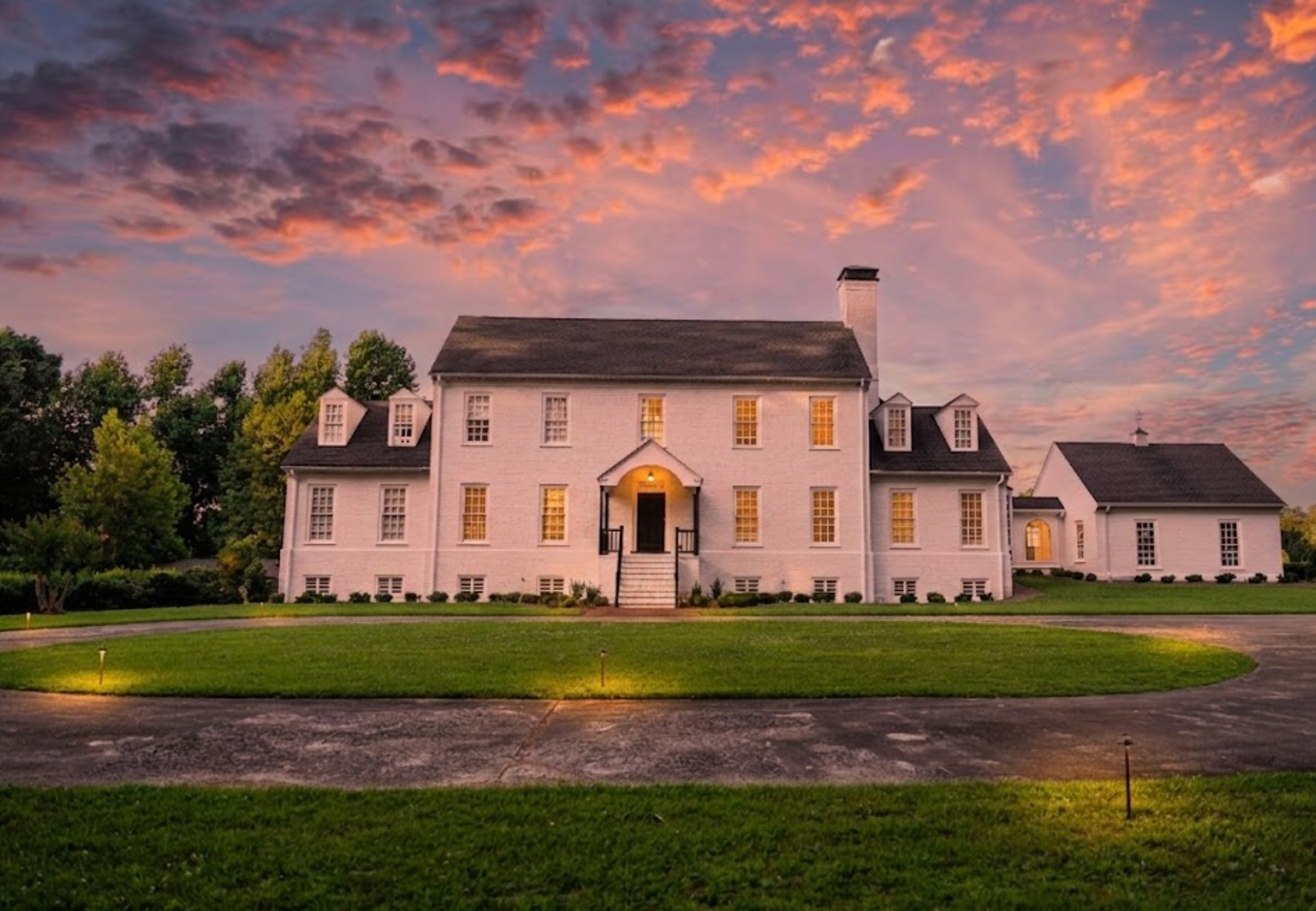
The lodging math is where estates quietly pay for themselves. Put 18 people onsite at something like the 35-acre private estate near Lake Lanier in Gainesville, Georgia, and you have absorbed what would otherwise be nine hotel rooms for two nights. That property starts at $6,565 for a 2-night weekday booking and hosts up to 200 event guests across 35 acres. Compare that with Georgia banquet halls charging $8,000 to $15,000 for a six-hour reception that includes zero lodging, and the model explains itself.
For everyone not sleeping onsite, check the drive time to the nearest hotel cluster and whether a shuttle can run the loop. Lake Lanier, for instance, sits about 75 to 90 minutes from Atlanta's airport, with a dedicated shuttle service into Gainesville running around $39 one way. Those small logistics answers are what make a remote estate feel effortless to guests instead of inconvenient.

Get Estate Pricing in Writing
Transparent pricing is the second pillar of a good estate choice, and it has a precise definition. You want one number, in writing, that covers the entire property for the entire minimum stay, plus a written list of what that number does not include.
Estate pricing runs a wide range. On WedStay, estate weekends generally run from about $8,000 into the $50,000 range depending on region, acreage, and amenities, with weekday rates meaningfully lower. The number itself matters less than its structure. Here is what a trustworthy quote looks like:
- A total for the minimum stay. "$11,288 for a 2-night weekday minimum," not a per-night figure that hides the real commitment. Estates are booked as full stays; any pricing that obscures that is marketing.
- What the total includes. The best listings spell it out. The Dale Hollow Lake recreation estate in Tennessee, for example, starts at $11,288 for a 2-night weekday minimum and includes the private rental, event spaces, overnight lodging for 20, event insurance, and a chosen vendor list. That is a complete sentence of a price.
- The security deposit, stated up front. Typically $1,000 to $1,500 on estates in this class, refundable, and separate from the rental total.
- How the price moves. Weekend dates, peak season, holidays, and guest count can all adjust the total. Ask for your specific dates before you emotionally commit.
Wait, I should mention the comparison trap. Couples sometimes see a $15,000 estate weekend next to a $9,000 banquet hall package and conclude the hall is cheaper. It is not, once you add two nights of hotel rooms for the wedding party, a separate rehearsal dinner venue, and a getting-ready suite. Run both scenarios through the wedding venue cost calculator with your real guest count. The totals, not the sticker prices, are the comparison.
Weekend Flexibility Is the Whole Point
If accommodations are the practical reason to choose an estate, flexibility is the emotional one. You are not buying a six-hour window. You are buying two or three days where the schedule belongs to you.
Test each candidate property against the full arc of a wedding weekend:
Friday. Arrival, setup, and the rehearsal dinner. Does the estate have a second gathering space (a covered patio, a great room, a fire pit area) so Friday dinner does not happen in the middle of Saturday's reception setup? Can vendors load in Friday afternoon, or does the contract restrict setup to the wedding day?
Saturday. Ceremony, cocktail hour, reception. Look for distinct spaces for each so the day has movement. A lawn for vows, a terrace for cocktails, a tent or event barn for dinner. Then the detail almost everyone forgets: what happens at 10 pm? Estates in residential areas often carry outdoor music curfews. The good ones offer an indoor space where the party continues. Ask precisely where the after-party goes, because "quiet hours at 10" reads very differently when there is a finished basement lounge versus when there is not.
Sunday. The farewell brunch. This is my favorite test of a property. Is there a kitchen and dining setup where 25 people can linger over coffee for three hours? I have watched couples glow describing this morning more than the reception itself. The slow goodbye is the estate model's signature move, and a property with one long table and good morning light delivers it.
One long weekend, one location, zero transitions for your guests to navigate. That is the product. A property that only shines on Saturday is a traditional venue wearing an estate's clothing, and you should price it accordingly. WedStay's wedding weekend planning guide has hour-by-hour templates for structuring all three days once you have booked.

The Hidden Costs Most Couples Miss
Every estate budget I have ever reviewed had at least one line item the couple did not see coming. Here are the usual suspects, so yours has zero.
Rentals. Unless the estate has a built event space, you may be renting tables, chairs, linens, a dance floor, market lighting, and possibly a tent. Venue industry guides consistently flag this as the biggest surprise category for private estate weddings, and upscale rental packages for 100-plus guests routinely run into five figures. Ask the host what past couples rented, and get their preferred rental company's name.
Restrooms. A home's plumbing serves the overnight group, not 150 reception guests. Most estates hosting large events bring in upscale portable restroom trailers. Some properties include them; most do not. Ask for the ratio the host recommends.
Permits and noise rules. Upscale communities frequently regulate events: guest counts, parking, amplified music, end times. Established wedding estates already hold the right permissions and will say so plainly. If a host shrugs at the word "permit," that is your cue to leave.
Insurance. Nearly every legitimate estate requires a certificate of event liability insurance, typically a few hundred dollars. Some, like the Dale Hollow property above, build it into the booking. Confirm which side of the line your estate falls on.
Power and weather. A property running catering equipment, a band, and space lighting off residential circuits needs a generator, and a quiet one. And every outdoor plan needs a written rain plan with a real indoor capacity number attached, not a hopeful glance at the barn.
Staffing. Someone must manage parking, trash, and turnover between Friday dinner and Saturday setup. Hotels bake this labor into their fee. At an estate, either your caterer covers it, you hire a day-of coordinator, or it lands on your family. Choose deliberately; you can browse vetted coordinators and vendors who work estate weddings regularly.
None of these costs is a reason to avoid estates. The $22,000 average savings in WedStay's budget study already accounts for couples handling these categories. They are simply the difference between a budget that holds and one that drifts.
Questions to Ask Before You Sign
Bring this list to every tour. In my experience, couples generate somewhere between 20 and 60 individual questions during an estate search; these fifteen are the ones that change decisions.
- What is the exact overnight capacity, bed by bed?
- What is the maximum event guest count, and has the property actually hosted that number?
- What is the total price for my specific dates, and what does it include?
- How many nights is the minimum stay for my dates?
- What is the security deposit, and what has caused past couples to lose part of one?
- When can vendors load in, and when must everything be out?
- Are there noise restrictions or music curfews, indoors or out?
- Where does the party go after outdoor quiet hours?
- What is the rain plan, and how many guests fit in it?
- What do most couples rent, and which rental companies know the property?
- Are restroom facilities adequate for my count, or do I need a trailer?
- Is event liability insurance required, provided, or both?
- Is the power supply event-ready, or do bands and caterers bring generators?
- Where do guests park, and does the driveway handle a shuttle or bus?
- Will someone from the property be reachable on the wedding day?
Notice what is not on this list: anything about how the property looks. You already know it is beautiful; that is why you toured. The questions exist to confirm the beauty is operational.
One more insider habit. Ask question 15 twice, once by email and once in person, and compare the answers. Responsiveness during the sales process is the ceiling, not the floor, of responsiveness after you have paid the deposit.
Three Estates That Show the Range
Abstract criteria only get you so far, so let me ground the framework in three real properties at three price points.
The value play: 35 acres near Lake Lanier, Georgia. Starting at $6,565 for a 2-night weekday booking, sleeping 18 and hosting up to 200. This is the estate model at its most efficient: big event capacity, meaningful onsite lodging, and a total below what many banquet halls charge for hours. It shows why step 1 of the process is guest count; a property like this fits a huge celebration precisely because most guests sleep offsite.
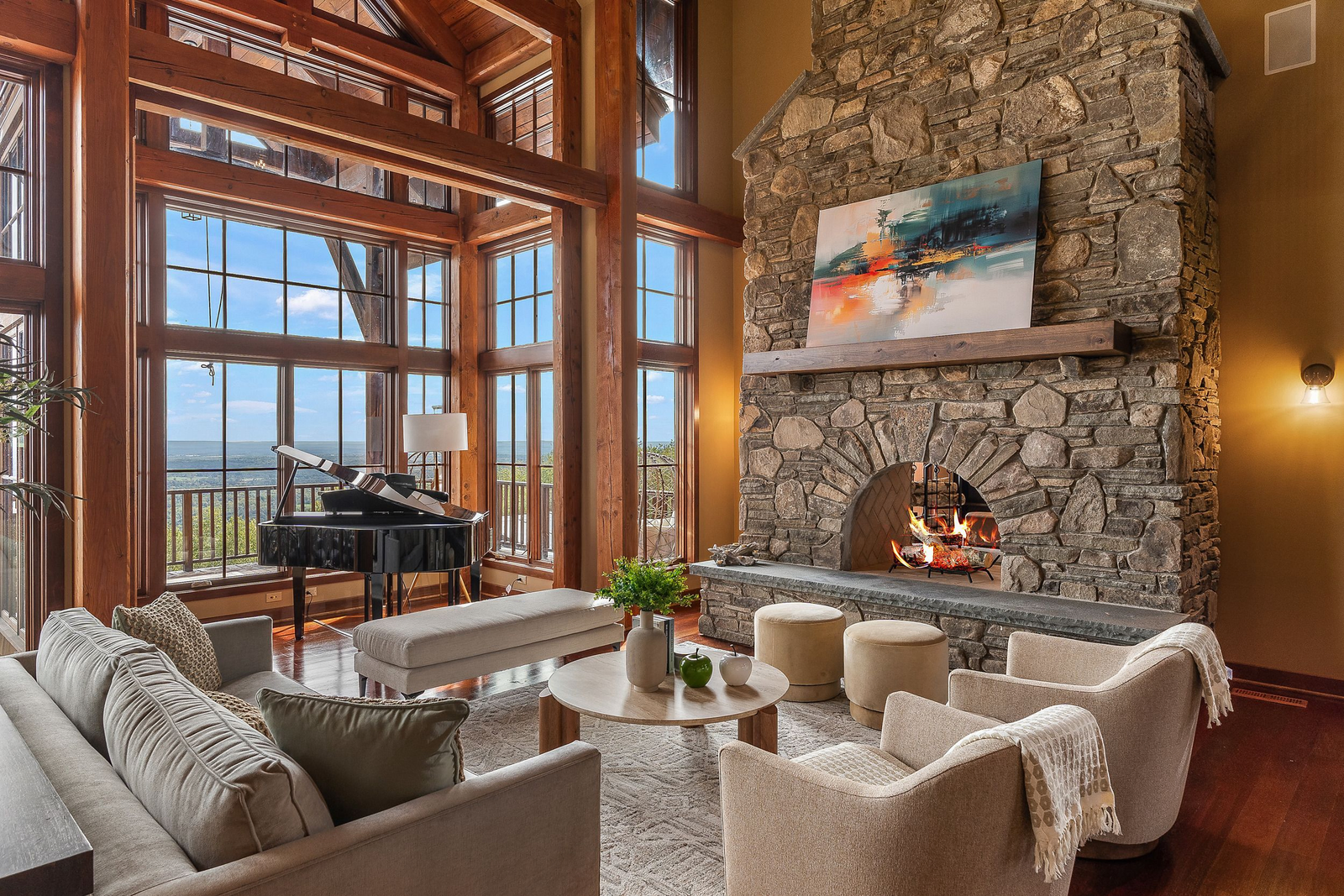
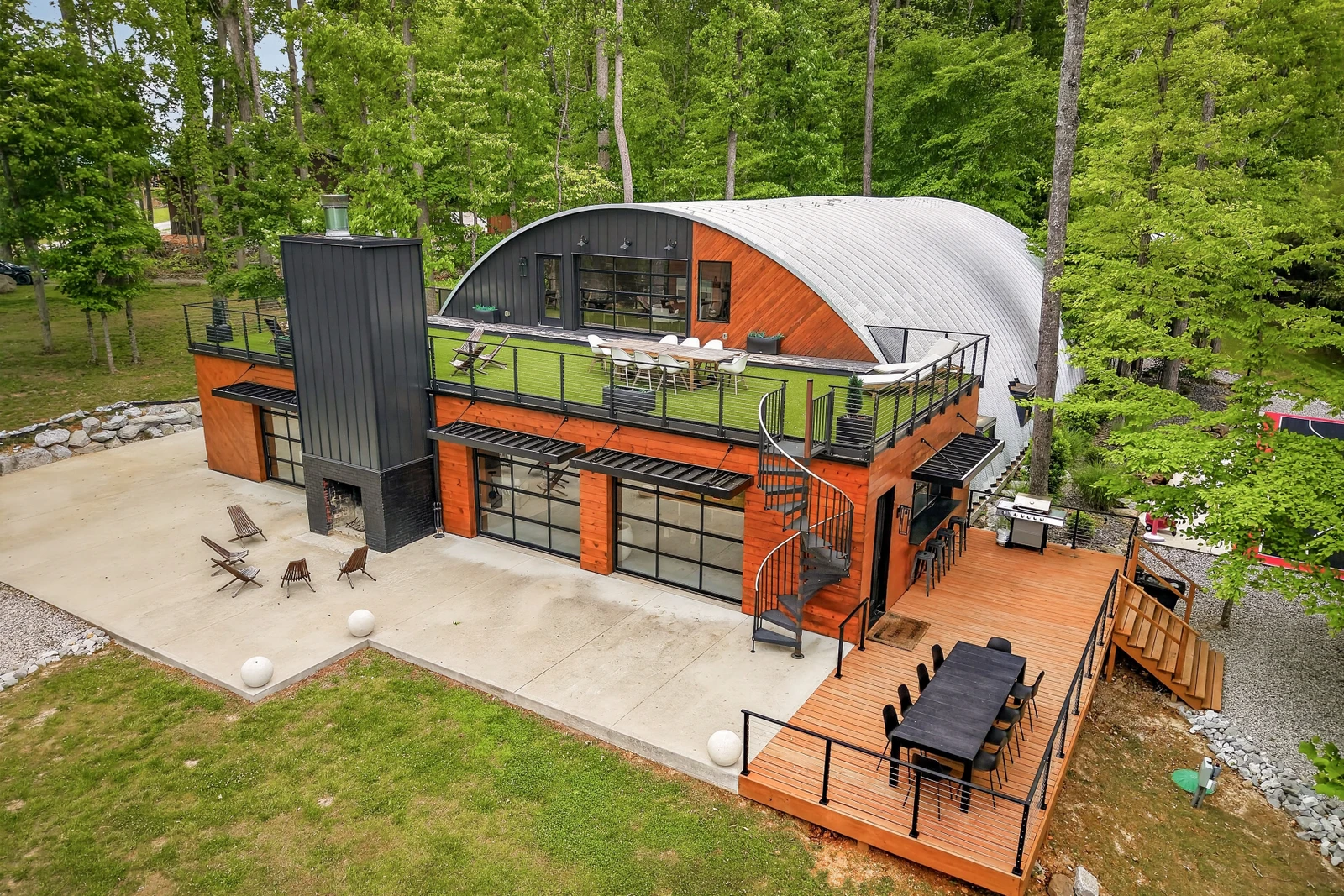
The mid-range flagship: Dale Hollow Lake, Tennessee. Starting at $11,288 for a 2-night weekday minimum, sleeping 20 and hosting 150, with a rooftop terrace, theater, and sports bar. Its pricing is a model of transparency, bundling event insurance and a vendor list into the stated total. This is what "the weekend is the venue" looks like: the amenities exist to fill Friday and Sunday, not just Saturday.
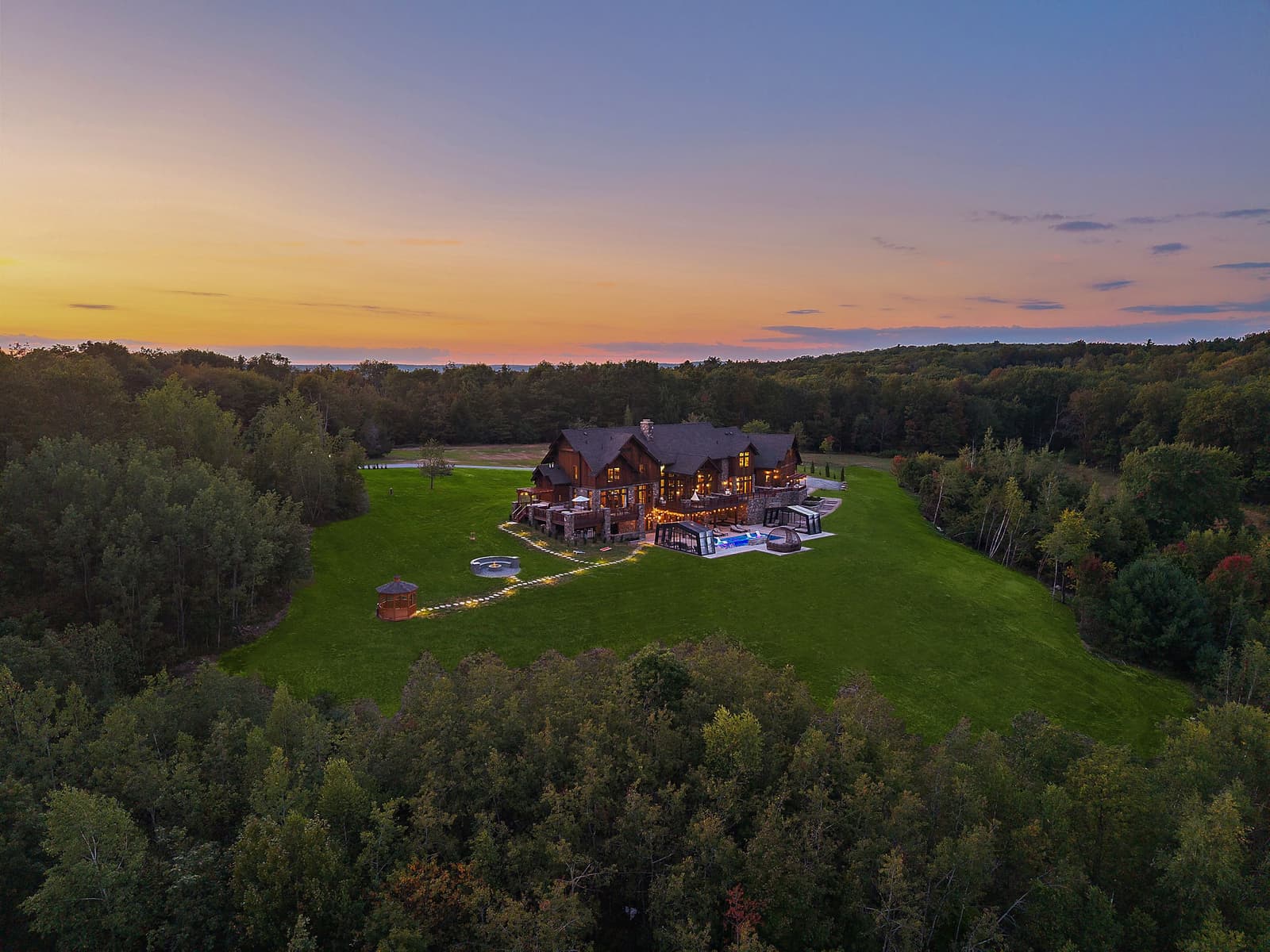
The statement property: 600 private acres in Middletown, New York. Starting at $28,366 for a 2-night stay, sleeping 24 about 90 minutes from Manhattan, with a heated enclosed pool, cedar sauna, and home theater. At this tier you are buying total privacy at scale, and the checklist still applies. Even a $28,000 booking needs the same rain plan, power audit, and bed-by-bed chart as the $6,565 one.
Three properties, one framework. Sleeping arrangements first, transparent totals second, weekend flexibility third, infrastructure and hidden costs last. Hold every estate you tour to those checks and the choice stops being overwhelming. It becomes a shortlist of two or three properties that genuinely fit, and at that point, honestly, you cannot choose wrong.
Free Tools for Your Wedding Weekend
Planning a wedding at a private estate or vacation rental? These free tools are built specifically for non-traditional venues.
🎯 Start PlanningWedding Venue Cost Calculator, Real pricing data from 100+ wedding properties. Compare all-inclusive estate costs vs. traditional venues.Browse Vetted Vendors, Vendors who specialize in estate, vacation rental, and backyard weddings. 4.9-star average, vetted and monitored.Wedding Weekend Planning Guide, Multi-day celebration timeline, guest coordination, and 100+ weekend venues from $8,000.Get the Free WedStay App, browse venues, plan, and book on the go.
- A Private Estate Wedding House Just Outside Nashville, Complete with an Event Barn, Scenic Views, and Room to Celebrate All Weekend Long
- Why Falling in Love with Someone Who Has a Child Might Be the Best Thing That Ever Happens to You
- 10 Things Every Couple Should Talk About After Getting Engaged (Before You Pick the Cake)
Frequently Asked Questions
Can you rent a house or villa on Airbnb or VRBO for a small wedding?
Sometimes, but most standard vacation rental listings prohibit events outright, and booking one without written permission is a fast way to lose your deposit or your date. Filter specifically for event-friendly listings, then message the host before booking to confirm your guest count, noise expectations, and any event fee. Get the approval in writing inside the platform. Better still, use a marketplace where properties are pre-vetted for weddings, list a real event capacity, and carry or require event insurance, so you are not gambling on a homeowner saying yes.
How do you find a private property or private estate to rent as a wedding venue?
Start with marketplaces built for event rentals rather than general vacation sites, since they publish event capacity, insurance requirements, and true weekend totals up front. Search terms like estate wedding venue or wedding house rental plus your region, then apply the same vetting order every time: overnight capacity, event permission in writing, total pricing for the minimum stay, and infrastructure like parking and power. This exact hunt comes up constantly among couples on r/weddingplanning searching for private property venues, and the successful ones all confirmed event permission before touring.
Do you need a wedding planner for a private estate wedding?
You need at least a month-of coordinator, and many estates contractually require one. Unlike a hotel, an estate hands you catering logistics, rental deliveries, vendor load-in schedules, trash removal, and sometimes generator power, and someone has to run that timeline on the day. A full planner makes sense if you are building the event from a blank lawn with a tent. If the property has a finished event barn and a chosen vendor list, like the Dale Hollow Lake estate includes, a strong coordinator plus organized couple is usually enough.
How far in advance should you book a private estate wedding venue?
Twelve to eighteen months out for a peak-season Saturday, since estates host one wedding per weekend and popular properties fill their calendar fast. If you are flexible, weekday and off-season dates open up both availability and price. The gap is real money: the Lake Lanier estate in Gainesville, Georgia starts at $6,565 for a 2-night weekday booking, meaningfully below typical weekend rates. Book the estate before any other vendor, because your caterer, rental company, and planner all need to know the property before they can quote accurately.
How much do tent and equipment rentals cost for an estate wedding?
For a 100 to 150 guest wedding on an open lawn, expect roughly $5,000 to $15,000 for the full rental package: tent, tables, chairs, linens, dance floor, lighting, and possibly restroom trailers and a catering tent. It is consistently the biggest surprise line item in estate budgets. You can cut it dramatically by choosing a property with a built event barn or covered pavilion, which is why auditing event infrastructure before booking matters so much. Always get a site visit from the rental company before signing their quote.
Sources
1. Wedding Checklists & Timeline · marthastewart.com
2. There's an Etiquette to a Surprise Wedding · townandcountrymag.com
3. The Complete Guide to Planning a Wedding · brides.com
4. The Etiquette of Wedding Rehearsal Dinners · marthastewart.com
5. The Perfect Getting-Ready Timeline for Your Wedding Day · brides.com
6. Host Your Micro Wedding at These 17 Airbnb Venues Around the · cntraveler.com
7. 45 Questions to Ask a Wedding Venue During Your Tour · theknot.com
From real couples on Reddit
- r/Weddingsunder10k: Renting a house/villa advice · Yes, VRBO and Airbnb both have properties that permit events, but you have to filter for event-friendly listings and message the host directly to confirm before booking. Several commenters hosted small weddings, rehearsal dinners, and showers at rentals with no issues, sometimes pairing the rental reception with a nearby park or outdoor ceremony site.
- r/weddingplanning: On the hunt for a private property venue. Any advice or strategies on how to find one of these gems? · Commenters suggest searching vacation-rental listings filtered for events, but warn most rentals cap guest counts near their sleeping capacity (often 20-60 people), so large weddings are hard to place. The most reliable routes are asking local wedding photographers which private estates they've shot at, or working with a planner who holds exclusive relationships with private estate owners, though private estates rarely end up cheaper than traditional venues.
- r/airbnb_hosts: Nearby wedding venues, guest problems and retaliatory reviews · Hosts report success getting unfair reviews removed by escalating to platform support with evidence (doorbell camera footage, listing disclosures) and citing house-rule violations like unregistered extra guests. Others argue minor guest-count overages aren't worth policing unless neighbors complain, in which case framing the issue around neighbor relations works better than confrontation.