How to Find Wedding-Friendly Rentals in the US

To find wedding-friendly rentals in the US, search on a platform that lists event-approved properties instead of vacation homes, filter by the property's approved event guest count rather than how many people it sleeps, and get written confirmation of the event policy, the noise cutoff, and the all-in weekend total before you send a deposit. That is the entire process, and it takes about six weeks if you do it in that order.
Most couples do it backwards. They fall in love with a house first, then start asking whether a wedding is allowed there, and by the time they get a real answer they have spent three weekends emotionally attached to a place that was never going to work. I have watched this happen to friends. I have watched it happen to clients. Okay, so, confession time: it happened to me, sort of, when I was planning my own wedding and spent nine days convinced I had found the one before learning the county capped outdoor gatherings on that parcel at 50 people. We had 84 on the list.
Here is the part that actually helps: the vetting is genuinely learnable. There is a fixed set of things that make a rental actually wedding-friendly, and once you know what they are you can rule out a bad fit in about four minutes instead of four weeks.
Quick Navigation
- How to Find Wedding-Friendly Rentals in the US
- What Wedding-Friendly Actually Means
- Where to Search: Event Platforms vs Vacation Platforms
- The Capacity Trap: Sleeps 24, Hosts 25
- Getting the Event Policy in Writing
- Local Rules That Can Cancel Your Wedding
- Pricing a Wedding Weekend Rental Honestly
- Vetting a Rental So Every Guest Can Actually Come
- Three Real US Properties and What They Teach You
- Red Flags That Should End the Conversation
- Your Six Week Search Timeline
Key Takeaways
- Sort listings by approved event guest count, not sleeping capacity, since a Branchville, South Carolina estate sleeps 10 but hosts 150.
- Steps one and two, using an event-first platform and filtering by event capacity, eliminate roughly 80 percent of unsuitable properties at no cost.
- Two-night totals for 20 event guests range from $3,207 at a Canyon Lake, Texas wedding village to $9,735 in Fennville, Michigan.
- Host permission does not equal county permission, and jurisdictions like Sonoma County and Albuquerque require separate event or amplified-sound permits.
- Get eight items in writing before deposit, including guest cap, noise cutoff, vendor rules, event fees, insurance, and cancellation dates.
How to Find Wedding-Friendly Rentals in the US
Here is the checklist. Work it top to bottom and you will not waste a weekend on a property that cannot host you.
- Start on an event-first platform. Search somewhere that lists properties already cleared for weddings, so "can we get married here" is a filter rather than a negotiation.
- Filter by approved event guest count first. This is the number that decides whether your list fits. Sleeping capacity is a separate, smaller number.
- Pull the event policy in writing. Ceremony and reception both allowed, amplified music allowed, vendor access allowed, tents allowed. Get it in an email or in the contract.
- Check the noise cutoff and monitoring. Almost every private property has quiet hours. You are planning your reception timeline around that number whether you know it or not.
- Verify the local layer. County or town permits, noise ordinances, parking limits, HOA rules. The host's permission is not the same as the jurisdiction's permission.
- Price the whole weekend, not a headline figure. Wedding rentals are booked as multi-night totals with a two-night minimum, so compare totals to totals.
- Audit the property for your actual guest list. Stairs, gravel, bathroom access, distance from parking to ceremony, bedroom placement. Everyone deserves to get to the ceremony without an ordeal.
- Ask the host the ten questions in the section below, then reread the answers a day later before you commit.
That order matters. Steps one and two eliminate roughly 80 percent of what you will see, and they cost you nothing but a filter click.
What Wedding-Friendly Actually Means
"Wedding-friendly" gets used to mean four completely different things, and the gap between them is where couples lose deposits.
Photogenic. The house looks incredible. That is it. This is what most listing photography is selling you, and it tells you nothing about whether you can host.
Events tolerated. The host will probably say yes to a small gathering if you ask nicely. No written policy, no experience, no infrastructure. Risky.
Events allowed. There is a stated event policy with a guest cap, a noise cutoff, and a fee structure. The host has done this before.
Event-approved and equipped. Allowed, plus the property physically supports a wedding: a ceremony area, a rain-safe indoor or covered option, getting-ready space, parking that holds your cars, power near where the band will set up, and enough bathrooms.
Only that fourth category is what you actually want. A property in the third category can work beautifully if you rent the missing pieces. The first two will cost you money and sleep.
The distinction that trips people up most: a property can be a wonderful place for twenty-four people to sleep and a terrible place for eighty people to attend a ceremony. Those are unrelated capabilities. A house does not become a venue because it is large.
Where to Search: Event Platforms vs Vacation Platforms
Generic vacation rental platforms are built around a different transaction. Their inventory is optimized for families on holiday, their default policies restrict parties and gatherings, and their filters do not surface the things you need to know. Some of them let hosts flag "events allowed," which helps, but that flag is self-reported and usually means "small gathering, ask me" rather than "wedding of 90 with a band."
You will burn weeks messaging hosts who say no.
Event-first platforms invert this. Every listing is already cleared for celebrations, so the search starts from a pool where the answer is yes. On WedStay's wedding house rentals, for instance, each property page states an overnight capacity and a separate event guest capacity, shows the event spaces as their own photo section, and quotes a total price for a minimum two-night stay with event insurance included. Whether you book there or not, that is the shape of information you should demand from any listing before you take it seriously.
A quick sanity test for any platform: can you see the approved event guest count, the noise cutoff, and an all-in multi-night total without emailing anyone? If the answer is no to all three, you are on a vacation platform wearing a wedding costume.
Wait, I should mention the third option, because it is real: local venue directories and regional estate-rental agencies. These are often excellent, especially in wine country and mountain markets, but they are fragmented by region and you will be running a dozen separate searches. Use them to go deep in one area after you have used a national platform to figure out which area you want.

The Capacity Trap: Sleeps 24, Hosts 25
This is the single most expensive misunderstanding in the category, so I want to be blunt about it.
Sleeping capacity and event capacity are different numbers, set by different constraints, and they are frequently nowhere near each other. Sleeping capacity comes from beds and septic and occupancy limits. Event capacity comes from the approved use of the land: how many cars fit, how far the nearest neighbor is, what the county allows, what the insurance covers.
Real examples from live US listings, all current as of this week:
- A forest lodge near Traverse City, Michigan sleeps 24 people but is approved for 25 event guests. Beautiful property. It is a family compound, not a wedding venue for your extended family.
- A Hill Country villa in Dripping Springs, Texas sleeps 20 and is approved for 20 event guests. One to one. Perfect for an elopement weekend, wrong for a 60-person reception.
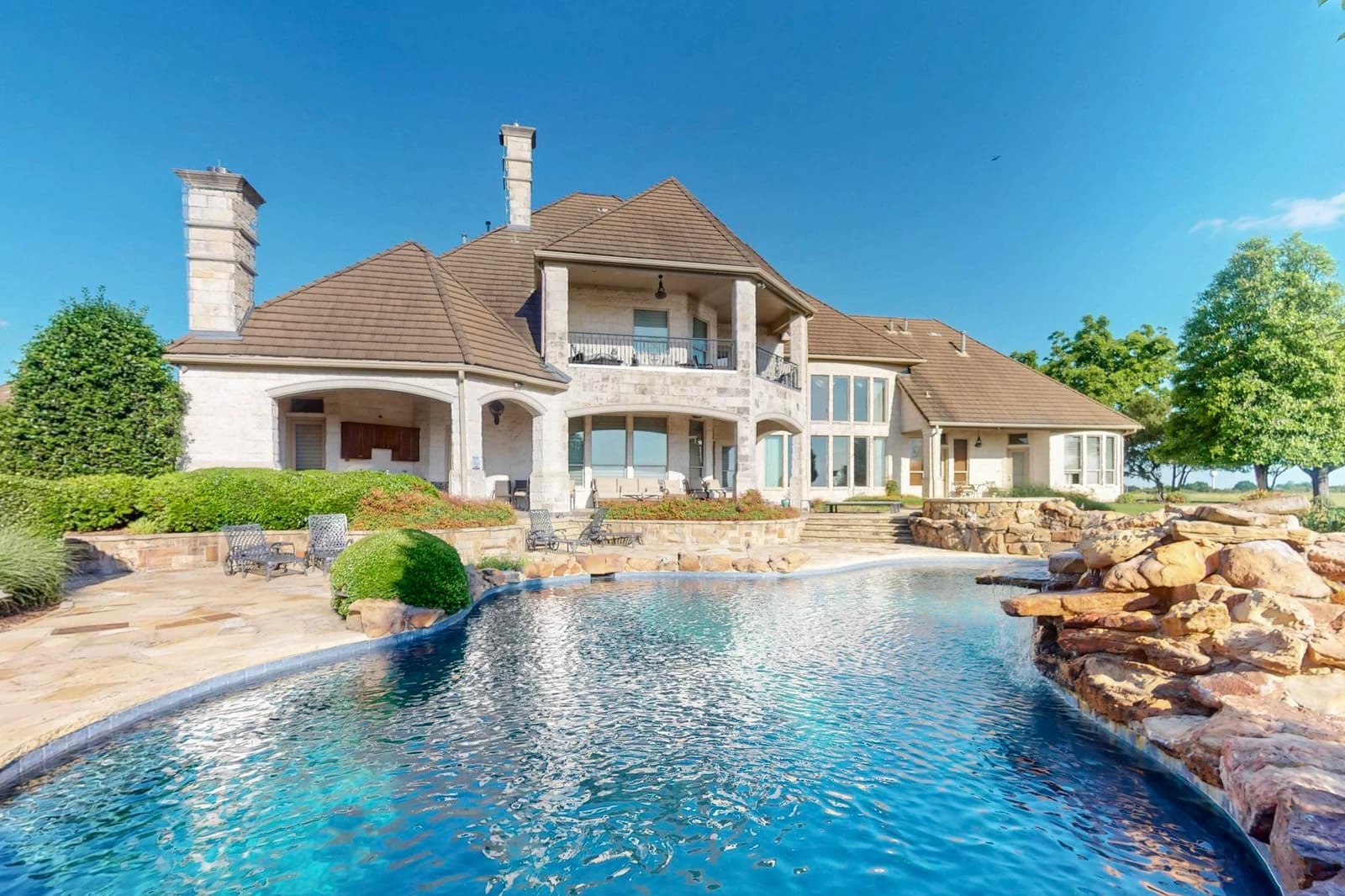
- A historic estate in Branchville, South Carolina sleeps only 10 but hosts 150 event guests. The inverse case. Great ceremony grounds, and you will be booking hotel rooms.
Three properties, three completely different shapes. If you had sorted by "sleeps 20+" you would have gotten two of them and neither would have fit a mid-size wedding. A couple on r/Weddingsunder10k floated an 80-person rental wedding and got talked down to 30 or 40 fast, mostly on bathrooms, with a few people adding that you should call the owner directly and sign a real event contract with actual cancellation terms.
So: sort by event capacity, then check sleeping capacity, then decide how many guests you actually want staying onsite. Guests who sleep onsite are the ones who get the wedding weekend. Everyone else is commuting.

Getting the Event Policy in Writing
A verbal yes from a friendly host is worth nothing in March when a new property manager takes over. Ask for these in an email you can save, or confirm they are in the booking contract.
The eight things to confirm in writing:
- Ceremony and reception are both permitted on the property, with the maximum approved guest count stated as a number.
- The noise cutoff time, and whether it differs for amplified versus acoustic music.
- Whether outside vendors are permitted, or whether you must use a preferred list.
- Whether tents, dance floors, and rented restrooms may be brought in, and any size limit.
- Load-in and load-out windows for vendors, including the day before and the morning after.
- Whether the fee you were quoted includes the event, or whether an event fee is charged on top of the stay.
- What insurance is required, what is provided, and whose policy covers what.
- The cancellation and date-change terms, in dates rather than adjectives.
On that last one, terms vary enormously and you should read them rather than assume. WedStay, as one reference point, publishes a refundable deposit window up to twelve months before arrival, a date change allowance within 90 days of booking if your preferred date is available, and event insurance included in the booking. Whatever platform you use, find the equivalent numbers and write them down. "Flexible" is not a policy.
Local Rules That Can Cancel Your Wedding
The host controls the property. The host does not control the county. This is the layer couples skip, and it is the one that produces genuine disasters.
Special event permits. Many jurisdictions require a permit for gatherings on private property above a threshold, and the triggers are usually things a wedding does: amplified music, multi-day activity, a guest count over some number, temporary structures. Sonoma County, for one, reviews events on private property based on exactly those characteristics. Thresholds vary wildly county to county, so look up your specific parcel's jurisdiction rather than trusting a general article.
Noise ordinances and variances. Separate from the property's own quiet hours. Some cities require a temporary noise permit for any amplified sound outdoors. Albuquerque, as an example, requires one for portable audio systems at events, plus public notification when amplified sound is involved. Your DJ ending at 10 is a planning decision. Your DJ ending at 10 because of a municipal code is a legal one, and the fine lands on somebody.
Alcohol. A private host serving alcohol to guests is usually fine. Selling drinks, or hiring a bartender, can require a permit or a licensed vendor depending on the state. If you are doing a cash bar, stop and check.
Parking, fire, and HOA. Rural properties often have a hard cap on vehicles. Fire permits come up for open flame, sparkler exits, and sometimes for tents. And an HOA can restrict events on a property the county would happily permit.
How to check without a law degree: call or email the county planning department with the parcel address, say you are planning a private wedding with roughly N guests and amplified music ending at a specific time, and ask what permits apply. They answer this question constantly. Then ask the host what permits past couples pulled, which tells you both the requirements and whether anyone has actually done this here before.

Pricing a Wedding Weekend Rental Honestly
Wedding rentals are priced as a total for a minimum stay, typically two nights and sometimes three. Comparing them to a traditional venue's per-person catering minimum is apples to oranges, and comparing them to each other requires you to hold the guest configuration constant.
Here is what real, current pricing looks like across three US properties, each quoted as a total for a two-night weekday stay with 20 event guests and 4 overnight guests:
| Property | Sleeps | Event capacity | Total, 2 nights |
|---|---|---|---|
| Lake Keowee estate, Seneca SC | 22 | 100 | $6,480 |
| 45-acre estate, Fennville MI | 24 | 120 | $9,735 |
| Wedding village, Canyon Lake TX | 84 | 300 | $3,207 |
That Texas number is not a typo, and it is a good lesson in how much configuration drives the total. It is a 14-cabin property, and at 20 event guests you are using a fraction of it. Scale the guest count up and the number moves a lot. Which is exactly why you should price your actual event, with your actual guest count, on every property you are comparing, instead of comparing starting-at figures that assume different weddings.
Two more things that change the math:
Weekday versus weekend. All three figures above are weekday rates. Weekend dates cost more at essentially every property. If your date is flexible, a Thursday-to-Saturday wedding weekend is one of the largest single savings available to you.
What is bundled. Several of these totals include event insurance, access to event spaces, and a chosen vendor list. A traditional venue quote often includes none of that and adds a separate event fee. Build a line-item comparison rather than trusting the headline.
For a sanity check against the wider market: The Knot's 2026 Real Weddings Study, which surveyed 10,474 US couples married in 2025, puts the average wedding at $34,200 with an average guest count of 117 and an average cost per guest of $292. Run your own numbers through the wedding venue cost calculator before you decide whether a rental weekend is beating a traditional venue for your specific guest count. Sometimes it is not, and it is better to learn that in a spreadsheet.

Vetting a Rental So Every Guest Can Actually Come
This is the part that gets left out of every checklist I read, and it is the part I care about most.
A private property is not a commercial venue, which means it is not built to any accessibility standard. Nobody inspected it. The listing will not tell you. And unlike a hotel ballroom, you cannot assume a ramp exists somewhere.
I learned this the hard way at my first fully ASL-interpreted ceremony, where we had planned beautifully for the interpreters and then discovered on setup day that the only route from parking to the ceremony lawn was 40 yards of loose gravel and a step down. We fixed it with plywood and a lot of apologizing. It should not have been a surprise.
So ask for photos or a video walkthrough of these specific things:
- The path from parking to the ceremony site. Surface, distance, slope, steps. Gravel and grass are hard for wheelchairs, walkers, canes, and honestly for anyone in heels.
- At least one step-free entrance to the main house and to whatever building holds the reception.
- A ground-floor bathroom, and its door width. If the only accessible bathroom is up a staircase, you need rented facilities.
- At least one ground-floor bedroom if any guest staying onsite cannot manage stairs. Many gorgeous estates put every bedroom upstairs.
- Lighting on outdoor paths after dark. A dim gravel walk at 10 PM is a fall waiting to happen.
- Where a chair can actually sit during the ceremony. Not a designated corner. Integrated into the seating.
- Cell signal and WiFi coverage across the property, which matters for guests who rely on captioning apps, hearing aid streaming, or medical devices.
Then ask the host directly: has anyone hosted a guest using a wheelchair here, and what did they do? A host who has an answer is a host who has thought about it.
Also worth asking, and I say this plainly because couples ask me privately all the time: it is entirely reasonable to confirm that a host is glad to have your specific wedding. Most are. Booking through a platform with a nondiscrimination policy and a support team in the middle of the conversation gives you recourse if one is not, which is one of the underrated arguments for an event-first marketplace over a direct handshake with a stranger. Every couple deserves a welcoming environment for the weekend they have been saving for.

Three Real US Properties and What They Teach You
I want to make this concrete, so here are three currently listed properties that sit in different places on the spectrum.
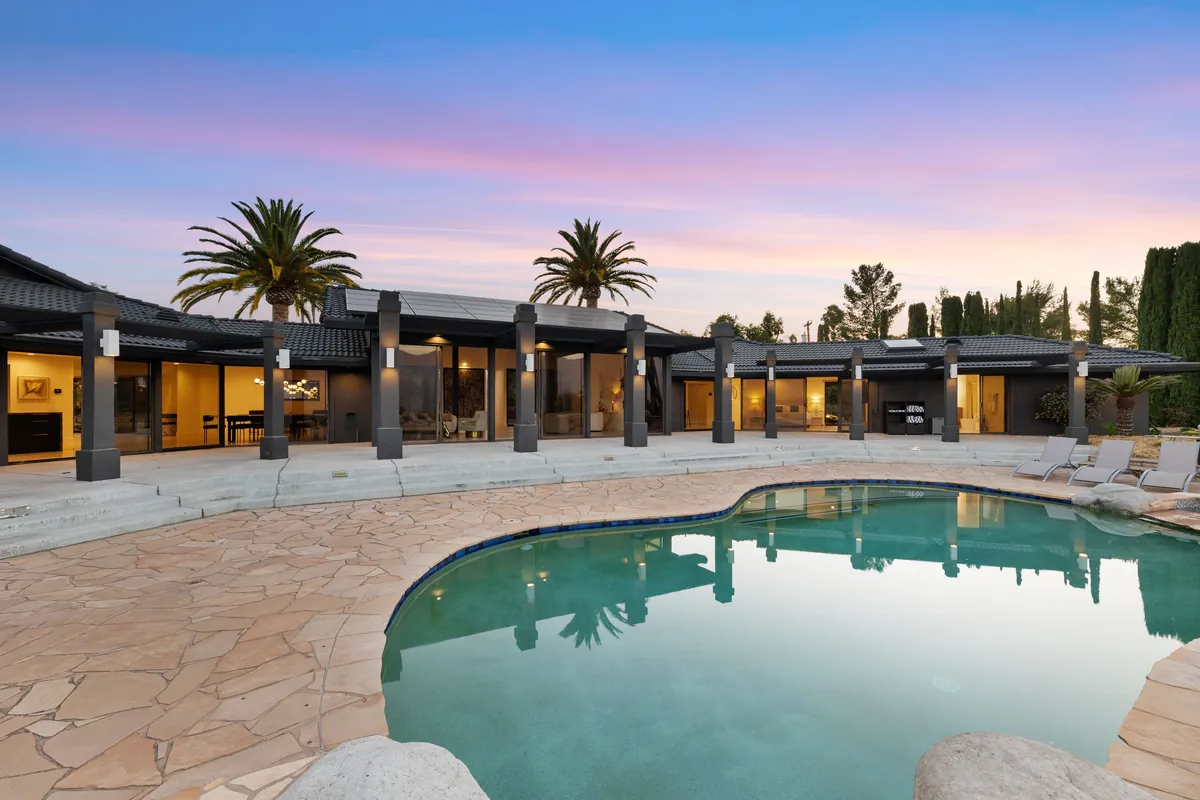
The mid-size lakefront: a modern estate on Lake Keowee in Seneca, South Carolina. Seven bedrooms, sleeps 22, listed event capacity of 100, with lakeside ceremony areas, a turf lawn, and a private dock. Total from $6,480 for a two-night weekday stay at a small guest count. What it teaches: this is the sweet spot shape for a wedding weekend, where the wedding party and immediate family sleep onsite and a wider guest list comes for the day. Note that the house rules set quiet hours from 10 PM to 8 AM and the property runs outdoor decibel monitoring. That is normal on private properties and it is a timeline input, not a red flag.
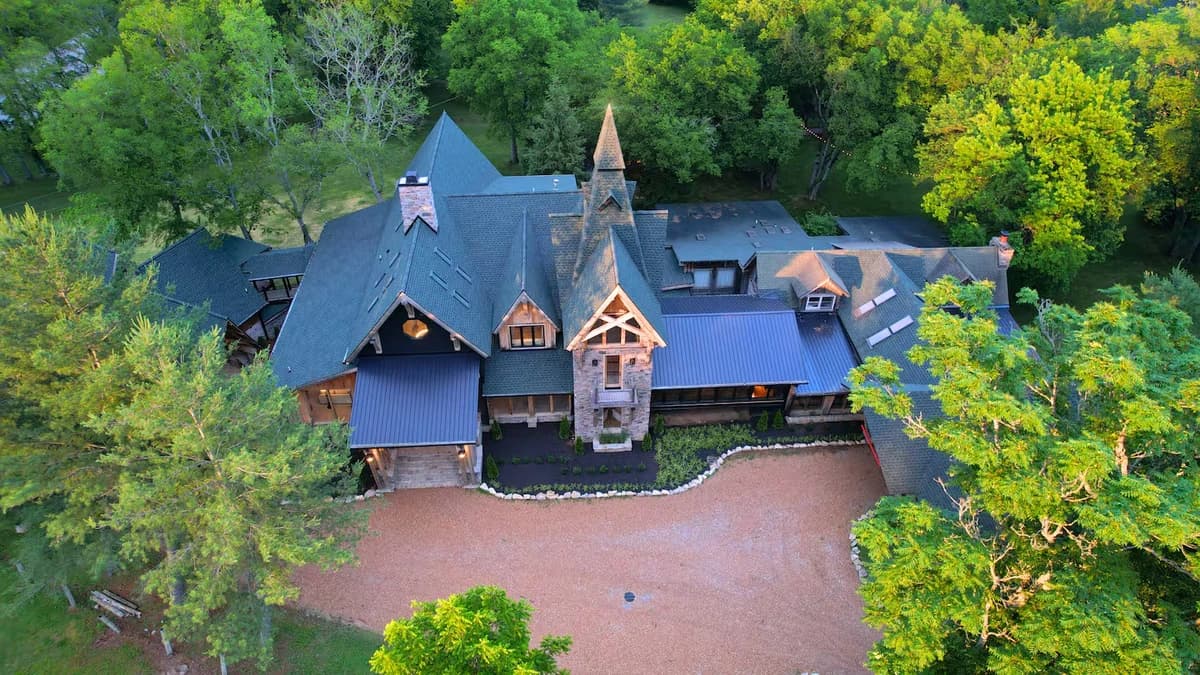
The barn-equipped estate: a 45-acre Michigan estate with a 4,000 square foot heated event barn. Sleeps 24, event capacity 120, in Michigan wine country about 15 minutes from Lake Michigan. Total from $9,735 for two nights on a weekday. What it teaches: the rain plan is the whole ballgame in the Midwest and Northeast. A climate-controlled indoor space large enough for your full guest count is worth paying for, because the alternative is a tent quote you did not budget for, in October, at short notice.
The compound: a Texas wedding village of 14 cabins near Canyon Lake. Forty-two bedrooms across 14 cabins, sleeps 84, event capacity 300, 28 miles from San Antonio International. What it teaches: read the fine print on shared space. This listing states that full privacy of the amenities and common areas is only guaranteed with a full property buyout. On multi-building compounds anywhere in the country, "exclusive use" and "we booked the property" can mean different things, and you want that clarified before you picture the pool at cocktail hour.
Red Flags That Should End the Conversation
Some of these are judgment calls. Several are not.
- No written event policy after you have asked twice. A host who will not put a guest cap in an email will not back you up when a neighbor calls the sheriff.
- The listing advertises an event capacity the host cannot explain. Ask where the number comes from. "That is what the county approved" is an answer. A shrug is not.
- Pricing that only exists as a starting-at figure. You need a real quote for your real guest count and dates before you can compare anything.
- No prior weddings, in a residential neighborhood, with close neighbors. Being the first is fine on a 40-acre parcel. It is genuinely risky on a half-acre lot.
- An event fee that appears after you express interest. Fees are fine. Fees that materialize once you are emotionally committed are a preview of the relationship.
- Vague answers about rain. "We have never needed a backup" is not a backup.
- The host discourages you from contacting the county. Full stop. Walk.
- Any pressure to book before you have read the cancellation terms. Especially with a nonrefundable deposit attached.
One more that is softer but real: if you get a bad feeling from how a host talks about guests, believe it. You are inviting the people you love most into a space this person controls for three days.

Your Six Week Search Timeline
You do not need six months for this part. You need six focused weeks, ideally 12 to 18 months out from your date so you still have Saturdays available.
Week 1: Define the constraints. Total guest count, how many need to sleep onsite, maximum drive or flight time for the majority of guests, absolute budget ceiling for the property, and your accessibility requirements. Write these down. They are your filters.
Week 2: Build the long list. Search event-first platforms nationally, filtered by event capacity, not sleeping capacity. Aim for 15 to 20 properties across two or three regions. Do not read the descriptions closely yet. You are collecting, not choosing.
Week 3: Cut to eight. Now read properly. Kill anything where event capacity is below your guest count, where the rain plan is unclear, or where the accessibility photos raise flags you cannot fix with rented equipment. This is fast and it feels great.
Week 4: Request real quotes and written policies. Same guest count, same dates, same questions to all eight. Put the answers in one spreadsheet. Differences that felt cosmetic get very obvious in a column.
Week 5: Verify the local layer on your top three. Call the county. Ask about permits, noise, and parking. This is the week most couples skip and it is the week that saves the wedding.
Week 6: Visit or do a live video walkthrough, then decide. Walk the parking-to-ceremony path yourself. Stand where the band will be. Check the bathroom situation. Then sleep on it for 48 hours before you sign, because a deposit made at midnight after a beautiful tour is a decision made by your feelings, and your feelings are not the one paying the balance.
If you want a scaffold for what comes after the property is locked, the wedding weekend planning guide covers the multi-day sequencing piece, and you will want a vendor shortlist going before you sign, since rural properties often have thin local vendor coverage and the good ones book out first.
The thing I keep coming back to, after years of inclusive planning work and an embarrassing number of venue rabbit holes, is that this search rewards being unromantic early. Be ruthless in weeks one through five. Ask the boring questions. Read the noise ordinance. Then, once the property is genuinely cleared and everyone on your list can actually get to the ceremony, you get to be as sentimental as you want for the next twelve months.
Free Tools for Your Wedding Weekend
Planning a wedding at a private estate or vacation rental? These free tools are built specifically for non-traditional venues.
🎯 Start PlanningWedding Venue Cost Calculator, Real pricing data from 100+ wedding properties. Compare all-inclusive estate costs vs. traditional venues.Browse Vetted Vendors, Vendors who specialize in estate, vacation rental, and backyard weddings. 4.9-star average, vetted and monitored.Wedding Weekend Planning Guide, Multi-day celebration timeline, guest coordination, and 100+ weekend venues from $8,000.Get the Free WedStay App, browse venues, plan, and book on the go.
- A Private Estate Wedding House Just Outside Nashville, Complete with an Event Barn, Scenic Views, and Room to Celebrate All Weekend Long
- Texas Hill Country Wedding Cost Guide: Real Numbers from 12 Venues (2026)
- Top 10 Things Couples Look For at Your Property for Their Estate Wedding
Frequently Asked Questions
Does renting a VRBO or short-term rental property for a wedding actually save money compared to a traditional venue?
Sometimes, but not automatically. A rental total like the $6,480 for two nights at the Lake Keowee estate in Seneca, SC covers the space and lodging, not catering, rentals, staff, or restrooms, so the savings show up only if you would have paid a venue fee plus lodging anyway. Traditional venues bundle tables, chairs, bathrooms, parking staff, and often a coordinator. Price both as all-in totals: rental plus tent, plus restroom trailer, plus rentals delivery, plus insurance, versus venue fee plus per-person minimum. Rentals usually win when guests sleep onsite and lose when you are building a venue from scratch.
How should short-term rental hosts handle wedding groups that break guest and vehicle limits, and what can be done about retaliatory reviews?
Put the numbers in the listing and the contract before booking: approved event guest count, vehicle cap, noise cutoff, and the fee if any are exceeded. Enforcement is much easier when the guest already signed a stated cap than when you are arguing about it at 11pm. Document violations with timestamped photos and messages the same night, and log neighbor complaints. If a retaliatory review follows, most platforms will review it when you can show the guest violated written terms, so submit the documentation rather than arguing in the public reply. Hosts trading notes on this are on r/airbnb_hosts discussing wedding guest problems.
How do you plan a multi-day wedding weekend at an estate venue with onsite guest lodging?
Build the weekend around who sleeps onsite. Friday is arrival, setup, and a welcome dinner; Saturday is the wedding; Sunday is brunch and load-out. Decide early which guests get beds, because a place like the Branchville, SC estate sleeps 10 but hosts 150, meaning almost everyone is at a hotel and you need a shuttle plan. Confirm your load-in and load-out windows cover Friday and Sunday morning, not just Saturday. Assign the getting-ready rooms in advance, keep one bathroom off limits to guests on wedding morning, and put a coordinator in charge of Friday so you are not directing setup yourself.
What does it cost to add the missing pieces to a rental that allows events but is not equipped for them?
Budget for what a venue would have included. The usual list is a tent or rain plan, a restroom trailer if the house has two bathrooms and 80 guests, tables and chairs with delivery, a dance floor, generator or distro if there is no power near the band, lighting, and trash removal. Each of those is a separate vendor with its own delivery window, which is why the load-in and load-out question in the written policy matters so much. A property in the events-allowed category can be a great deal, but price the add-ons before you compare it to an event-approved property that already has ceremony grounds and parking.
How far in advance should you book a wedding-friendly rental, and how does that compare to booking a venue?
The search itself takes about six weeks if you work the checklist in order, and rentals tend to book on a shorter horizon than traditional venues, often 9 to 14 months out rather than 18 to 24. That is partly because the same houses also sell as regular vacation stays, so peak summer and fall weekends in popular markets go early to non-wedding bookings. The practical move is to lock the property first and build the vendor list around it, since permits, noise cutoffs, and load-in windows all shape what vendors you can even hire.
What insurance do you actually need for a wedding at a private rental property?
Two things, and they are not the same. Event liability covers injury or property damage during the wedding, and cancellation coverage reimburses deposits if you have to call it off. Some platforms bundle the first one, WedStay includes event insurance in the booking as one example, but bundled coverage rarely includes cancellation. Ask the host what their homeowner policy covers, whether they need to be named as an additional insured, and whether vendors must carry their own certificates. Bartenders and caterers often need to show liquor liability separately. Get the answer in writing alongside the event policy, not verbally.
Sources
1. The Perfect Getting-Ready Timeline for Your Wedding Day · brides.com
2. Wedding Checklists & Timeline · marthastewart.com
3. Event Tent Rental Guide: Comprehensive Step-by-Step Process · brides.com
4. The Ultimate Wedding Budget Checklist · vogue.com
From real couples on Reddit
- r/Weddingsunder10k: VRBO wedding? · Commenters said the savings are real but capacity-dependent, 80 guests is likely too many for most rentals (bathrooms and infrastructure become the limiting factor), with 30-40 being more realistic. Several also recommended contacting the property owner directly outside the rental platform to negotiate a proper event contract with clear cancellation terms and to avoid platform fees.
- r/airbnb_hosts: Nearby wedding venues, guest problems and retaliatory reviews · Hosts report success getting unfair reviews removed by escalating to platform support with evidence (doorbell camera footage, listing disclosures) and citing house-rule violations like unregistered extra guests. Others argue minor guest-count overages aren't worth policing unless neighbors complain, in which case framing the issue around neighbor relations works better than confrontation.
- r/weddingplanning: Estate Style Venue for Multiple Days - Ideas?! · Commenters who did similar multi-day venue weddings advise deciding early who gets onsite lodging and how to charge/administer it, and budgeting for hidden costs like guest shuttles, required planners, bartenders, cleanup help, and vendor logistics for each day's events, and confirming all of it with the venue before signing.