Our Real Wedding: The Honest $38K Cost Breakdown (2026)

Eighteen months ago I got married, and ever since I have become the friend people text the second they get engaged. The first question is always the same, and it is never "were you happy" or "did you cry." It is: what did it actually cost? Not the Pinterest fantasy, not the glossy national average. The real number. So here is my real wedding cost breakdown, pulled straight from the 47-tab spreadsheet I used to track every single dollar of our day.
The final total was $38,247 for 127 guests at a private estate, which was exactly $1,247 over the budget I swore on my life I would not blow. I know where every one of those dollars went because, as my husband will tell anyone who asks, I am insufferable about this stuff. I am a product manager. I A/B tested our invitations. I sent a survey to all 127 guests after the wedding. I treated our reception timeline like a sprint board.
What follows is the whole thing, unfiltered: the line items, the stuff that was worth every penny, the stuff I would torch if I could do it again, and what our guests actually remembered (spoiler, it was not the thing we spent the most on). If you are planning a 2026 wedding and you want a real number instead of a vibe, this is for you.
Quick Navigation
- What Our Real Wedding Actually Cost
- Where Every Dollar Went
- Why We Rented a Private Estate Instead of a Banquet Hall
- Blending Three Cultures Into One Ceremony
- What Was Worth Every Penny
- What I Would Cut Next Time
- What Our 127 Guests Actually Remembered
- Your Real Wedding Game Plan for 2026
Key Takeaways
- The wedding cost $38,247 for 127 guests at a private estate, about $301 per guest and $1,247 over budget.
- Catering and venue ate 51% of the budget at $19,600 combined, far more than florals, favors, or decor.
- Renting a private estate for four nights cost $8,400, less than the room rental alone at two local ballrooms.
- Booking a DJ at $1,500 instead of a $3,900 live band saved about $2,400 without emptying the dance floor.
- Blending Korean, Japanese, and American rituals cost roughly $850, the most meaningful money spent all day.
What Our Real Wedding Actually Cost
Let me give you the context first, because a number without context is just a flex or a scare.
The average wedding in 2026 lands somewhere between $34,000 and $36,000 depending on which study you read, and the national average guest count hovers around 115. We had 127 guests, so we were a touch bigger than typical, and our $38,247 total works out to about $301 per guest. That per-head number is the one I wish someone had handed me on day one, because it is the figure that actually moves when you add or cut people. Every name on that list was three hundred real dollars.
Here is the part that surprised me. According to The Knot's own data, couples with a budget in the $15,000 to $40,000 range spend about $26,400 on average. We landed well above that, not because we were extravagant, but because we hosted 127 people and fed them all a real dinner with an open bar. Headcount is the single biggest lever in any real wedding cost breakdown, and no amount of DIY centerpieces will out-save inviting fewer people. I learned that the hard way, around tab 19 of the spreadsheet.
The other thing I want to be honest about: we were not a "budget wedding" and we were not a luxury one. We were a normal, slightly-over-our-heads couple in our early thirties who wanted everyone we loved in one beautiful place for a weekend. If that is you, this breakdown is going to feel familiar.
Where Every Dollar Went
This is the table I am most proud of and most embarrassed by. Proud because I tracked it perfectly. Embarrassed because I can see exactly where my discipline cracked.
| Category | What We Spent |
|---|---|
| Private estate rental (4 nights) | $8,400 |
| Catering & open bar (127 guests) | $11,200 |
| Photography + videography | $4,900 |
| Florals & decor | $2,700 |
| Attire, alterations & cultural outfits | $2,900 |
| DJ + sound | $1,500 |
| Rentals (furniture, lighting, dance floor) | $2,300 |
| Hair & makeup | $950 |
| Welcome bags, favors & stationery | $1,650 |
| Cake, coordinator, officiant, insurance & everything else | $1,747 |
| Total | $38,247 |
A few things jump out when you stare at this long enough.
Catering and the venue were 51% of the entire wedding. That is normal, food, drink, and a place to put everyone almost always eat half the budget. Zola's 2026 numbers put the average venue at $8,573 and average catering at $6,927, and our combined $19,600 tracks right alongside that once you account for an open bar and a higher headcount. If you want to control your total, this is the half to obsess over, not the favors.
The DJ line is the smartest $1,500 we spent. The average wedding DJ runs about $1,500, while a live band averages around $3,900, roughly a $2,400 difference. We loved the idea of a band, but when I modeled it, the band would have added that $2,400 and pushed us close to $41,000. We booked a great DJ, gave him a tight must-play and a brutal do-not-play list, and the dance floor never emptied. Nobody at a wedding has ever said "this would be better if it cost $2,400 more."
The "everything else" line is where reality lives. Every real wedding has a tab that is just... the rest. The officiant, the event insurance, the marriage license, the day-of coordinator's overtime, the second dessert nobody asked me about. Build that buffer in from the start, because it is coming for you whether you plan for it or not.
Why We Rented a Private Estate Instead of a Banquet Hall
This was the decision that shaped everything else, so it gets its own section.
When I was planning my wedding, the standard path was: book a hotel ballroom or a dedicated wedding venue, pay their per-plate minimum, use their preferred vendors, and get four hours before the next couple's rehearsal kicks you out. I priced three of those. Every single one wanted $18,000 to $25,000 before we had even talked about food, and most capped us at a hard end time of 11 p.m. with a four-figure penalty for going over.
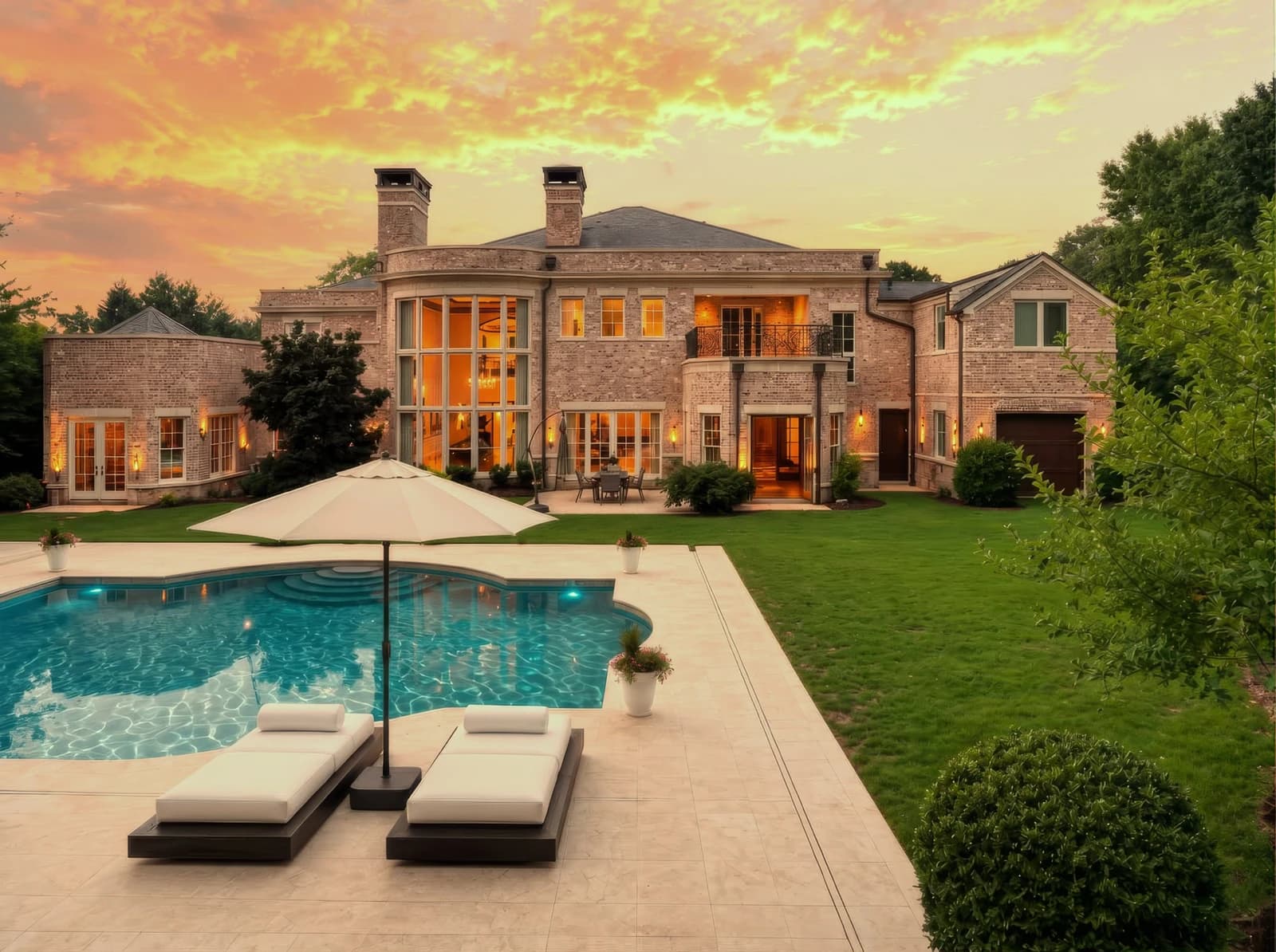
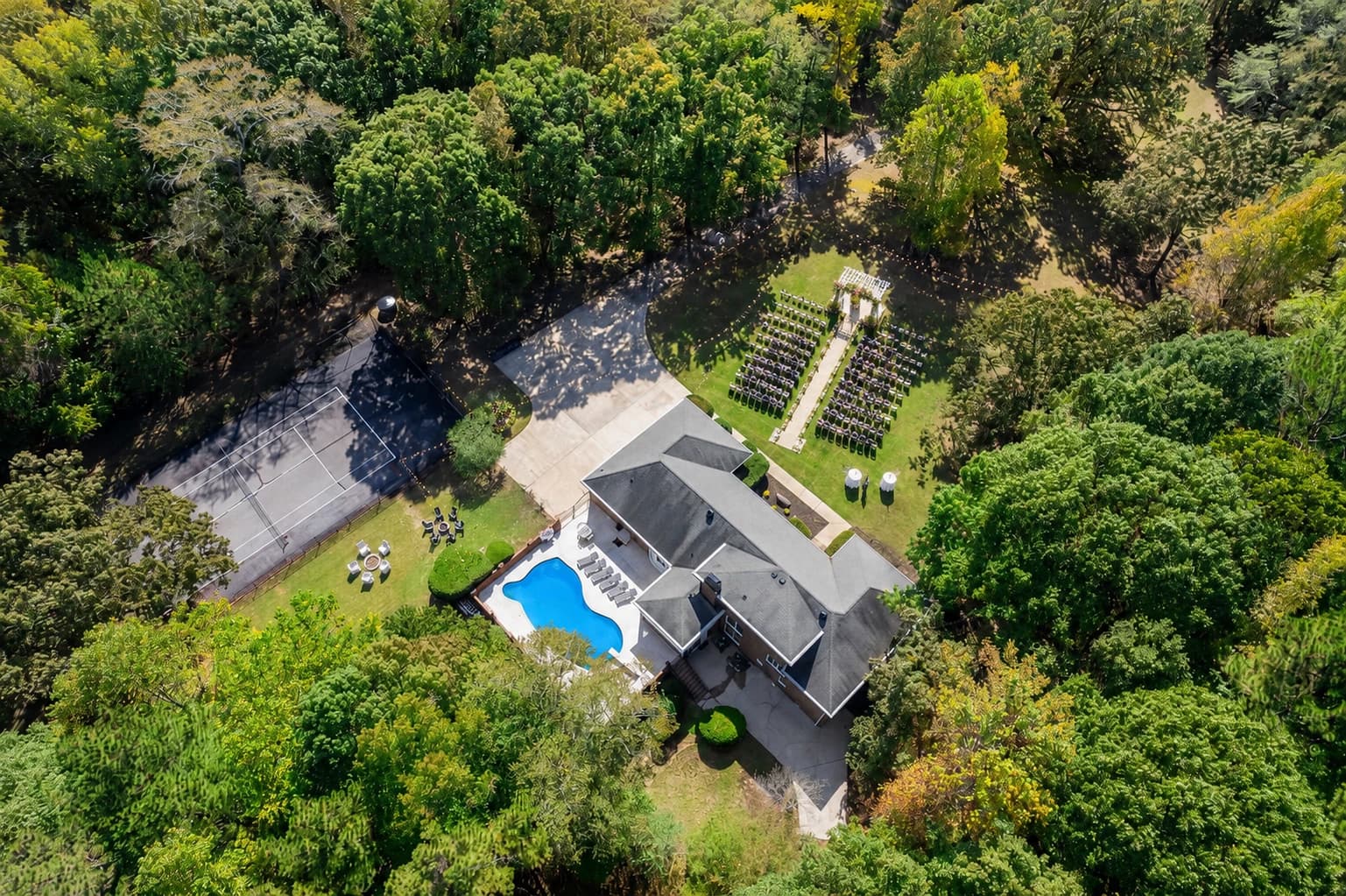
So I did what my project-manager brain does and looked for a different model entirely. We rented a private estate for four nights instead. The math was almost funny: the entire property, the place we got ready, hosted the rehearsal dinner, held the ceremony and reception, and slept our wedding party and both sets of parents, cost us $8,400. That is less than the room rental alone at two of the ballrooms I'd toured.
The non-financial part mattered even more. We were not renting four hours; we were living somewhere for a long weekend. My mom did her makeup in the same house where I said my vows. Both grandmothers stayed on site so nobody was driving home at midnight. The "wedding" stopped being a frantic event and became a slow, three-day thing. If you are even slightly drawn to that, look at properties built for it, somewhere like this hilltop equestrian ranch outside San Diego that is set up for the ceremony, the gathering, and the overnight stay all on one footprint, or a bigger event-ready 48-acre Los Angeles estate if your guest list runs large like ours did.
The honest tradeoff: a private estate means you are the general contractor. There is no venue coordinator quietly handling the rentals, the caterer's load-in, or the trash at the end of the night. You bring those in yourself. For a control freak with a spreadsheet, that was a feature. If you want to show up and have it all handled, a full-service venue may be worth its premium to you. Know which person you are before you book.
Blending Three Cultures Into One Ceremony
Here is the part of our wedding that no calculator can price, and the part I would not trade for anything.
I am Korean and Japanese American, and my husband's family is American. We were not going to pick one tradition and pretend the others did not exist, so we built a ceremony that held all three. We did a Korean tea ceremony, the pyebaek, where we bowed to our elders and they tossed dates and chestnuts into my skirt for the kids they apparently expect us to have. We did a Japanese san-san-kudo, the three-times-three sake ritual, sharing cups between both families. And then we did plain American vows that my husband wrote and could barely get through.
My halmeoni cried. My obaachan cried. I cried. The officiant, a stranger we had met twice, cried. It remains the single best ninety minutes of my life.
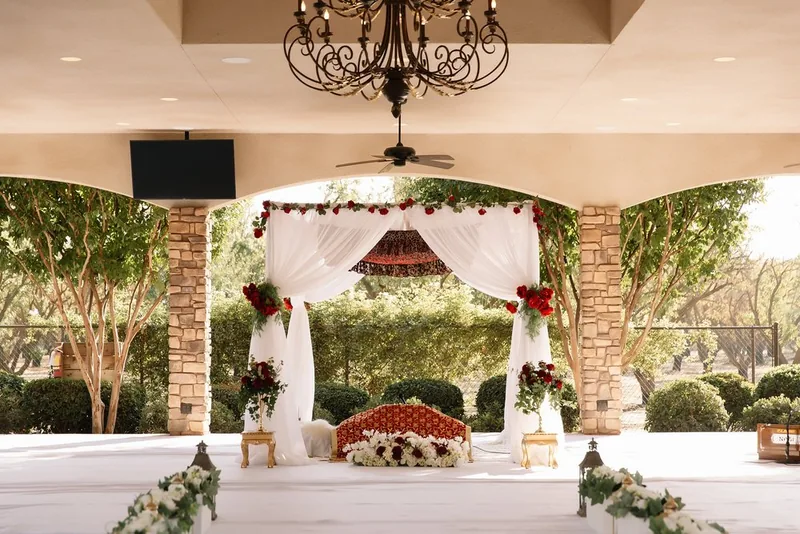
Logistically, blending traditions is where a private estate quietly earns its keep again. We needed a low table and floor space for the tea ceremony, an outdoor spot for the sake ritual, and a transition into the reception, all without herding 127 people between three separate locations on a clock. Having the whole property to ourselves meant we could let each ritual breathe instead of rushing it to make a venue's turnover deadline. A spread-out estate with a vineyard pavilion and garden grounds like this one near Fresno is exactly the kind of layout that makes a multi-ritual day flow instead of stall.
The cost of all this cultural blending, by the way, was small, about $850 for the hanbok and kimono rentals, the tea set, and the sake cups, tucked into that attire line above. It was, per dollar, the most meaningful money we spent the entire wedding.
What Was Worth Every Penny
People want the regrets, and I have them, but let me start with the wins because they are more useful when you are deciding where to put your own money.
Photography and videography, $4,900. This is the line I would defend in court. The flowers died, the cake got eaten, the dress is in a box. The photos and the eight-minute film are the only things that still actively give back. The vendor that was worth every penny was our photographer, full stop. If your budget is tight, this is the last place I would cut. Future-you is going to watch that film on every anniversary.
The day-of coordinator. I resisted this one hard because I genuinely believed my spreadsheet could run the day. It could not. You cannot bustle your own dress, cue the DJ, and handle a caterer who shows up twenty minutes late at the same time. Handing the binder to a professional at 9 a.m. and not touching it again was the thing that let me actually be present. Worth it. Non-negotiable for the next person who asks me.
The open bar. I went back and forth on a limited bar to save money. I am so glad we didn't. An open bar is hospitality you can feel the moment guests walk in, and in our post-wedding survey it came up over and over as something people noticed and appreciated. Some lines are not about the dollars; they are about how the room feels.
Welcome bags. Hold that thought, they get their own moment in the survey section, because the result genuinely shocked me.
What I Would Cut Next Time
Now the regrets. Every honest real wedding cost breakdown has them, and pretending otherwise helps no one.
The florals, partially, $2,700. I love flowers. I also watched roughly $1,200 of arrangements get carried to the dumpster at the end of the night because nobody had a plan to repurpose or rehome them. The ceremony arch flowers, the tall reception centerpieces, gorgeous, photographed beautifully, dead by Sunday. If I did it again I would spend half as much, lean harder on greenery and candles, and put the savings toward something that lasts. Decor is the most emotionally seductive and least durable money at a wedding.
The elaborate stationery I almost bought. This one I caught in time and I am still smug about it. I A/B tested two invitation designs with 20 friends, a simple one and an elaborate letterpress version that cost roughly twice as much. The "simpler" design got three times more compliments. Three times, for half the price. I cannot tell you how many couples I have watched pour money into letterpress and wax seals that guests glance at for four seconds and recycle. Test your assumptions. Your taste is not your guests' taste, and the data will tell you so if you let it.
Two outfit changes. The cultural outfits were essential. The third "party dress" I bought for the dance floor was not, I wore it for about forty minutes and it added a few hundred dollars I will never see again. One meaningful change, not three.
If I rebuilt the budget today, I would pull about $1,500 out of florals and the extra dress and move it straight into the "everything else" buffer, because that is the line that actually went over.
What Our 127 Guests Actually Remembered
This is my favorite data point from the entire wedding, and it is the reason I tell every engaged friend to stop arguing about chair styles.
Two weeks after the wedding, I sent a short survey to all 127 guests. I am a product manager; of course I did. I asked them one open-ended question: what is the thing you remember most? I expected the answers to be the food, the venue, the ceremony, the things we agonized and overspent on.
The number one answer, by a wide margin, was the personalized welcome bags.
The welcome bags. The thing that cost us a small fraction of the budget, tucked into that $1,650 line with the favors and stationery. We had filled them with a handwritten note, a local snack, a hangover kit, and a little printed schedule for the weekend. That tiny, cheap, high-effort gesture is what stuck, not the open bar, not the florals I cried over, not the four-figure photography I would still defend. A bag of pretzels and a Post-it note in my handwriting.
The lesson rearranged how I think about wedding money entirely. Guests do not remember the line items. They remember how you made them feel seen. A welcome bag says "I thought about you specifically before you even arrived," and that beats a $2,400 band upgrade every single time. If you take one thing from this whole breakdown, let it be that: spend on the things that make individual guests feel personally considered, and let the impressive-on-paper stuff come second.
Your Real Wedding Game Plan for 2026
Okay, here is what I wish someone had told me, condensed into the advice I now give every newly engaged friend who texts me.
Build your budget per guest, not per category. Take your real total, divide by your headcount, and stare at that number. Ours was $301 a head. Once you internalize that every name is a few hundred real dollars, the guest list, your single biggest lever, gets a lot easier to manage honestly.
Decide early whether you are a full-service or DIY couple. A private estate saved us thousands and gave us a three-day weekend instead of a four-hour event, but it made me the general contractor. A traditional venue costs more and hands you a coordinator. Neither is wrong. Pick the one that matches your actual personality, not your fantasy of it.
Protect three lines above all: a great photographer, a day-of coordinator, and a generous buffer. Those three are what let you both capture the day and actually be present for it. Everything else flexes.
Spend on guest experience, cut on guest decor. The welcome bags beat the flowers. The open bar beat the band upgrade. Test your assumptions like I tested those invitations, because your guests will remember thoughtfulness long after they have forgotten your centerpieces.
When I was planning my wedding, I would have killed for one honest couple to just show me the spreadsheet instead of the highlight reel. So that is what this is. We spent $38,247, we went $1,247 over, I would change maybe two things, and I would marry him on that hillside again tomorrow. Go build your number, invite the people who matter, and put a snack and a handwritten note in every bag. That part, weirdly, is the part they keep.
Free Tools to Build Your Vendor Team
Finding the right vendors for a private property wedding takes specialized expertise. WedStay makes it simple.
🎯 Start PlanningBrowse Vetted Vendors, Only 15% of applicants accepted. 500+ vetted professionals across photographers, planners, caterers, and 8 more categories.Wedding Budget Planner, See exactly how much to allocate per vendor category based on your location and guest count.Wedding Venue Cost Calculator, Includes vendor add-on pricing for catering, DJ, flowers, hair & makeup, and more by region.Get the Free WedStay App, browse venues, plan, and book on the go.
Frequently Asked Questions
How is wedding catering usually priced, and how much of the $11,200 was the open bar?
Most caterers quote per plate, then layer bar on separately, so our $11,200 for 127 guests was really two line items stacked together. As a rough split, the plated dinner was the bulk and the open bar added a few thousand on top. If you want to control that number, ask your caterer for a per-head food price and a separate bar package (open, beer-and-wine only, or consumption-based) before you sign anything. Beer and wine only can shave a meaningful chunk versus a full liquor open bar, and a signature cocktail instead of a full spirits list keeps people happy for less.
What does a wedding day-of coordinator actually cost?
I buried our coordinator's overtime in the catch-all line, but as a standalone, day-of (really month-of) coordination usually runs somewhere in the $800 to $2,500 range depending on your market and how many hours you book. Full planning costs far more. For a private estate where you are the general contractor, this is the hire I fought hardest against and was most wrong about. They run the timeline, wrangle vendors at load-in, and handle the trash and breakdown so you are not doing it in your dress. Budget for it from day one instead of treating it as optional.
How do I find and vet a private estate that actually allows weddings?
Not every beautiful rental permits events, so start by filtering for properties that explicitly list weddings or gatherings, then confirm the guest cap in writing. For our 127 people we needed something built for scale, like the 48-acre Los Angeles estate that sleeps 26. Before booking, ask three things: what is the maximum event headcount, are there noise or end-time rules with the neighbors, and what does the rental include versus what you bring in. Estates rarely come with a venue coordinator, so assume you are sourcing rentals, catering load-in, and cleanup yourself unless the listing says otherwise.
Do I need event insurance for a private estate wedding, and how much is it?
Most estate and short-term rental owners require it, and you want it regardless. Event insurance tucked into our $1,747 catch-all line, and a one-day liability policy typically runs about $100 to $250, with optional liquor liability and cancellation coverage adding more. When you are the general contractor on a private property, that policy covers you if a guest gets hurt or something gets damaged. Ask the owner what coverage limit they require (often one to two million in liability) and whether they need to be named as additional insured. Buy it once your headcount and date are locked, not the week of.
How far in advance should I book a private estate for a 2026 wedding?
Sooner than you think, especially for peak months. Good event-ready estates often book 12 to 18 months out for spring and fall Saturdays, and the best ones for large guest counts go even earlier. Because a private estate doubles as lodging for your wedding party, you are competing with regular vacation bookings too, not just other weddings. My advice: lock the property before almost anything else, since it shapes your date, your headcount, and your whole budget. We built everything around our four-night $8,400 rental, and having that anchor first made every later decision easier.
How much should I budget for tipping wedding vendors?
Tips never show up on the quote, so they quietly blow the kind of buffer I warned about. Plan to tip your caterers and bartenders (often built in as 18 to 22 percent service, so check before doubling up), your DJ around $50 to $150, hair and makeup 15 to 20 percent, and your coordinator and photographer a discretionary $50 to $200 each if they crushed it. On a wedding our size, gratuities can easily total $1,000 or more. Put cash in labeled envelopes the week before and hand them to your coordinator to distribute, so you are not chasing people down at midnight.
Sources
1. The Etiquette of Having Children at Your Wedding · marthastewart.com
2. Wedding Checklists & Timeline · marthastewart.com
3. The Wedding Trends That Are In, and Out, for 2025 · vogue.com
4. The Perfect Getting-Ready Timeline for Your Wedding Day · brides.com