Reduce Wedding Logistics at Short-Term Rentals

You reduce wedding logistics at short-term rentals by deciding things once, in writing, before a single couple asks. Every question a planner emails you (capacity, load-in time, power, parking, quiet hours, insurance) has exactly one correct answer for your property, and that answer should live in a document you send the day a wedding inquiry lands, not in a text thread you rebuild from scratch every weekend.
That is the whole strategy. Everything below is the execution.
Here's the game plan. I ran logistics for the Army for eight years before I started planning wedding weekends, and I have now coordinated 200-plus of them across 14 states. The hosts who dread wedding bookings and the hosts who quietly love them are not different people with different properties. They are the same people with different paperwork. One group answers 40 questions per booking by text. The other group answers zero, because they already published the answers.
Okay, so let's get specific.
Quick Navigation
- How to Reduce Wedding Logistics at Short-Term Rentals
- Why Wedding Weekends Overwhelm Short-Term Rental Hosts
- Step 1: Replace House Rules With a Real Event Addendum
- Step 2: Publish One Capacity Number and Defend It
- Step 3: Build a Vendor Access Sheet You Reuse Every Weekend
- Step 4: Collect Certificates of Insurance on a Deadline
- Step 5: Run One Planner Call Instead of Forty Emails
- Step 6: Map the Property Once for Load-In, Parking, and Power
- Step 7: Handle Noise and Neighbors Before They Handle You
- Step 8: Plan the Turnover Before You Plan the Party
- The Host Timeline: 90 Days Out Through Checkout
- Questions Hosts Ask Most and Straight Answers
Key Takeaways
- Couples hire an average of 13 vendors per wedding, meaning 13 gate-code requests, arrival windows, and insurance certificates per booking.
- Publish overnight capacity and event capacity as two separate numbers, one Tennessee estate lists 20 overnight guests and 150 event guests.
- Set your event cap at the lowest of local code, septic and parking limits, and space math at 12 to 15 square feet per seated guest.
- Require vendor certificates of insurance 21 days out at $1,000,000 per occurrence, one-day event policies cost couples only $75 to $300.
- Eight hours building an event addendum, vendor access sheet, and property map saves 15 to 25 coordination hours per wedding weekend.
How to Reduce Wedding Logistics at Short-Term Rentals
The short version, in the order I would build it if you handed me your property tomorrow:
- Write an event addendum. A separate document from your house rules that covers event capacity, hours, vendor access, insurance, damage deposit, and what happens if any of it gets ignored.
- Set one capacity number. Overnight guests and event guests are two different numbers. Publish both. Never negotiate them by text at 11pm.
- Build a vendor access sheet. Gate code, load-in door, parking map, power locations, trash plan, prep sink, restroom plan. One page. Same page every wedding.
- Set a COI deadline. Certificates of insurance from every vendor, 21 days out, with your entity listed as additional insured.
- Run one planner call. Thirty minutes, 45 days out, with a fixed agenda. That call replaces roughly 40 emails.
- Map the property once. Photograph and label every access point, outlet, and parking area. Reuse forever.
- Get ahead of noise. Publish quiet hours, monitor decibels (not audio), and tell your neighbors the date before they hear it.
- Plan the turnover. Decide who breaks down rentals, when the dumpster arrives, and how many hours you actually need before the next check-in.
Each one of these takes a couple of hours to build the first time and then takes zero minutes forever. That is the entire return on investment. You are trading eight hours of setup for what I would conservatively estimate at 15 to 25 hours of coordination per wedding weekend.
I've seen this go wrong exactly one way: the host builds none of it, says yes to a wedding anyway, and then spends the six weeks before the event making up policy on the fly while a planner (who is very good at her job and has done this 300 times) runs circles around them.
Why Wedding Weekends Overwhelm Short-Term Rental Hosts
Here is the number that explains everything. According to The Knot 2026 Real Weddings Study, which surveyed 10,474 US couples married in 2025, couples hire an average of 13 vendors to pull off their wedding.
Thirteen.
That means 13 companies want to know your gate code. Thirteen arrival windows. Thirteen sets of vehicles. Potentially 13 certificates of insurance. And if you have not written any of it down, that is 13 separate conversations, each one landing in your inbox at a different time over a five-month span, each one asking a variation of the same six questions.
The rest of the study fills in the picture. The average wedding cost is $34,200. Average guest count is 117, at roughly $292 per guest. Venue spend alone averages $12,900, with 89% of couples hiring one. Those are not casual gatherings. That is a small commercial event with a catering operation, an amplified sound system, and a rental company delivering furniture on a box truck.
Real talk: most short-term rental hosts are set up to answer "what time is check-in." They are not set up to answer "where does the 26-foot refrigerated truck stage at 7am and is there a 20-amp circuit within 60 feet of the tent."
The gap between those two questions is the entire problem. And it is completely solvable with documents.

Step 1: Replace House Rules With a Real Event Addendum
Your standard house rules were written for a family of six on vacation. They say things like "no parties." That language is actively working against you now, because a wedding is a party, and a planner reading "no parties" will either walk away from a property that would have been perfect or (worse) book it and assume the rule does not apply to a rehearsal dinner.
Write a second document. Call it the Event Addendum. It attaches to the booking and it covers exactly this:
- Event guest maximum, stated as a number, separate from overnight occupancy
- Event hours, with a hard amplified-sound cutoff time
- Vendor access window, earliest load-in and latest load-out
- Insurance requirements, including limits and additional insured language
- Damage deposit amount and what triggers a claim against it
- What is included (tables? chairs? the catering kitchen? the sound system?) and what is not
- Prohibited items, which for most properties means open flame, confetti, sparklers, fireworks, and anything staked deeper than 8 inches into an irrigated lawn
- Parking limits, stated in vehicle count, not "reasonable"
- Consequences, in plain language, for exceeding capacity or hours
This is non-negotiable: the addendum goes out with the first reply to every wedding inquiry. Not after the deposit. Not after the site visit. First reply. It filters out the couples whose vision does not fit your property before either of you spends three weeks discovering that. Couples pick at the flip side of this on r/BigBudgetBrides, where the consensus was that some venue vendor lists are earned and others are paid for, so it is fair to ask which kind yours is.
Confession time: I spent my first two years as a planner treating venue paperwork as an obstacle. Then I worked a property in Vermont where the owner had a four-page event addendum and I realized I had asked her a total of two questions in eight weeks, both of which were about her preferred coffee. Her document had answered everything else. I now build one for every property I work with, whether they want it or not.
Step 2: Publish One Capacity Number and Defend It
Two numbers, actually, and hosts blur them constantly.
Overnight capacity is how many people sleep on the property. Event capacity is how many people attend the ceremony and reception, most of whom leave that night. These are wildly different numbers and they need to be listed separately everywhere you describe your property.
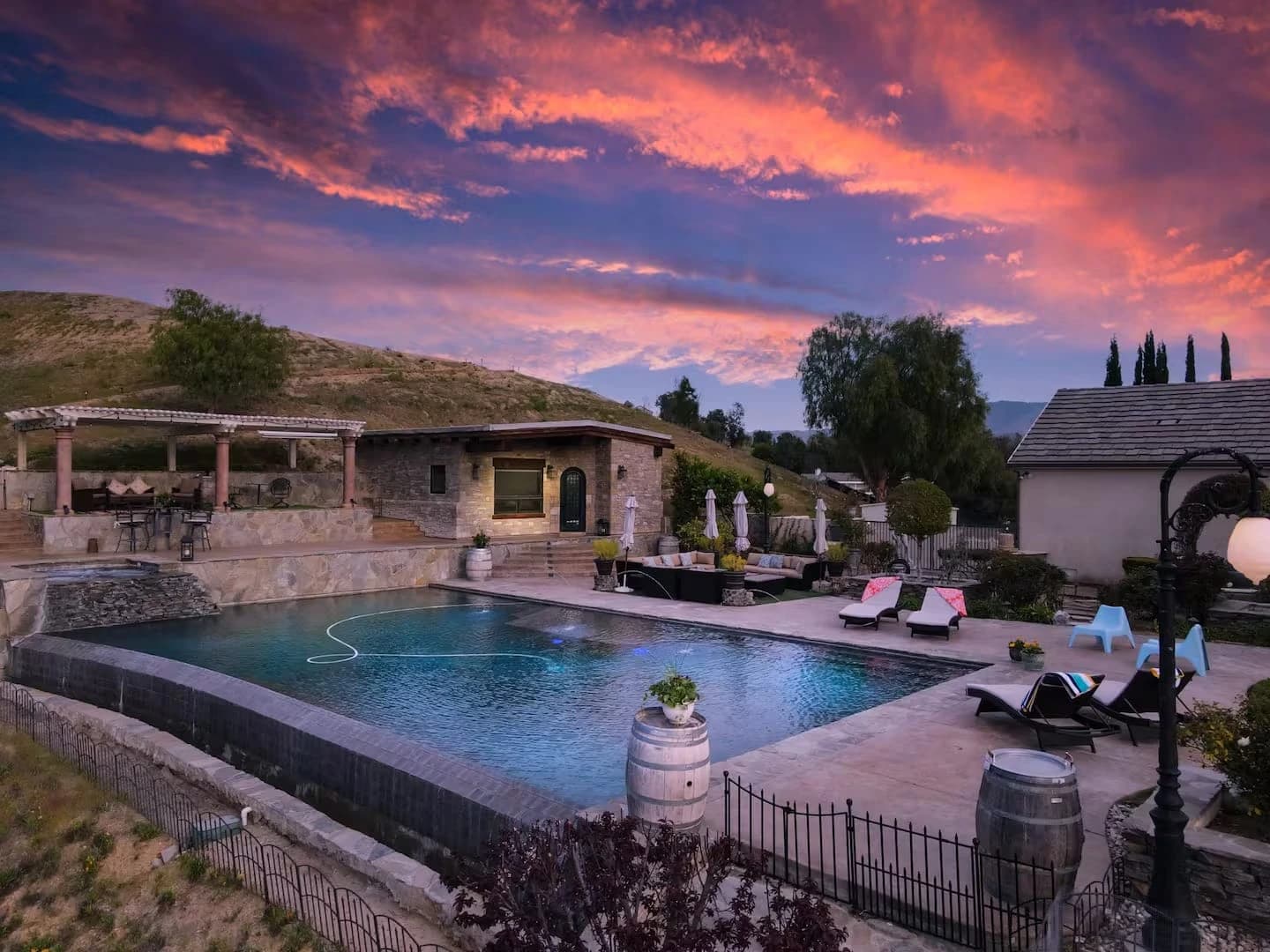
Look at how the well-run properties state it. This Dale Hollow Lake estate in Monroe, Tennessee publishes 20 overnight guests and 150 event guests as two distinct figures, with 7 bedrooms and 6 bathrooms behind the first number. A couple reading that page knows instantly whether their 130-person guest list works and whether their 18-person wedding party can sleep on site. No email required.
Compare that to a 14,000 square foot estate outside Nashville, which sleeps 24 across 9 bedrooms but caps events at 50 guests. Higher overnight capacity, much lower event capacity. Totally different wedding. A couple with 120 guests self-selects out in about four seconds, which saves everyone a site visit.
Where do you get your event number? Three constraints, and you take the lowest one:
- Local code. Some jurisdictions cap it explicitly. The US Conference of Mayors short-term rental best practices report documents Cape Charles, Virginia limiting occupancy to 3 per bedroom. Virginia Beach passed a 2019 vacation rental law allowing approved short-term rentals up to three special events per year with a maximum of 100 people each. Phoenix went the other direction entirely and adopted a law prohibiting special events at short-term rentals. Your city has a rule. Find it before a couple does.
- Septic and parking. Two constraints that nobody thinks about until they fail. A residential septic system handling 150 people for eight hours is a real engineering question. So is parking 60 cars on a property with a 400-foot gravel driveway.
- Physical space. Seated dinner needs roughly 12 to 15 square feet per guest including aisles. Cocktail style needs about 8. Measure your actual usable flat area and do the math once.
Then publish the number and stop negotiating. The couple who asks for "just 15 more, they're family" at the 30-day mark is not being difficult. They are testing whether the number is real. Make it real the first time and it never comes up again.
Step 3: Build a Vendor Access Sheet You Reuse Every Weekend
This is the single highest-use document in the whole system, and it fits on one page.
The vendor access sheet goes to the planner, who forwards it to all 13 vendors. It contains:
| Item | What to include |
|---|---|
| Address and pin | Street address plus a dropped map pin, because rural addresses route badly |
| Gate or lock code | The event-weekend code, which you rotate after |
| Load-in entrance | Which door or gate, with a photo |
| Staging area | Where trucks park while unloading |
| Vehicle capacity | How many vehicles fit, and where overflow goes |
| Power | Circuit locations, amperage, and whether a generator is required |
| Water | Nearest spigot to the tent or catering area |
| Prep space | Catering kitchen access, counter space, refrigeration, ice |
| Restrooms | Which ones vendors may use (this matters more than you think) |
| Trash | Where it goes, whether the vendor hauls out, dumpster location |
| Ceiling and doorway dimensions | For rental companies moving large pieces |
| Wi-Fi | Network and password, because the DJ and the photographer both need it |
| On-site contact | One name, one phone number, available that day |
Photos of each access point make this document about three times more useful. A florist who has seen a photo of the load-in door does not text you at 6am asking which door.
Build it once. Save it as a PDF. Every wedding, you change the dates and the gate code and send it. That is the entire ongoing effort.
Step 4: Collect Certificates of Insurance on a Deadline
A Certificate of Insurance (COI) is a one-page summary of a vendor's insurance policy. It is not the policy itself, but it lets you verify that the caterer, the rental company, and the DJ carry coverage before they set foot on your property.
Set the deadline at 21 days before the event. Not 7. Twenty-one, because a vendor who has let coverage lapse needs time to fix it, and you need time to decide whether they are coming.
What you are actually checking, according to the risk management guidance published for wedding venues:
- Named insured matches the vendor. If the couple hired ABC Catering and the certificate says something else entirely, ask before you approve.
- Policy dates cover the wedding date. Not the date the certificate was issued. This is the easiest item to miss and the most common failure.
- General liability limits meet your minimum. Most venues require $1,000,000 per occurrence. For context on what these policies cost, a one-day event liability policy for a couple typically runs $75 to $300, with liquor liability adding another $75 to $200. GEICO quotes event insurance from $75 to $235 with liability limits starting at $500,000. The Knot puts basic policies in the $75 to $550 range. These are not expensive documents. There is no good reason for a professional vendor to lack one.
- Workers' compensation. If the section is blank, marked N/A, or waived, ask why. If a vendor's employee is injured on your property and the vendor carries no required coverage, attorneys will look at every other party involved, including you.
- Automobile liability, for caterers, rental companies, and anyone delivering on a truck.
- Additional insured status. This one trips up almost everyone. Writing your name in the Certificate Holder box does not make you an additional insured. It has to say so explicitly on the general liability line.
Wait, I should mention the shortcut here. Some platforms handle this layer for you. WedStay bookings include event insurance as part of the reservation, which removes the couple-side policy from your checklist entirely and leaves you tracking only the vendor certificates. That is a meaningful reduction in paperwork, and it is worth knowing which of your booking channels does it.

Step 5: Run One Planner Call Instead of Forty Emails
Thirty minutes on the phone, 45 days out, with the planner or the day-of coordinator. Fixed agenda, and you drive it:
- Confirm the numbers. Final event count, final overnight count, arrival day and time.
- Walk the timeline. Rehearsal, ceremony, reception, cutoff, breakdown. Get actual clock times.
- Confirm the vendor list. Names, companies, arrival windows. This is where you learn about the 26-foot truck.
- Review the access sheet together. Ten minutes. They will ask three questions you have not thought of, and you will add those answers to the document permanently.
- Agree on the on-site contact. Theirs and yours. One person each. Not a group text with nine people.
- Set the COI deadline out loud. Saying it beats emailing it.
- Walk the rain plan. Where does everything move? Does it fit? Who decides, and by what time?
The timeline looks like this on a normal weekend wedding weekend: Friday load-in and rehearsal dinner, Saturday ceremony and reception, Sunday breakdown and brunch, Monday turnover. If your booking is only two nights, breakdown and checkout collide, and that is a conversation you want to have on this call rather than at 9am Sunday.
I planned my partner's surprise wedding over a satellite phone from Afghanistan with a nine-hour time difference. Total voice contact: about four hours across six weeks. It worked because every single decision was written down before the call, and the call only handled exceptions. Your planner call works the same way. If you are discovering information on that call rather than confirming it, your documents are not doing their job yet.
Step 6: Map the Property Once for Load-In, Parking, and Power
Take an afternoon. Walk your property with your phone. Photograph and label:
- Every exterior door wide enough for a 6-foot table
- Every outlet within 100 feet of a likely event area, and note the amperage
- The breaker panel, and which breakers control what
- Every water spigot
- Gate clearances, in feet, for truck access
- The septic field, so nobody parks a catering van on it
- Low branches and overhead wires along the driveway
- Where the sun sets, and what time, in your peak wedding months
That last one sounds like a photography concern. It is actually a logistics concern, because ceremony start times get built around it, and everything downstream (dinner service, sunset photos, sound cutoff) chains off that decision.
Then draw a parking diagram. Actual vehicle positions, actual count. Nothing wastes more time on a wedding day than 40 cars arriving at a property where nobody decided where cars go. Your diagram assigns vendor staging, guest parking, overflow, and the one spot you keep clear for the caterer who has to make a second run.
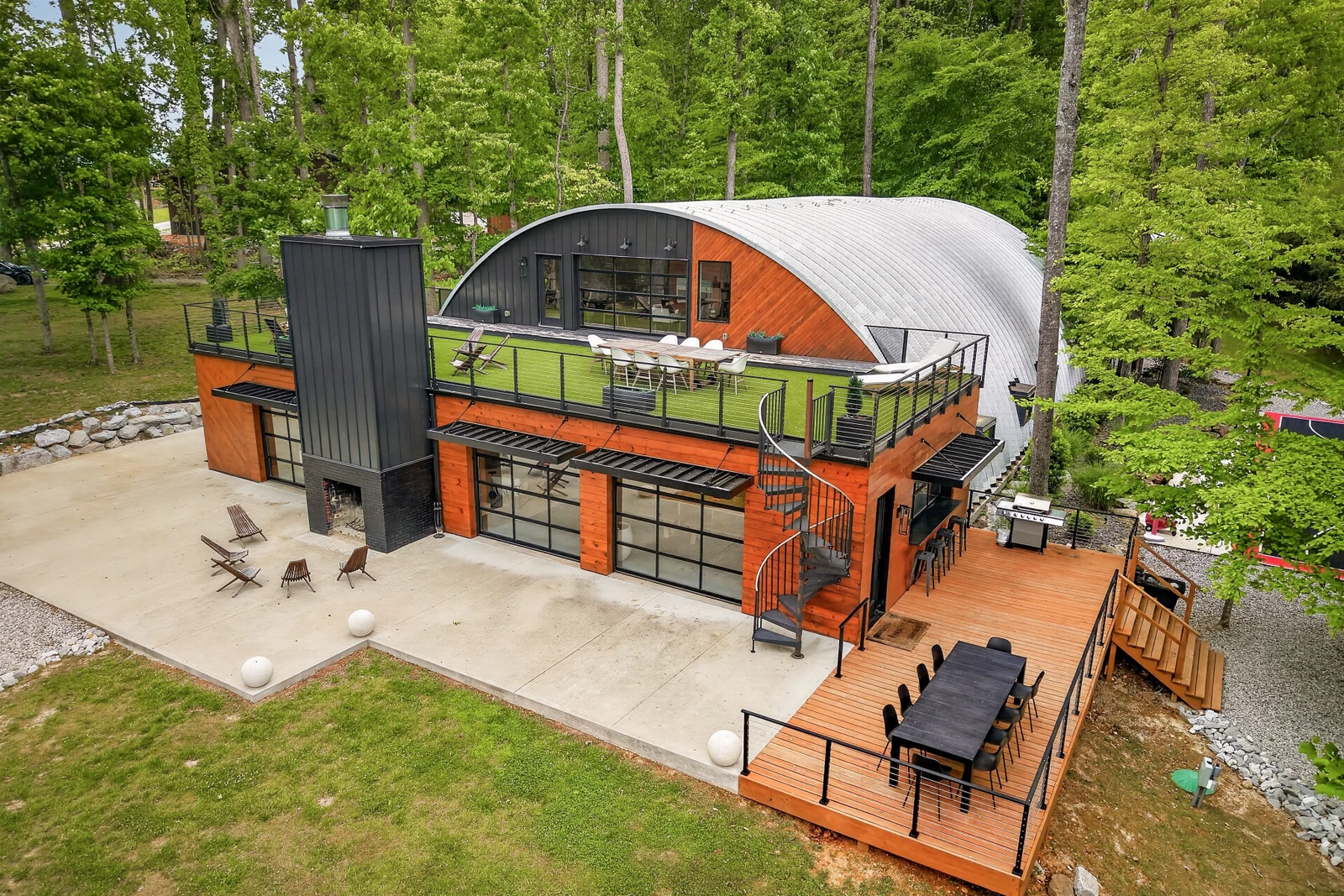
Properties built for this make it obvious. A well-configured estate will list "extensive parking for guests and boat trailers" or note that valet can be coordinated, which tells a planner the answer without a phone call. If your property has a real constraint (a single-lane driveway, a 25-car limit), say so in the listing. The couple with 117 guests and no shuttle budget needs to know that in week one, not week 20.
Step 7: Handle Noise and Neighbors Before They Handle You
Noise is the failure mode that ends a host's wedding business. One complaint at 11:40pm becomes a code enforcement visit, which becomes a permit review, which becomes a policy change for your whole street.
Three things, in order:
Publish quiet hours as a number. The properties that handle this well state it flatly: quiet hours from 10pm to 8am, be mindful of neighbors. That single line in a listing does more work than three paragraphs of polite suggestion, because it gives the planner something to build the timeline around. The DJ plans a last song. The couple plans a sparkler-free exit. Everyone knows.
Monitor decibels, not audio. Outdoor noise monitoring devices measure sound levels without recording conversations. Disclose that you have them, in writing, in the addendum. Well-run properties state this plainly as a safety notice: the home has noise monitoring in outdoor areas, no audio is recorded, decibel levels are monitored for community guidelines. Nobody objects to a disclosed decibel meter. People object very much to an undisclosed microphone.
Tell your neighbors first. Two weeks out, a short note: there is a wedding on Saturday the 14th, music ends at 10pm, here is my cell number, call me before you call anyone else. This costs you four text messages and buys you enormous goodwill. A neighbor with your number who has been told the plan will text you at 10:15. A neighbor without it calls the police at 10:05.
And know your local rules cold. Some jurisdictions require a special event permit above a certain headcount. Some cap the number of events per year, the way Virginia Beach's ordinance allows three per year at up to 100 people. Some prohibit events at short-term rentals outright, as Phoenix does. Find your rule, put it in the addendum, and then you are enforcing the city's number rather than arguing about yours.

Step 8: Plan the Turnover Before You Plan the Party
Every host underestimates Sunday.
A wedding leaves behind rented tables and chairs waiting on a pickup truck that comes Monday, floral debris across the lawn, a catering kitchen that got used harder than it has been used in five years, and roughly four times the normal trash volume. If you have a check-in Monday at 3pm and breakdown finishes Sunday at 6pm, you have 21 hours, and you need every one of them.
Decide these in advance and write them into the addendum:
- Who breaks down rentals, and by when. If the rental company picks up Monday, is that in your contract or a surprise?
- Trash. How many bags does 117 guests generate (answer: more than your bins hold), where does it go, and does the caterer haul out?
- Dumpster or extra pickup. For events above roughly 75 guests, order one. It costs less than you think and it solves the entire problem.
- Cleaning crew size. Your normal turnover crew is not sized for this. Book double, and book it when the wedding books, not the week of.
- Buffer night. This is the real answer. Block the night after the event. It converts a frantic turnover into a normal one, and you can price the block into the event fee so it costs you nothing.
That last one is why weekend-length minimums exist and why they benefit hosts as much as couples. Two-night and three-night minimums exist so the celebration has room to breathe on both ends. A property booked as a 2-night minimum with a proper event window gives you a Friday setup, a Saturday event, and a Sunday that is not a fire drill.
The Host Timeline: 90 Days Out Through Checkout
Here is the whole thing as a sequence. Print it.
At inquiry (day zero). Send the event addendum, the capacity numbers, and the pricing. Answer nothing else yet.
At booking. Send the vendor access sheet. Confirm event count and overnight count in writing. Collect the damage deposit. Book the post-event cleaning crew.
90 days out. Confirm the planner or coordinator's name and contact. If the couple has neither, that is worth flagging now, because a 13-vendor event with no coordinator becomes your problem by default.
45 days out. The planner call. Thirty minutes, fixed agenda, exceptions only.
21 days out. COI deadline. Every vendor, general liability, correct dates, additional insured. Chase anyone missing.
14 days out. Neighbor notification. Four texts. Confirm dumpster or extra trash pickup. Confirm cleaning crew.
7 days out. Rotate the gate code and send the final vendor access sheet with the new code. Confirm final counts. Send the rain plan decision deadline in writing.
Load-in day. Be reachable. Do not hover. The planner runs the event, you run the property. Those are two different jobs and the fastest way to make a weekend miserable is to confuse them.
Event day. One text at the sound cutoff time confirming it happened. That is your entire day-of role if the previous steps were done.
Breakdown day. Walk the property with the planner before they leave. Photograph anything that needs a deposit conversation. Do it together, in person, not over email three days later.
Turnover. Crew arrives. Dumpster hauls. You are back to normal by the buffer night.
Twelve touchpoints. Most of them under 15 minutes. That is what a wedding weekend costs a prepared host.
Questions Hosts Ask Most and Straight Answers
Should I charge a separate event fee? Yes. The wear on a property from a 117-person event is not comparable to a family stay, and pricing it into the accommodation total confuses everyone. Most well-run properties fold it in as a single transparent total for the minimum stay. On WedStay, for instance, a 2-night booking at that Dale Hollow Lake estate lands around $10,763 total for a weekday event with 20 guests, and the Franklin estate runs about $15,497 total for the same configuration. One number, event access included, no line-item archaeology.
Do I need a wedding planner involved, or can the couple self-coordinate? For under 30 guests with two or three vendors, couples manage fine. Above roughly 50 guests, require at minimum a day-of coordinator, and put that requirement in the addendum. You are not being precious. You are declining to become the unpaid coordinator by default, which is exactly what happens otherwise.
What if the couple exceeds the guest count? This is why the consequence goes in writing. State it plainly: exceeding maximum occupancy or event capacity results in forfeiture of the deposit, and in the cases where local occupancy law is involved, immediate cancellation. Properties that publish that language enforce it approximately never, because nobody tests a stated rule.
Can I say yes to weddings if my platform prohibits parties? Read your platform's actual terms rather than the summary. Many listing platforms distinguish between unauthorized parties and host-authorized events. If your channel genuinely prohibits events, list your wedding availability on a marketplace built for it instead. That is the entire point of a purpose-built channel: the wedding venues with lodging category exists because these bookings need different terms, different insurance, and different capacity fields than a vacation stay does.
How far out do weddings book? Longer than you are used to. Couples routinely book 12 to 18 months ahead, which is excellent for your calendar and means your cancellation terms need to be written for that horizon, not for a two-week vacation booking.
What is the one thing I should do first? The event addendum. Everything else is downstream of it. Two hours of writing, and it will answer roughly 80% of every question you would otherwise field by text for the next five years.
In my 200-plus wedding weekends, I've seen exactly three things ruin a multi-day celebration: bad timelines, no contingency plan, and not enough bathrooms. Notice that none of those three are about the property. They are about preparation. A host with a good addendum, a good access sheet, and a 30-minute planner call has already solved two of them, and the third is a plumbing question you can answer with a rental quote.
Build the documents. Send them early. Then go have a normal Saturday.
Free Tools for Your Wedding Weekend
Planning a wedding at a private estate or vacation rental? These free tools are built specifically for non-traditional venues.
🎯 Start PlanningWedding Venue Cost Calculator, Real pricing data from 150+ wedding properties. Compare all-inclusive estate costs vs. traditional venues.Browse Vetted Vendors, Vendors who specialize in estate, vacation rental, and backyard weddings. 4.9-star average, vetted and monitored.Wedding Weekend Planning Guide, Multi-day celebration timeline, guest coordination, and 150+ weekend venues from $8,000.Get the Free WedStay App, browse venues, plan, and book on the go.
Related guides:
- 10 Things Every Couple Should Talk About After Getting Engaged (Before You Pick the Cake)
- Top 10 Things Couples Look For at Your Property for Their Estate Wedding
Frequently Asked Questions
How do wedding vendors get on a venue's preferred vendor list, and is there any benefit to booking from it?
Vendors land on those lists two ways: they've worked the property enough times that the owner trusts them with the load-in, or they pay a referral fee or commission for the placement. Both exist, and the list itself rarely tells you which. Ask the host directly whether their list is earned or paid, and whether an off-list vendor is allowed at all. The real benefit of an earned list is logistical: those vendors already have the access sheet memorized, know where the 20-amp circuits are, and won't text you at 6am asking which door. That's worth something even if their pricing isn't the lowest. See couples on r/BigBudgetBrides discussing this.
Can you host a wedding at a vacation rental or cabin, and what should you know before doing it?
Yes, but the listing's overnight number tells you almost nothing about whether events are allowed. Confirm three things in writing before you book: does the property have a separate event guest cap, does local code permit it, and is there an event addendum. Virginia Beach's 2019 vacation rental law allows approved rentals three special events per year at 100 people max; Phoenix prohibits special events at short-term rentals entirely. Then ask about septic capacity, parking count, and amplified sound cutoff. A host who answers those in one document is set up for this. A host who says "we'll figure it out" is not.
Is a $10k budget realistic for a small short-term rental wedding?
It's realistic if you keep the guest count low and stay honest about what you're not buying. The Knot's 2026 study puts the average wedding at $34,200 with 117 guests, which works out to roughly $292 per guest. At that per-head rate, $10k covers about 34 people before you've paid for the rental itself. Most couples who pull this off cut to 20 to 40 guests, use the property's kitchen instead of full catering, and skip the rental company entirely. Budget separately for the damage deposit and event liability insurance, which typically runs $75 to $300 for a one-day policy.
What does event liability insurance actually cover, and who is supposed to buy it?
There are two separate policies and hosts conflate them constantly. Vendors carry their own general liability, usually $1,000,000 per occurrence, and prove it with a COI due 21 days out. The couple buys a one-day event policy covering guest injury and property damage, typically $75 to $300, with liquor liability adding $75 to $200 on top. GEICO quotes from $75 to $235 with limits starting at $500,000; The Knot puts basic policies at $75 to $550. Neither replaces the other. A property that only collects vendor COIs still has an uninsured guest problem on the dance floor.
What questions should couples ask a short-term rental host before booking it as a wedding venue?
Ask for the event addendum on the first email, not after the deposit. Specifically: what's the event guest maximum as opposed to overnight occupancy, what's the amplified sound cutoff time, what's the earliest vendor load-in and latest load-out, what's the parking count in vehicles, and what's prohibited (usually open flame, confetti, sparklers, and anything staked deeper than 8 inches into an irrigated lawn). If the host can send a one-page vendor access sheet with power locations, catering prep space, and an on-site contact, they've hosted weddings before. If every answer arrives by text over three weeks, expect to build their policy for them.
How much time do you need between a wedding and the next check-in?
More than you think, and it's the step hosts skip. Breakdown involves the rental company retrieving tables and chairs, the caterer clearing the kitchen, trash going somewhere specific, and then an actual clean. Decide in advance who breaks down rentals and when the dumpster arrives, then block the turnover window as unbookable rather than hoping a standard cleaning slot absorbs it. With 13 vendors involved, the last one out is often not the one you expect. Put the breakdown deadline in the addendum with the load-out window so the planner schedules pickups against your clock, not theirs.
Sources
1. Event Tent Rental Guide: Comprehensive Step-by-Step Process, brides.com
2. Wedding Checklists & Timeline, marthastewart.com
3. 45 Questions to Ask a Wedding Venue During Your Tour, theknot.com
4. The Complete Guide to Planning a Wedding, brides.com
From real couples on Reddit
- r/BigBudgetBrides: How do vendors get on a venue’s preferred vendor list?, It depends on the venue: reputable venues build their lists on merit, while others charge vendors for placement or take kickbacks. Couples should ask the venue directly whether recommendations are paid and consider off-list vendors if so, since pay-to-play lists often mean higher costs.
- r/weddingplanning: Hosting a wedding at a vacation rental, Commenters warn that major listing platforms ban parties (VRBO has a 'parties and events allowed' filter, or contact owners directly, though cancellation risk is real) and stress being realistic about DIY setup/teardown, don't spring those duties on guests or the wedding party without agreeing beforehand.