Fall Wedding Ideas 2026: What Actually Works

Fall wedding ideas are everywhere right now, and I'm going to be honest with you: most of them are recycled. The same pumpkin displays. The same burnt orange bridesmaid dresses. The same hay bales that will snag every gown at the ceremony. I spent 8 years building fall weddings as an event florist, and 2026 is the year the season finally grew up. The trend reports agree with me, the flower markets agree with me, and your budget will too.
So this is my real guide to planning a fall wedding in 2026. What to copy, what to skip, and what your florist won't tell you unless you ask directly.
Quick Navigation
- Why Fall Weddings Own 2026
- Fall Wedding Color Palettes That Skip the Pumpkin
- Fall Wedding Flowers Actually in Season
- Fall Wedding Decor Ideas Worth Copying
- Fall Centerpieces and Tablescapes
- Fall Wedding Venues and Foliage Timing
- Fall Weather Planning That Saves Your Day
- What a Fall Wedding Really Costs
Key Takeaways
- Fall is the most popular wedding season in the country, and September 20 was 2025's single most requested date.
- Imported October peonies cost roughly four times their June price, while dahlias, heirloom mums, and garden roses peak in fall.
- Keep centerpieces under 12 inches or over 24, because the 12 to 24 inch zone sits at seated eye level.
- Peak foliage hits northern New England in late September, the Hudson Valley mid October, and the Deep South early November.
- 2026 palettes trade pumpkin orange for deeper tones like bordeaux with antique gold or plum, mulberry, and dusty blue.
Why Fall Weddings Own 2026
Fall is not a niche choice. It is the most popular wedding season in the country, according to The Knot's real wedding data. September and October dates consistently top the list, and the single most requested wedding date of 2025 was September 20. If you're planning a fall 2026 wedding, you already picked the season everyone else wants. That has consequences (mostly for your budget, which we'll get to), but it also means the entire wedding industry is designing for you right now.
Here's what the 2026 trend reports actually say. Vogue's planner roundup calls intentionality the defining theme of the year: couples are done copying viral weddings and want celebrations that feel personal, with guest experience ranked above how things look on social media. Pinterest's 2026 wedding trend report splits the year's palettes into two directions it calls Rooted Romance and Ethereal Shimmer, one grounded and earthy, one glowing and luminous. And The Knot's 2026 trend list is full of things like supper club receptions and meadow-style floral narratives, loose and layered instead of stiff and structured.
Read those again and notice something. Every single one of those trends is easier to pull off in fall than in any other season.
Grounded, earthy palettes? Fall hands you those for free. Meadow-style florals? The late-season flower markets are full of exactly that texture. Supper club energy, long candlelit tables, food that doubles as decor? All of it works better when the sun sets at 6:30 and the air has a bite to it. Couples getting married in October 2026 are not chasing the trend. They are standing where the trend is headed.
One more practical point. Fall light is the best light of the year. The sun sits lower all day, which means the harsh overhead glare that ruins midsummer portraits basically disappears. Your photographer will thank you. Your skin tone in photos will thank you.
Fall Wedding Color Palettes That Skip the Pumpkin
Okay, real talk: your Pinterest board is lying to you about fall color. Search "fall wedding palette" and you'll get a wall of pumpkin spice. It photographs flat, it dates your photos instantly, and every venue in America has seen it four hundred times.
The 2026 direction is richer and darker. Vogue's fall real weddings lean into moody, saturated tones. Boutique venue trend reports are calling for layered neutrals and deep heritage hues. That's the lane. Here are three palettes I would actually build for a 2026 fall wedding:
The Heritage Palette: Bordeaux, Chocolate, Cream, Antique Gold
This is Rooted Romance done properly. Bordeaux carries the emotion, chocolate brown grounds it, cream keeps the tables from going gothic, and antique gold (in candlesticks and flatware, not glitter) adds the glow. Color theory note: this palette works because you're spreading value from very dark to very light. Most fall palettes fail because everything sits in the same middle value and the photos turn to mud.
The Evergreen Palette: Deep Emerald, Forest, Bronze, Ivory
If your venue is wooded, stop fighting the trees and design with them. Deep emerald velvet runners, forest green taper candles, bronze accents, ivory florals. This one photographs beautifully in November when the foliage is past peak, because the palette doesn't depend on leaves cooperating.
The Dusk Palette: Plum, Mulberry, Dusty Blue, Pewter
The unexpected one. Plum and mulberry read unmistakably autumnal without a single gourd in sight, and dusty blue is the tension color that keeps it modern. I designed a September wedding in this palette with mulberry dahlias and privet berry, and guests still bring it up to the couple.
Whatever you choose, follow the 60-30-10 rule: 60 percent of the room in your dominant neutral, 30 percent in your main color, 10 percent in your accent. Couples who split a palette five equal ways end up with tables that look like a craft store exploded.

Fall Wedding Flowers Actually in Season
Here's what your florist won't tell you unless you ask: "in-season" means the flower is being harvested from local and domestic farms during your wedding month, and it is the single biggest lever on your floral budget. In-season blooms can cost a fraction of what the same stem costs imported out of season, and they arrive fresher and last longer.
Confession time: I once had a bride insist on peonies for a late October wedding. I had to explain that peonies are a spring crop, and getting them in October means importing from the southern hemisphere at roughly four times the June price. We pivoted to garden roses layered with ranunculus-adjacent textures, and I promise you, nobody at that wedding knew the difference. The photos were stunning. The budget survived.
So what is actually in season for a fall 2026 wedding?
- Dahlias. The queen of fall. Peak harvest runs from late summer until the first hard frost. Dinner-plate varieties like Café au Lait are gorgeous but fragile, so use them in low centerpieces, not a bouquet that gets hugged forty times.
- Chrysanthemums. Wait, I should mention: I typed "chrysanthumum" twice before getting that right... chrysanthemum. Forget the grocery store version. Heirloom mums (look for spider and football varieties) are having a genuine moment; Vogue has featured them in real wedding arrangements, and they hold up for days out of water.
- Garden roses. Reliable, romantic, available in every heritage hue on the palette list above.
- Celosia and amaranthus. Velvet texture and dramatic drape. Hanging amaranthus in bordeaux is the single most underrated fall stem.
- Zinnias and scabiosa. Local farm staples through first frost, perfect for that loose meadow look The Knot keeps talking about.
- Rosehips, privet berry, and copper beech foliage. This is where the "rooted" texture comes from. Berries and branch material make arrangements look foraged instead of ordered.
What's out: peonies, lilac, and sweet peas are spring crops. Tulips are iffy until late winter. If a 2026 fall proposal includes them, ask your florist where they're coming from and what that line item costs. The answer will be educational.
And my standing opinion, unchanged after 8 years in the studio: baby's breath as filler is a surrender. Use limonium or dried grasses if you need airy volume. Speaking of dried elements, they're no longer just a boho thing. A 70/30 fresh-to-dried mix stretches budgets and survives an outdoor ceremony far better than delicate fresh-only work.
Fall Wedding Decor Ideas Worth Copying
The 2026 decor conversation has moved past "more stuff on tables." Three ideas from this year's trend reports translate perfectly to fall:
Food as decor. Vogue's planners are unanimous on this one: sculptural, abundant food displays are replacing static decor pieces. For fall, that means a harvest table that actually functions, with heirloom fruit, whole honeycomb, artisan bread, and cheese styled like a still-life painting. A mulled cider station with copper kettles does more for the room's atmosphere than an equivalent spend on cut flowers. Guests interact with it, photograph it, and eat it. Triple duty.
Scenic walls instead of flower walls. Planners are moving away from flower walls that exist purely for selfies and toward painted or architectural backdrops that anchor the whole space. At a historic estate or an old inn, you may not need to build anything: a stone fireplace, a library wall, or a weathered barn door does the anchoring for free. Choose venues that come with their own scenery and reallocate that budget.
Storytelling details. The through-line of every 2026 report is personalization with a point. A seating chart displayed on stacked firewood (a real Vogue-featured wedding did this beautifully). Table names based on the trails you've hiked together. Your grandmother's quilts folded into the ceremony blanket baskets. One well-executed personal idea beats five generic ones.
And the fall-specific hero: candlelight, everywhere, at every height. Early sunsets mean your reception happens mostly after dark, so light becomes the decor. Taper candles in brass and antique gold holders, pillar candles in hurricane sleeves (more on wind later), votives in amber glass. If you have to choose between spending on flowers and spending on candles for an evening fall reception, I will say the quiet part out loud: choose candles.

Fall Centerpieces and Tablescapes
Centerpieces are where fall weddings most often go wrong, so let me give you the arrangement that actually works, mechanically and visually.
Start with the run of the table, not the center of it. Long supper-club style tables are the 2026 layout of choice, and they want a low, continuous design: a loose runner of foliage and berries punctuated every 18 inches by either a low compote arrangement or a cluster of taper candles. Nothing taller than 12 inches or shorter than 24. That dead zone between 12 and 24 inches sits exactly at seated eye level, and it's why guests at badly designed weddings spend dinner peering around an arrangement to talk.
Texture is the whole game in fall. My favorite trick from the studio: build each arrangement around one focal bloom (a dinner-plate dahlia or garden rose), one velvet element (celosia), one line element (amaranthus or branch material), and one "forager" element (rosehips, seeded eucalyptus, oak foliage). Four ingredients, endlessly repeatable, never boring. I once designed an entire monochrome wedding where every single texture was different, and it taught me that texture variation does more work than color variation ever will.
Fruit belongs on fall tables. Figs halved to show the interior, plums stacked in footed bowls, champagne grapes draping off a compote edge. Fruit costs less than focal flowers, adds saturated color, and reads as abundance. One warning: skip anything that rolls. A round gourd on a table with a tablecloth and one enthusiastic uncle is a physics experiment.
Linens: this is the year of the velvet runner. A bordeaux or deep emerald velvet runner over a cream or oatmeal base cloth delivers more visual weight per dollar than any floral upgrade. Rental velvet runs a few dollars per table more than polyester and photographs like a different tax bracket.
Fall Wedding Venues and Foliage Timing
Now for the part nobody warns you about: foliage does not check your wedding date. Peak color moves south like a slow wave. Northern New England and the Adirondacks usually peak late September into early October. The Hudson Valley and Catskills typically hit mid October. Kentucky and the mid-South run mid to late October, and the Deep South holds color into early November. If leaf color matters to your photos, pick the date for the region, not the other way around. And build in a hedge: a venue that is beautiful before and after peak, because peak week is a moving target every single year.
This is exactly why I steer fall couples toward full-property venues where you stay on-site for the weekend. You're not gambling one four-hour window on the weather and the leaves. You get Friday golden hour, Saturday morning fog, Sunday portraits, three chances at the postcard shot.
A few WedStay properties that were built for this:
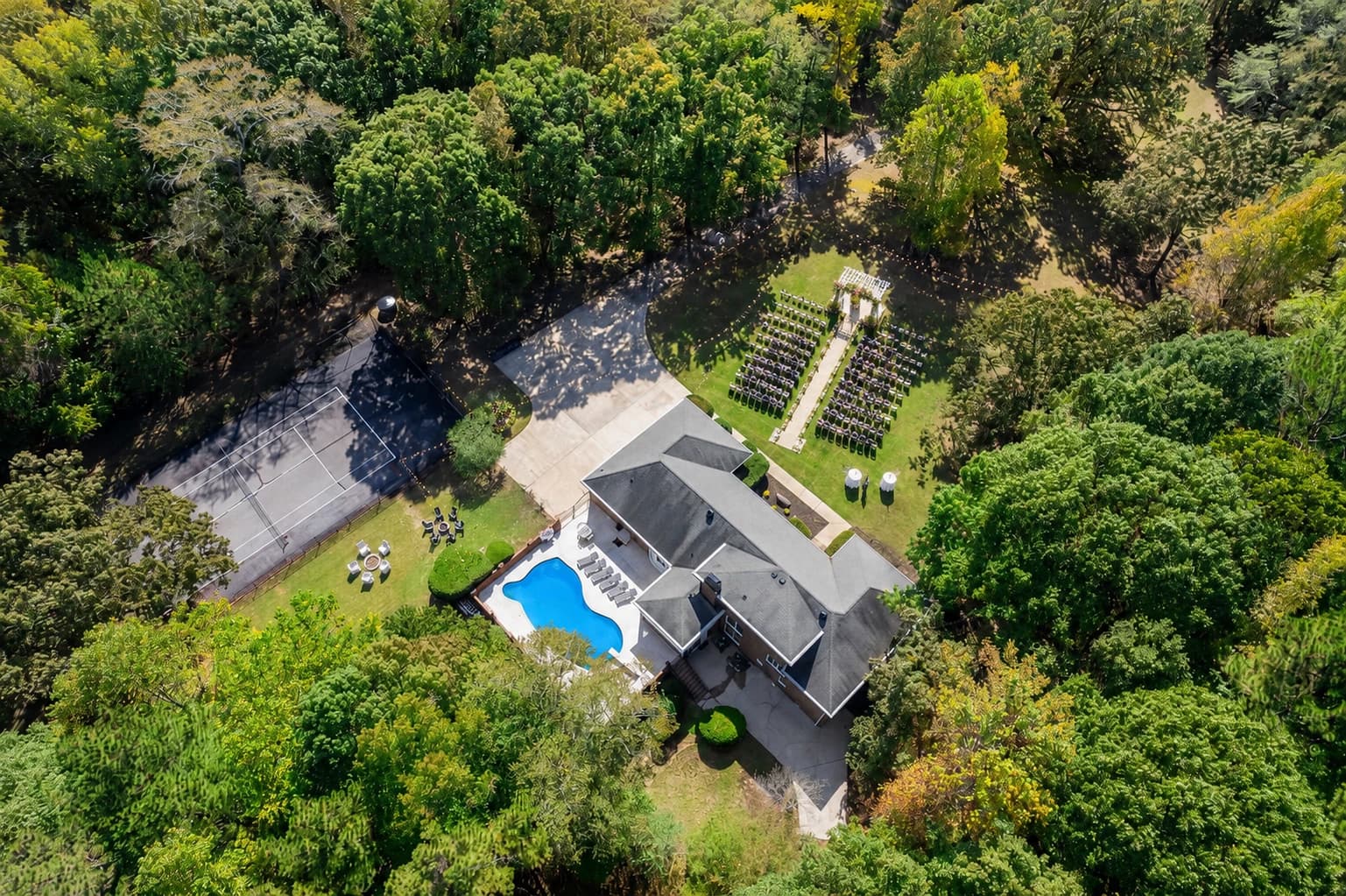
- The Hudson Valley historic estate in Sparrow Bush, New York is 110 private acres with a woodland ceremony site and a waterfront lawn, an 1895 estate that sleeps 16 and hosts up to 150 guests. Pricing starts at $19,000 for a two-night minimum. In mid October, that woodland ceremony aisle is lined in exactly the copper beech and oak tones we've been talking about, no decor budget required.

- For intimate weddings, the cliffside cabin overlooking Red River Gorge in Zoe, Kentucky hosts up to 60 guests on four wooded acres with a scenic overlook, starting at $4,988 for a two-night minimum on a weekday rate. Kentucky's gorge country in late October is one of the most underrated foliage displays in the country, and a ceremony at that overlook puts the entire canyon in your photos.
- The Catskills literary inn in Hobart, New York is an 1890 boutique inn with five themed suites that hosts celebrations up to 100 guests, starting at $5,555 for a 2-night minimum. It sits in a village of bookshops three hours from Manhattan, and it comes with the kind of built-in scenery (original woodwork, library corners, historic facades) that makes the scenic-wall trend redundant.
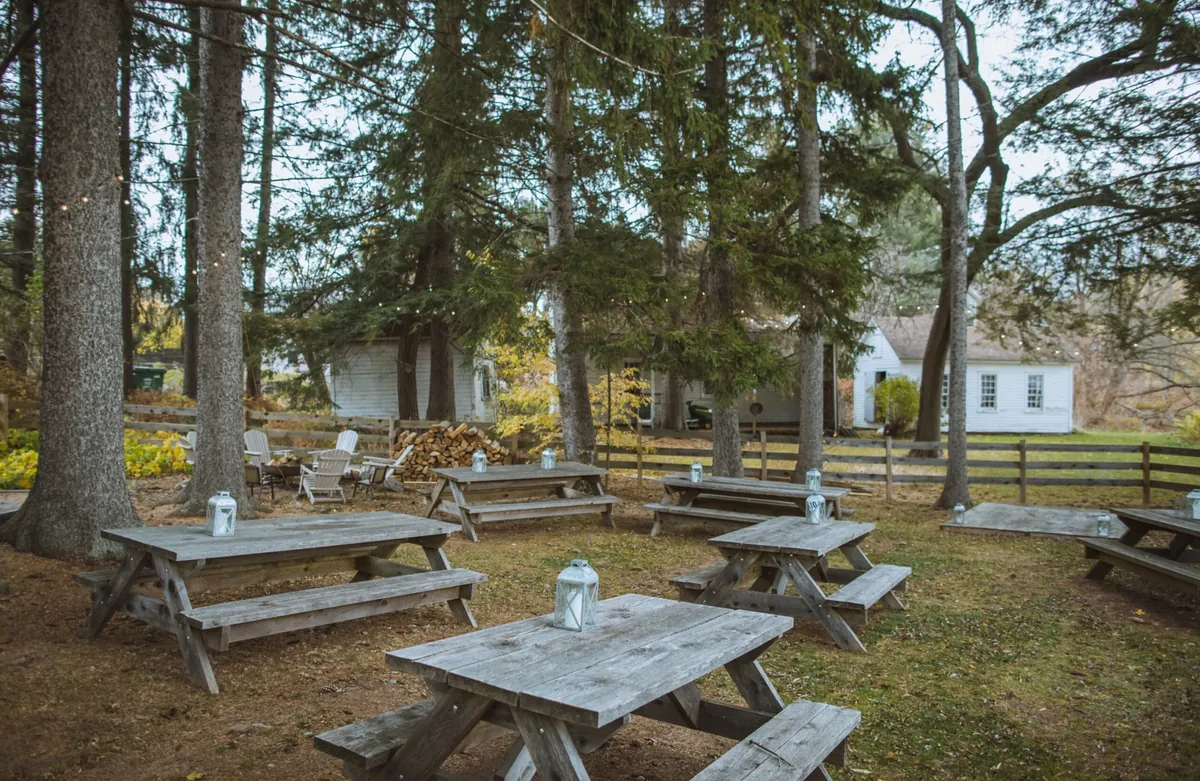
Notice the pricing pattern with these full-property venues: totals for a multi-night stay, not a single-day rental fee stacked on top of hotel blocks for your whole family. When you compare against a traditional venue, add the lodging math before deciding which one is expensive.

Fall Weather Planning That Saves Your Day
Fall weather is a design constraint, and pretending otherwise is how beautiful weddings fall apart. I learned this the expensive way. Confession time, part two: early in my career I built a ceremony arch with 300 stems of delphinium for a Lowcountry wedding, and it wilted in two hours because nobody told me the site had zero shade. Weather beats design every time you fail to plan for it. Now it's the first conversation I have, not the last.
Your fall-specific checklist:
The temperature swing. A sunny October afternoon at 68 degrees becomes a 45-degree evening fast. Plan the ceremony for warmth and the reception for cold. A basket of wool blankets at the ceremony (rolled, not folded, so guests actually take them) is the highest-ROI comfort spend in fall. Patio heaters near the bar and the dance floor edge, not the center of the tent where nobody stands still.
The early sunset. In mid October, sunset lands between 6:00 and 6:30 in most of the country, and by November it's before 5:00 in the north. Work backward from golden hour: if you want sunset portraits, your ceremony needs to end at least 90 minutes before sundown. Couples who copy a June timeline into October get their first dance in full darkness and their portraits under a parking lot lamp.
Wind and open flame. Every candle outdoors or in an open barn needs a hurricane sleeve or a lantern. One gust through open barn doors will take out forty naked tapers in a second, and relighting them mid-reception is nobody's job. Glass sleeves cost a couple dollars each to rent. Do it.
The rain plan you'd actually be happy with. Not "we'll squeeze into the garage." A real plan B: a tent with sides and a floor reserved by early September (tent inventory in foliage regions books out), or a venue with an indoor space you genuinely love. This is another quiet argument for estate venues with real indoor event space: the rain plan is already on the property and already beautiful.
Flowers in the cold, not the heat. Good news for once: fall is the easiest season on cut flowers. Cool air means arrangements built Friday still look fresh Sunday. That's part of why fall floral budgets stretch further, which brings us to money.
What a Fall Wedding Really Costs
Time for the math section, because fall pricing cuts both ways and almost nobody explains it honestly.
The bad news first. Because fall is the most popular season, September and October Saturdays are peak inventory. Venues, photographers, and planners in foliage regions price those dates at the top of their card, and the best ones book 12 to 18 months out. If you want October 10, 2026 in the Hudson Valley, you are competing for it, and competing costs money.
Now the good news, in three parts.
One: the calendar arbitrage. Demand falls off a cliff after the first weekend of November, but the season doesn't. Early November in the mid-South and Southeast still has color, still has 60-degree afternoons, and prices like the off-season The Knot's own winter guides describe, where vendors get less expensive across the board. A Friday or Sunday in late October, or any date in early November, can save four figures on the identical venue and vendor lineup.
Two: the flower dividend. An in-season fall floral order (dahlias, mums, zinnias, berry, and branch) simply costs less per stem than importing the same visual weight out of season. Add the fresh-to-dried mix and the cool-weather durability, and a fall couple can hit the same visual impact for 20 to 30 percent less than an equivalent February wedding. I once priced out a bride's Pinterest inspiration board at $47,000 in florals for a 200-person wedding. The fall-adapted version of that same board, in-season stems and dried texture doing the volume work, came in under half. Same feeling. Same photos. Different mortgage impact.
Three: the decor you don't buy. This is the structural advantage. A fall wedding at a venue with real scenery outsources your biggest decor line items to the space. Foliage is your ceremony backdrop. Early dark plus candlelight is your lighting design. The harvest table is your installation piece. Couples who choose the venue for its built-in beauty routinely spend a fraction of what a blank-ballroom couple spends, and their photos look more expensive, not less.
So here's my honest bottom line after 8 years of building these. Fall gives you the most popular season, the best light, the cheapest in-season flowers, and the 2026 trend direction handed to you by the calendar itself. The couples who get it right are the ones who stop decorating against the season and start designing with it. Pick the venue with the scenery, pick the palette with some depth to it, put your money in candles and dahlias, and leave the pumpkins on the porch where they belong.
Free Tools to Build Your Vendor Team
Finding the right vendors for a private property wedding takes specialized expertise. WedStay makes it simple.
🎯 Start PlanningBrowse Vetted Vendors, Only 15% of applicants accepted. 500+ vetted professionals across photographers, planners, caterers, and 8 more categories.Wedding Budget Planner, See exactly how much to allocate per vendor category based on your location and guest count.Wedding Venue Cost Calculator, Includes vendor add-on pricing for catering, DJ, flowers, hair & makeup, and more by region.Get the Free WedStay App, browse venues, plan, and book on the go.
Related guides:
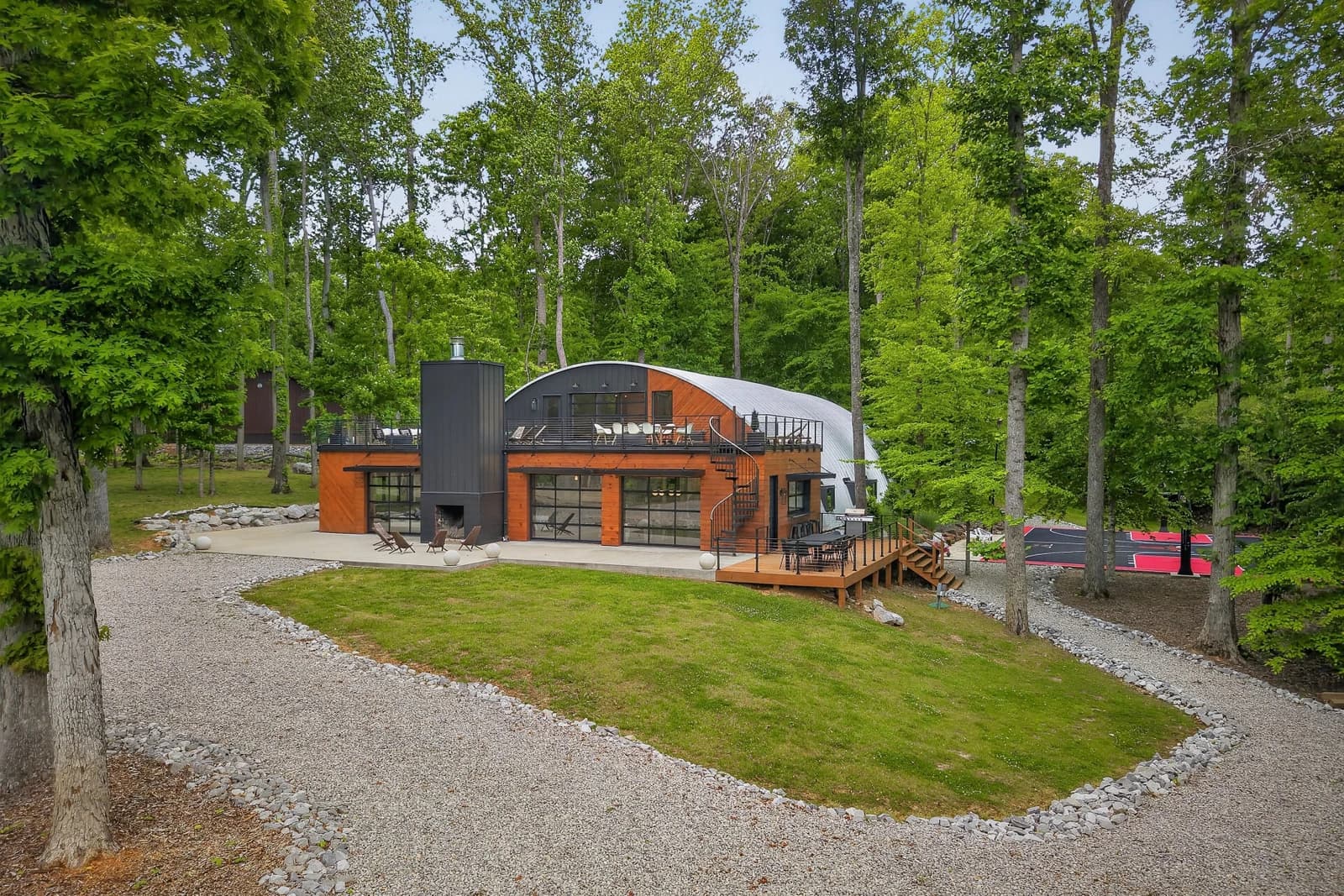
- A Private Estate Wedding House Just Outside Nashville, Complete with an Event Barn, Scenic Views, and Room to Celebrate All Weekend Long
- 10 Things Every Couple Should Talk About After Getting Engaged (Before You Pick the Cake)
- From Inspiration to Reality: Transforming Your Wedding Estate Rental into a Luxury Wedding Venue
Frequently Asked Questions
How far in advance should you book a fall 2026 wedding venue?
Twelve to eighteen months for a September or October Saturday, and honestly, the popular foliage weekends in regions like the Hudson Valley can go two years out. Since fall tops The Knot's data as the most requested season, treat the venue as the first domino: lock the date, then book the photographer and florist, who also cap how many fall weekends they take. If you are starting later than a year out, look at Friday and Sunday dates in the same month. They are usually still open and often priced lower.
Are fall weddings more expensive than summer weddings?
Often yes, at least for the venue. Because September and October are now the highest-demand months, many venues price them at or above June rates, so the old advice that fall is the discount season no longer holds. Where fall genuinely saves money is everything around the date: in-season flowers like dahlias and heirloom mums cost a fraction of imported spring stems, early sunsets mean candlelight replaces expensive lighting rentals, and a harvest-style food display pulls double duty as decor. If the total budget is tight, a November date keeps the fall look with softer venue pricing.
What time should a fall wedding ceremony start?
Work backward from sunset, not from tradition. In mid-October, most of the country loses light between 6:00 and 6:45 pm, so a 3:30 or 4:00 pm start puts the vows in soft light, gives you a full golden hour for portraits, and lands cocktail hour right as dusk hits and the candles take over. Push the start to 5:00 pm and you will be shooting family photos in the dark. Also check your exact date: sunset shifts about 20 minutes between early October and early November, and daylight saving time ends November 1 in 2026, moving everything an hour earlier overnight.
What is a good backup plan for an outdoor fall wedding ceremony?
Have a real one, not a hopeful one. Fall weather swings harder than summer: a 75-degree afternoon and a 45-degree evening can happen on the same date a year apart. Ask every venue you tour what the indoor or covered option actually looks like set up for a ceremony, and when the flip decision gets made, because a tent added last-minute in October costs far more than one reserved in advance. Then plan for cold guests, not just rain: a basket of blankets, a mulled cider station, and patio heaters near the bar keep people outside and happy through evening portraits.
Do wedding venues allow real candles at receptions?
Many do not, and you want that answer before you design an entire evening reception around candlelight. Historic estates, barns, and old inns, exactly the venues that suit a fall wedding, are the most likely to require enclosed flames, meaning tapers inside hurricane sleeves and votives in glass, or to allow LED only. Ask for the candle policy in writing when you tour, and clarify whether the rule is enclosed flame, no open flame, or no flame at all, because each changes what your florist can build. Good LED tapers have improved a lot, and they read best mixed into amber glass.
How much should you budget for fall wedding flowers?
Most full-service floral budgets land around 8 to 10 percent of total wedding spend, and the in-season advantage is what keeps a fall wedding at the low end of that range. Locally grown dahlias, zinnias, and heirloom mums cost a fraction of imported out-of-season stems like October peonies, which can run roughly four times their June price. Two moves stretch the money further: a 70/30 fresh-to-dried mix, and shifting spend from tall arrangements to a foliage-and-berry runner with fruit, which fills a long table for less. Give your florist a total number, not a Pinterest board, and let them allocate it.
Sources
1. The Etiquette of Having Children at Your Wedding, marthastewart.com
2. Wedding Checklists & Timeline, marthastewart.com
3. Summer Wedding Tips for the Perfect Warm Weather Celebration, vogue.com
4. Top Hors D'oeuvres Ideas for Your Event or Wedding Cocktail Hour, brides.com