How Much Does It Cost to Be a Bridesmaid in 2026?

Last month my sister-in-law called me with a question I hear a lot: "How much does it cost to be a bridesmaid?" She'd just said yes to her third wedding party in two years, and she wanted real numbers before her savings account said no for her. So I did what I always do. I opened a spreadsheet, pulled every data point I could find, and ran the math. The answer surprised even me: being a bridesmaid in 2026 costs between $1,500 and $2,400 for a typical wedding, and it can clear $3,000 when a destination bachelorette enters the picture.
That number has been creeping up for years while nobody was tracking it. WeddingWire's often-cited estimate put the average at $1,200, and that study is several years old now. Junebug Weddings pegged the 2024 range at $600 to over $2,000. And on wedding forums right now, bridesmaids are posting line-item tallies of $2,800 or more before the wedding day even arrives. The honor of standing next to your best friend has quietly become a four-figure financial commitment, and most people say yes before they've seen a single number.
This post is the breakdown I wish existed when my sister-in-law called. Every line item, who traditionally pays for what, where the budget actually blows up, and nine specific ways to bring the total down without being the difficult one in the group chat.
Quick Navigation
- The 2026 Bridesmaid Cost Breakdown
- Line-Item Analysis: Where Every Dollar Goes
- Who Pays for What in 2026
- The Bachelorette Party Is the Budget Killer
- How Group Lodging Changes the Math
- Nine Ways to Cut Bridesmaid Costs
- What Brides Can Do to Lower the Bill
- How to Say No Without Losing the Friendship
- Your Bridesmaid Budget Timeline
Key Takeaways
- Being a bridesmaid in 2026 costs $1,500 to $2,400 on average, and tops $3,000 with a destination bachelorette.
- A typical Scottsdale or Nashville bachelorette weekend runs about $725 per person, while Miami or Cabo clears $1,200.
- If the bride requires professional hair and makeup, 2026 etiquette says she pays; optional glam runs bridesmaids $150 to $300.
- A fully local wedding and bachelorette costs $800 to $1,200, nearly $1,000 less because travel and lodging drop to zero.
- For groups larger than six, splitting a private estate typically matches or beats mid-tier hotel rates per person.
The 2026 Bridesmaid Cost Breakdown
Let's start with the summary table, because that's how my brain works. These are realistic 2026 ranges for a US wedding, built from published industry data and the real tallies bridesmaids are sharing this year.
| Expense | Low End | High End |
|---|---|---|
| Bridesmaid dress | $130 | $300 |
| Alterations | $45 | $150 |
| Shoes and accessories | $50 | $150 |
| Hair and makeup | $150 | $300 |
| Bridal shower (gift + contribution) | $75 | $225 |
| Bachelorette party | $300 | $1,500 |
| Wedding gift | $50 | $150 |
| Travel and lodging for the wedding | $0 | $800 |
| Total | $800 | $3,575 |
Three scenarios fall out of that table:
- Local wedding, local bachelorette: $800 to $1,200. Everything happens in your city, you sleep in your own bed, and the bachelorette is a nice dinner and a night out.
- The 2026 standard: $1,500 to $2,400. A wedding within driving distance plus a weekend-away bachelorette. This is where most bridesmaids land now, and it's the range I quote when someone asks me the headline question.
- Destination everything: $3,000 and up. Flights for the bachelorette, flights for the wedding, three nights of hotels, and suddenly you've spent more on this wedding than the couple spent on their photographer's second shooter.
The data shows the biggest variable isn't the dress. It's geography. Every event that requires a flight roughly doubles your total, which is why I'll spend a whole section on the bachelorette party below.
Line-Item Analysis: Where Every Dollar Goes
Averages hide the details, so let's walk each line like an analyst would.
The dress: $130 to $300
The bridesmaid dress market has actually gotten more efficient. Direct-to-consumer brands now anchor the market around $100 to $150, while traditional bridal salon lines still run $200 to $300. The trap isn't the sticker price. It's that you don't choose it. The bride picks the designer and the color, and your budget rides along. If she chooses a $285 satin gown in a specific dye lot, that's your number.
One pattern I like in 2026: more brides are giving a color palette and letting each bridesmaid pick her own dress and price point. It photographs beautifully and it turns a fixed cost into a controllable one. If your bride hasn't decided yet, forward her this paragraph.
Alterations: $45 to $150
Almost nobody skips this line, and almost nobody budgets for it. A simple hem runs about $45. Taking in a bodice, adjusting straps, and adding a bustle-adjacent fix can push a bridesmaid to $150. For context, The Knot puts full wedding gown alterations at $150 to $800, with intricate beadwork clearing $1,000. Bridesmaids get off cheaper, but the alterations industry runs on the same 6 to 8 week timeline for everyone, so book your fitting 2 to 3 months out. Rush fees are how a $45 hem becomes a $90 hem.
Shoes, jewelry, and the "small stuff": $50 to $150
Individually these purchases feel trivial. A $60 pair of heels you'll wear once. A $25 pair of earrings to match the other five sets. $30 of shapewear. That's how "small stuff" quietly becomes a three-digit line item. My rule: before you buy anything under $75 for a wedding, add it to a running total in your notes app. Small numbers hide from memory. They can't hide from a list.
Hair and makeup: $150 to $300
Professional hair averages $75 to $100 per person and makeup runs about the same, so the day-of glam package lands between $150 and $200 in most markets, more in major metros. The etiquette here has genuinely shifted, and I'll cover who should be paying for this in the next section, because it's the single most argued-about line in the whole budget.
The bridal shower: $75 to $225
As a bridesmaid you're usually chipping in for the shower itself (venue, food, decorations, split among the wedding party) plus bringing a gift. Budget $50 to $150 for your share of hosting and $25 to $75 for the gift. If the maid of honor is organized, your share gets set early and stays fixed. If she's not, costs drift upward one "I'll just grab it and we can split it" text at a time.
The wedding gift: $50 to $150
Yes, bridesmaids still give wedding gifts. Etiquette experts agree that being in the wedding party doesn't waive the gift, though it's completely acceptable to scale it down given everything else you're spending. Analysis reveals most bridesmaids land between $50 and $100, versus the $100 to $150 typical for regular guests.
Travel and lodging: $0 to $800+
For a local wedding this line is zero, which is why the local scenario is nearly $1,000 cheaper. For an out-of-town wedding, you're looking at gas or a flight plus one or two hotel nights. At 2026 hotel rates, two nights near a wedding venue runs $300 to $500 in most markets before you've eaten a single overpriced hotel breakfast.
Who Pays for What in 2026
The traditional rule is simple: bridesmaids pay for everything they wear and everywhere they travel, and the couple covers the events themselves. But the etiquette has real nuance in 2026, and knowing it can save you hundreds.
Bridesmaids traditionally pay for:
- Their dress, alterations, shoes, and accessories
- Travel and lodging for the wedding
- Their share of the bachelorette party, plus the bride's share (split among attendees)
- Their contribution to the bridal shower
- A wedding gift and usually a shower gift
The couple traditionally pays for:
- Bridesmaid bouquets and any getting-ready outfits they want everyone in
- The rehearsal dinner and wedding-day meals
- Wedding-day transportation between venues
- Thank-you gifts for the wedding party
The gray zone, and where 2026 has landed:
Hair and makeup is the flashpoint. The emerging consensus among planners: if the bride requires professional hair and makeup, she pays for it. If it's optional, bridesmaids who opt in pay their own way. When my wife was a maid of honor last year, the bride required a specific makeup artist and covered all six services. That's not generosity anymore. That's the norm when it's mandatory. If your bride hasn't addressed it, ask early and politely: "Are we doing required hair and makeup, and if so how is that being handled?" One text, potentially $300 saved or at least known in advance.
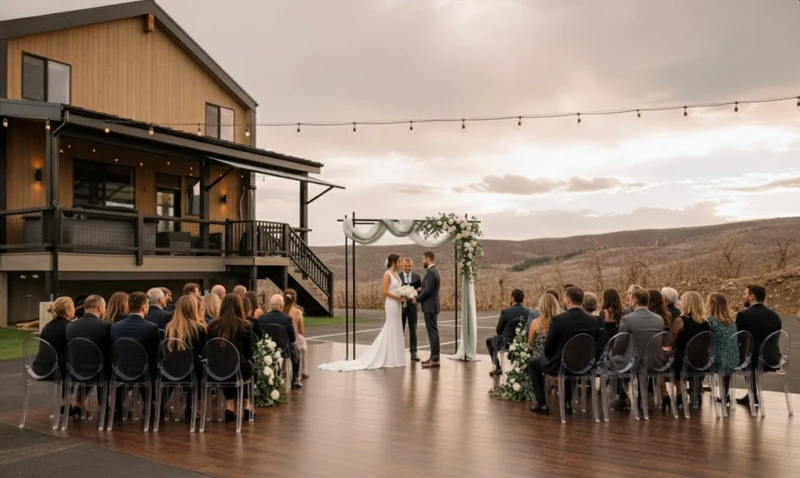
The Bachelorette Party Is the Budget Killer
Here's the line item that broke the historical averages. That old $1,200 WeddingWire number came from an era when a bachelorette party meant one big night in your own city. In 2026, the default has become a two-to-three-night destination weekend, and the numbers reflect it. Bridesmaids posting real tallies this year routinely report $600 or more for the bachelorette weekend alone, before flights.
Run the math on a typical Scottsdale or Nashville weekend: $250 round-trip flight, $200 for your share of lodging, $150 for dinners and drinks, $75 for activities, $50 for your share of the bride's costs, plus the matching shirts nobody wears again. That's $725 for one weekend, and it's not even the expensive version. A Miami or Cabo bachelorette clears $1,200 per attendee without trying.
The bachelorette is also where group dynamics inflate costs. Nobody wants to be the person who says "that's out of my budget" in a 9-person group chat, so the plan escalates to the comfort level of the highest earner. I've watched it happen in real time. The fix is structural, not personal: the maid of honor should collect anonymous budget ranges from everyone before anything gets booked, then plan to the median, not the max. Every group has a spread. Planning to the median keeps everyone in, and the data shows attendance is what makes a bachelorette good, not the zip code.
How Group Lodging Changes the Math
This is the part of the analysis where the numbers genuinely surprised me, and it applies to both the bachelorette and the wedding itself.
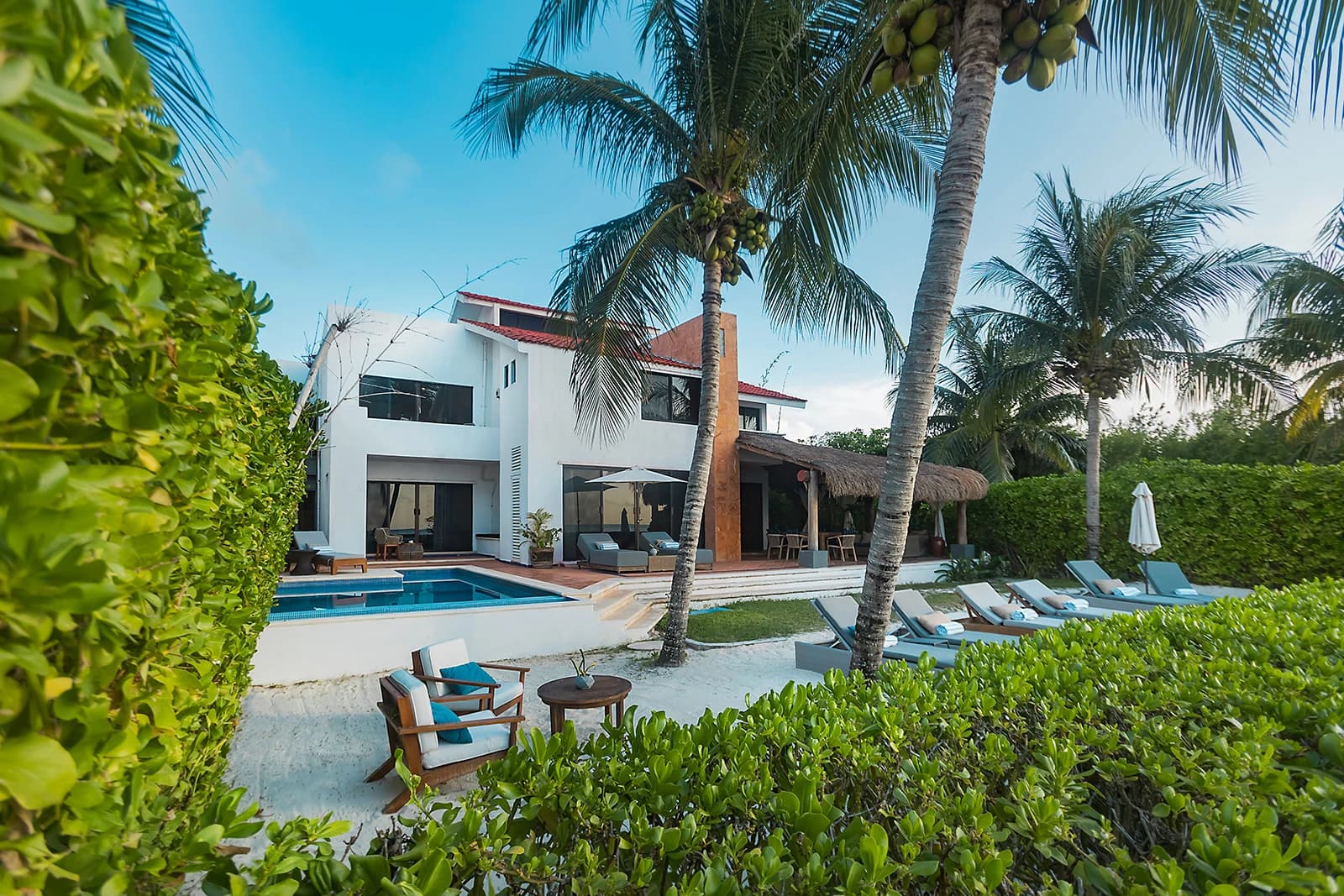
Hotels price per room. Estates price per property. When a group is bigger than about six people, that difference flips the math. Take a real example: a Palm Springs estate with pickleball courts, putting greens, and mountain views that sleeps 8. Split a private estate like that among 8 bridesmaids and you're typically at or below the per-person cost of mid-tier hotel rooms, except now the "venue" for the whole weekend is included. The pool party, the group dinners, the getting-ready space: all on-site, all included in the split. The bar tab drops too, because a grocery run replaces $19 resort cocktails.
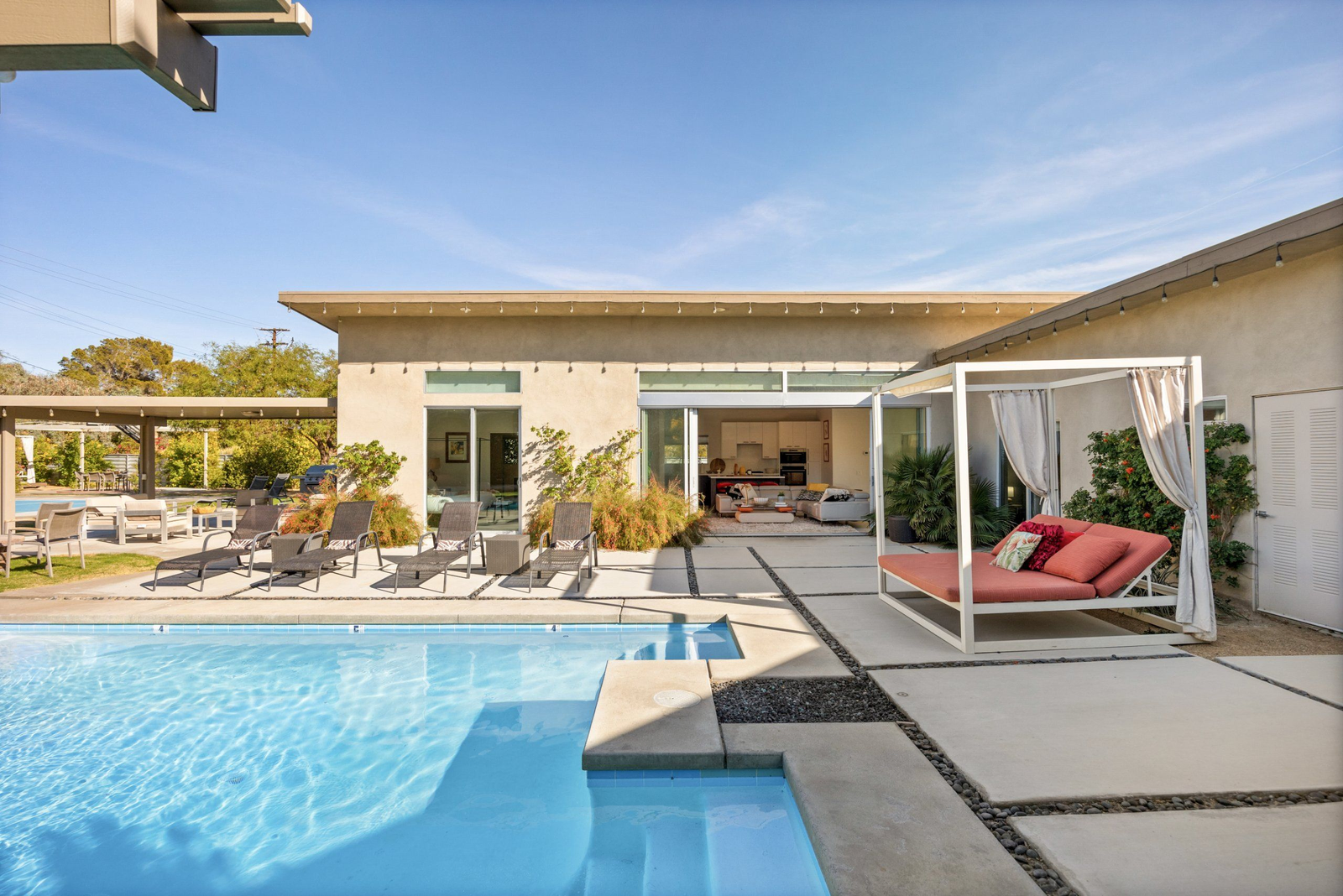
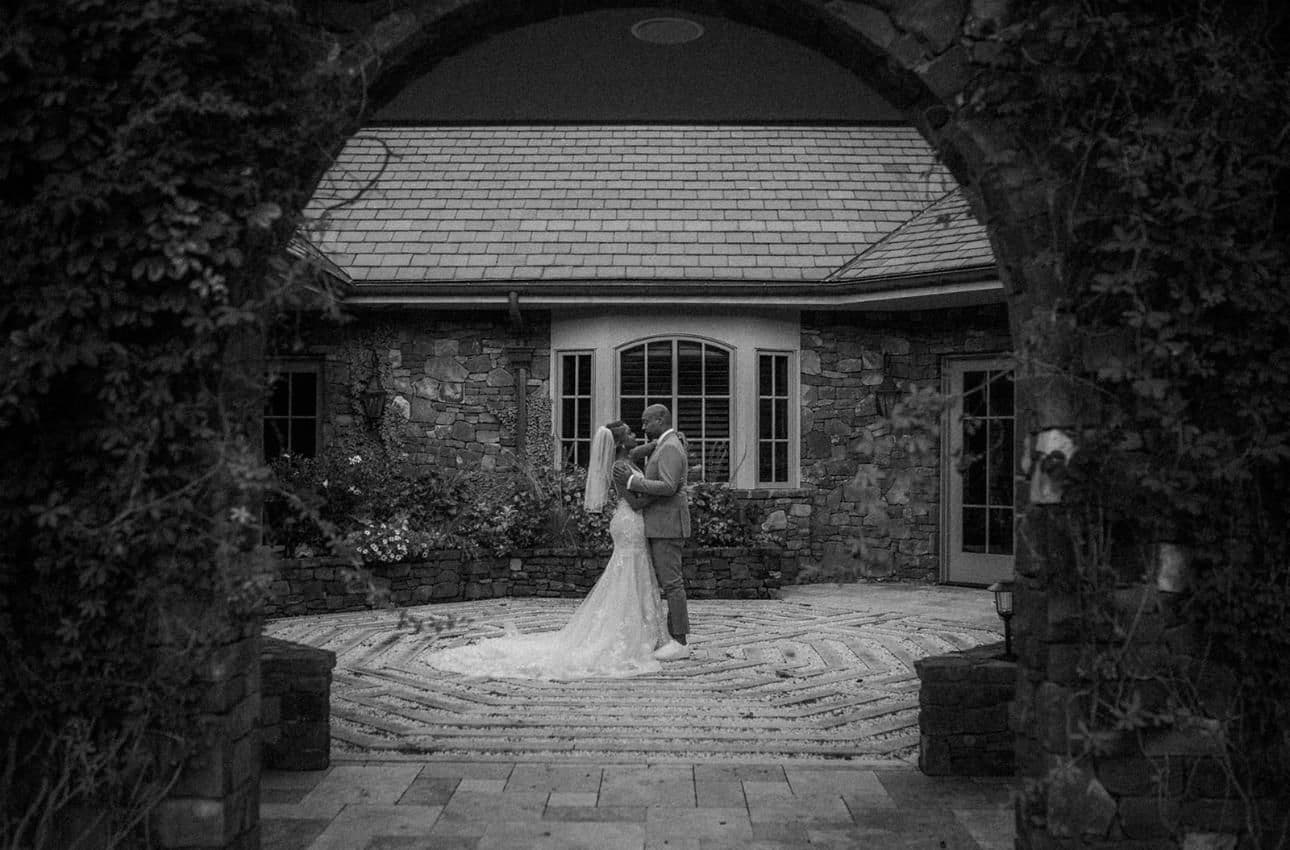
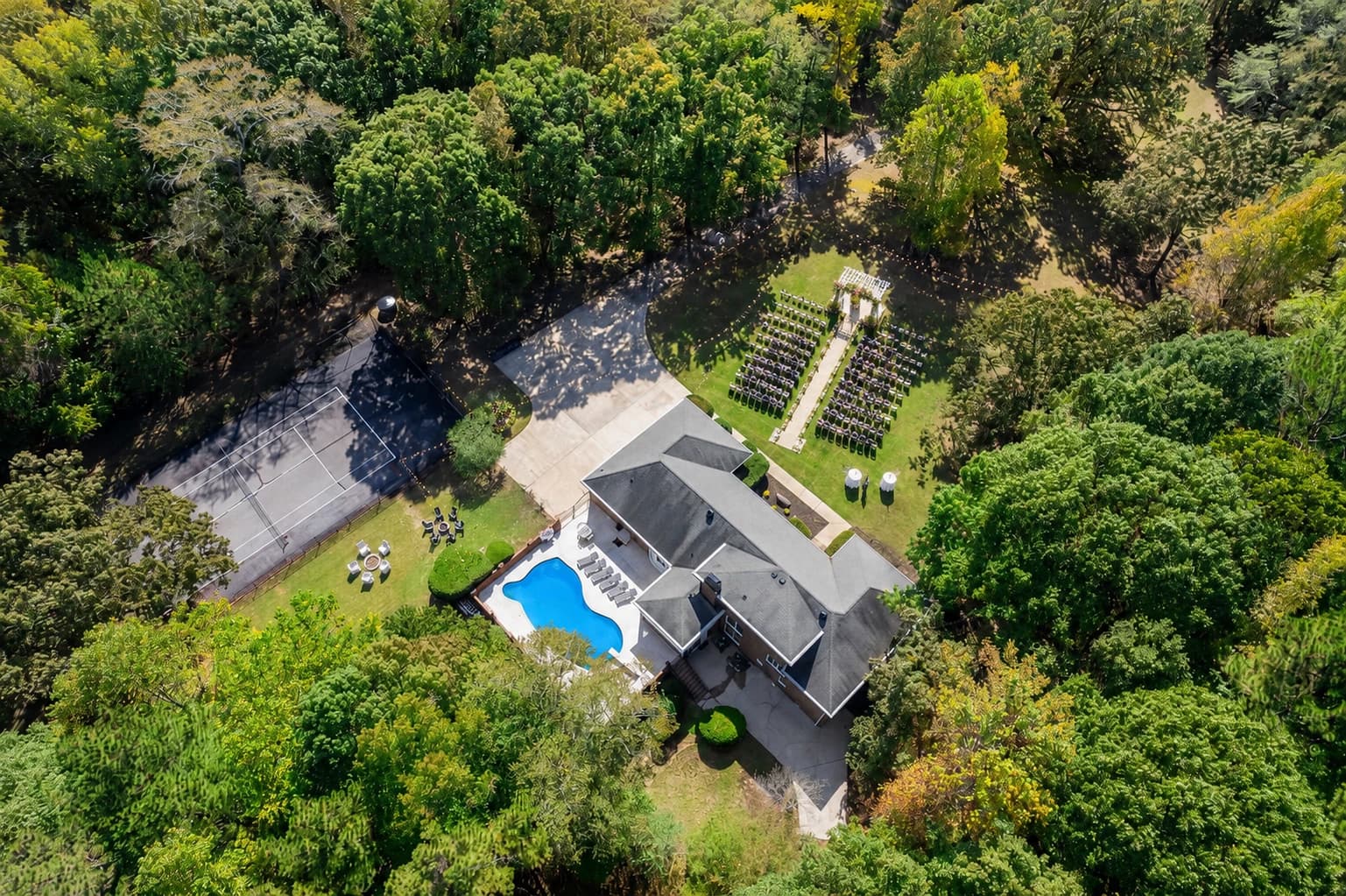
The same logic applies to the wedding weekend itself. When couples book a venue with on-site lodging, like this Hudson Valley historic estate with a woodland ceremony site and on-site inn that sleeps 16, the wedding party's hotel line can drop to zero or near it. That's a $300 to $500 saving per bridesmaid that the couple controls with one venue decision. For bigger wedding parties, properties like this Lake Keowee modern estate that sleeps 22 can house the entire wedding party and then some, with a game room and private dock doing double duty as the after-party.
If you're a bride reading this on behalf of your bridesmaids, this is the single highest-leverage cost decision you'll make for them. One booking eliminates the largest variable expense on their entire spreadsheet.
Nine Ways to Cut Bridesmaid Costs
Cost optimization is my favorite part of any budget, so here are the nine tactics with the best return, ranked roughly by dollars saved per unit of effort.
- Rent the dress. Rental platforms carry major bridesmaid lines for $40 to $90 against a $200+ purchase price. For a dress you'll wear for nine hours, renting is the single best ROI move on this list. Confirm the color match with the bride first.
- Buy secondhand. Bridesmaid dresses are the most "worn once, like new" category in all of fashion resale. Search the exact style and color name. Typical savings run 40 to 60 percent, and after the wedding you can resell it and recover half your cost again.
- Set your bachelorette number before the group chat starts. Decide your real maximum, tell the maid of honor privately, and let her plan around it anonymously. Budgets set before emotional momentum builds are budgets that hold.
- Push for the estate split. As covered above, group lodging at a private property beats per-room hotel pricing for groups of six or more, and it usually upgrades the experience while cutting the cost.
- Do your own makeup, book professional hair. If glam is optional, this hybrid saves $75 to $100 and photographs nearly identically. Hair holds all night in photos. Makeup you can replicate yourself with a good tutorial and the right setting spray.
- Book alterations the week the dress arrives. The 6 to 8 week standard timeline is your friend. Rush alterations carry 50 to 100 percent surcharges, and they're entirely avoidable with a calendar reminder.
- Give the couple a scaled-down gift without guilt. Etiquette is unambiguous here. Wedding party members can and should adjust gift spending to reflect their total outlay. A heartfelt $50 gift from a bridesmaid who spent $2,000 showing up for the couple is not a lesser gift.
- Split travel like an analyst. Share rides, split rooms two to a bed, and book flights the moment dates are announced. Airfare booked 3+ months out versus 3 weeks out is routinely a $100 to $200 difference per flight.
- Track everything from day one. Open a note or spreadsheet the day you say yes. The bridesmaids who get blindsided aren't the ones who spent the most. They're the ones who never added it up until it was over.

What Brides Can Do to Lower the Bill
If you're the bride, your decisions set roughly 80 percent of your bridesmaids' costs. They just execute the budget you design. Five choices with outsized impact:
- Give a palette, not a dress. Letting each bridesmaid choose her own dress within a color family turns a $285 mandate into a "spend what works for you" line. Mismatched-on-purpose is fully mainstream in 2026.
- Make glam optional, or pay for what you require. The modern rule: mandatory means you cover it.
- Book lodging into the venue. A property with on-site accommodations deletes the hotel line from every bridesmaid's budget in one decision.
- Keep the bachelorette drivable. A cabin or estate weekend within a two-hour drive costs each attendee half of what a flight destination does, and the group time is identical. That's the metric that matters.
- Say the numbers out loud early. The kindest thing my wife's friend did as a bride was send a message that said: "Here's roughly what this year will cost you, and here's what's optional." Nobody had to guess, and nobody quietly went into debt to stand next to her.
How to Say No Without Losing the Friendship
Sometimes the math just doesn't work, and I want to be direct about this because nobody else in the wedding content industry seems to be: declining a bridesmaid invitation for financial reasons is a legitimate, responsible decision. A recent forum thread that stuck with me tallied $2,800 of bridesmaid costs against a rent payment, and the poster's conclusion was that she couldn't afford both. That's not a friendship failure. That's arithmetic.
If the full role doesn't fit your budget, offer a scoped-down version: "I love you and I want to be there. I can't take on the full bridesmaid budget this year, but I'd be honored to do a reading, or I can be there for everything local even if I skip the destination bachelorette." In my experience, brides accept a clear, early, honest constraint far better than a bridesmaid who says yes, stresses for ten months, and resents the whole thing by the wedding day. Scope negotiation beats silent overcommitment every time. That's true in project budgets and it's true in wedding parties.
Your Bridesmaid Budget Timeline
Costs hurt most when they cluster. Here's how the spending actually distributes across a typical 12-month engagement, so you can smooth it out:
- Months 1 to 2 (saying yes): No major costs yet. Open your tracking sheet, tell the MOH your bachelorette budget range, and start setting aside $100 to $150 a month. That single habit funds the entire standard scenario painlessly.
- Months 3 to 6: Dress purchase ($130 to $300). Book wedding travel now if it requires a flight. This is your cheapest booking window.
- Months 6 to 9: Bachelorette weekend ($300 to $1,500) and bridal shower contribution ($75 to $225). This is the expensive quarter. Your early savings exist for exactly this stretch.
- Months 9 to 11: Alterations ($45 to $150), shoes and accessories ($50 to $150). Book the fitting 2 to 3 months before the wedding.
- Wedding month: Hair and makeup ($150 to $300), wedding gift ($50 to $150), and any final travel costs.
Spread across a year, the standard $1,500 to $2,400 scenario works out to $125 to $200 a month. Framed that way, it's manageable for most budgets. Discovered all at once in month eight, it's a crisis. The difference between those two experiences isn't the total. It's whether you ran the numbers on day one.
So when your friend pops the question with a cute proposal box and a "will you be my bridesmaid?" card, say yes if your heart says yes. Then do what my sister-in-law did: open the spreadsheet before you open the group chat. Future you, standing at the altar next to your best friend with zero financial resentment, will be glad you did.
Free Tools to Build Your Vendor Team
Finding the right vendors for a private property wedding takes specialized expertise. WedStay makes it simple.
🎯 Start PlanningBrowse Vetted Vendors, Only 15% of applicants accepted. 500+ vetted professionals across photographers, planners, caterers, and 8 more categories.Wedding Budget Planner, See exactly how much to allocate per vendor category based on your location and guest count.Wedding Venue Cost Calculator, Includes vendor add-on pricing for catering, DJ, flowers, hair & makeup, and more by region.Get the Free WedStay App, browse venues, plan, and book on the go.
Frequently Asked Questions
Is it okay to skip the bachelorette party if I can't afford it?
Yes, and it happens more often than group chats suggest. The bachelorette is the single biggest line item, with a typical Scottsdale or Nashville weekend running about $725 per person, so skipping it can cut your total by a third or more. The key is to decline early, before deposits are collected, and to offer an alternative like hosting a local dinner or joining for one night. Most brides care more about you standing next to them at the ceremony than about a weekend trip. A simple 'I can't swing the trip, but I'm all in for the wedding' lands fine when it comes with notice.
Does the maid of honor spend more than a regular bridesmaid?
Usually yes, often by $200 to $500. The maid of honor carries the same dress, alterations, and travel costs, but she also typically fronts deposits for the bachelorette and shower, absorbs planning extras like decorations and games, and gives a slightly larger gift. She also eats the cost when someone drops out after a nonrefundable booking. If you're asked to be maid of honor, budget toward the top of the $1,500 to $2,400 range even for a local wedding, and set a planning budget with the other bridesmaids in writing before you book anything.
Should the bride ever pay for the bridesmaid dresses?
Tradition says bridesmaids buy their own dresses, and that's still the norm in 2026. But etiquette is shifting toward the same logic as hair and makeup: the more control the bride takes, the more of the cost she should absorb. If she insists on a specific $285 designer gown in an exact dye lot, covering part or all of it is a gracious move, and some brides now pay for dresses instead of giving a thank-you gift. If she gives a color palette and lets you pick your own dress and price point, paying your own way is fair since you control the number.
How far in advance should I start saving to be a bridesmaid?
Start the month you say yes, ideally 9 to 12 months before the wedding. Spread across ten months, the typical $1,500 to $2,400 commitment works out to $150 to $240 a month, which is manageable. Compressed into the final three months, it becomes a credit card problem. Front-load for the dress and bachelorette deposits, which usually come due 4 to 6 months out, and remember alterations need booking 2 to 3 months before the wedding to avoid rush fees that can double a $45 hem.
Can I back out of being a bridesmaid after I already said yes?
You can, but do it early and honestly. The cleanest exits happen before the dress order and bachelorette deposits, when nobody loses money. Be direct about the reason, whether it's finances, work, or a conflict, and offer to attend as a guest and help in a cheaper role like managing the guest book or day-of logistics. What damages friendships isn't stepping down, it's ghosting the group chat or dropping out two weeks before the wedding when your absence leaves the bride scrambling. If money is the issue, say so plainly. Many brides would rather quietly cover a cost than lose a friend from the lineup.
Who pays for the bride's costs at the bachelorette party?
The attendees split them, and it adds up faster than most people expect. The standard practice is that the bride pays nothing for her own bachelorette, so her share of lodging, dinners, drinks, and activities gets divided among everyone else. In the post's Scottsdale example, that's about $50 per person, but on a Miami or Cabo trip the bride's covered share can hit $150 or more each. Some groups now cover only the bride's activities and drinks while she pays her own flight and lodging, which is a reasonable compromise for destination trips. Agree on the approach before anyone books.
Sources
1. The Etiquette of Wedding Rehearsal Dinners · marthastewart.com
2. Wedding Dresses and Fashion Accessories 2025 · harpersbazaar.com
3. Wedding Costs: Who Pays for What Traditionally? · brides.com
4. The Complete Guide to Planning a Wedding · brides.com