How Much Does a Bachelorette Party Cost 2026

I have coordinated weddings in fourteen countries, and the single most predictable argument I see has nothing to do with the wedding. It is the bachelorette party cost conversation, and it usually happens in a group chat at 11pm, three months out, between people who love each other and are about to feel very weird about money.
Here is the thing nobody says out loud. The number in that group chat is almost never the number anyone actually pays.
I want to walk you through the real figures, where they come from, and why the gap between the quote and the final Venmo request is so wide. Bueno, let's do the math properly.
Quick Navigation
- What a Bachelorette Party Actually Costs Per Person
- Why Two Days and Four Days Are Different Budgets
- Flying Versus Driving Changes the Whole Number
- The Guest Count Trap Between Eight and Ten
- What the Group Chat Quote Leaves Out
- Cost by Destination Across Five Popular Cities
- Who Pays for the Bride and What It Adds
- How to Split the Bill Without Resentment
- Why One House Beats Ten Hotel Rooms
- A Realistic Budget Template for Ten Guests
- How to Cut the Cost Without Cutting the Fun
Key Takeaways
- Bachelorette attendees spend $1,300 per person on average, up $600 from 2019, though most spend under $1,000.
- Guests who fly spend $2,000 on average versus $900 for those who drive, the single biggest cost variable.
- Adding guests 9 and 10 raises lodging per head 20.5% to 37.2% by forcing a jump to a six-bedroom rental.
- Bookable costs like flights and the house are only about 37% of the real bill; groceries, bars, and swag make up the rest.
- Covering the bride adds $260 per guest in a four person group but only $87 in a fourteen person group.
What a Bachelorette Party Actually Costs Per Person
The most useful hard number we have comes from The Knot's Bach Study, which surveyed 500 US respondents who had attended or planned to attend a bach party, fielded in July 2023. Average spend for a bachelorette attendee: $1,300 per person. That was a $600 jump from 2019, which is a genuinely enormous increase over four years.
For context, bachelor parties came in higher at $1,500 per attendee, up $440 over the same stretch. Across both kinds of party the average was $1,400.
But an average is a lousy planning tool, and this one hides a very lopsided distribution. The majority of bachelorette attendees actually spent less than $1,000. Meanwhile 1 in 10 spent over $3,000.
Read that again, because it matters. Most people spend under a thousand. A tenth of people spend three times the average. The "typical" bachelorette party in the data barely exists as a real event. What exists are cheap local weekends and expensive fly-in weekends, and the average is just the midpoint of a canyon.
A few more figures from the same study worth having in your head:
- 64% of attendees spent more than $400
- In pricier major metro destinations, that figure climbed to 82%
- 29% of celebrants in a major metro spent $2,000 or more
- 37% of all bach party attendees spent over $1,000 (34% of female attendees specifically)
- The average party had 10 attendees
- The average party lasted 2 days
That last one surprises people. Two days. Not the four day Scottsdale odyssey that lives in your head from Instagram. Though 15% of bachelorettes do run four days or longer, and those are the ones you see photographed.
Why Two Days and Four Days Are Different Budgets
The study split spending by length, and the split is clean.
One to two days: $1,135 per person. Three to four days: $1,630 per person.
That is a $495 difference, which is about what a lot of people were hoping the entire weekend would cost. Every extra day adds lodging, adds two or three meals, adds a bar tab, adds an activity, adds a rideshare or four.
What nobody tells you about trip length is that the marginal day is usually the worst value. Day one has the arrival energy. Day two has the big planned thing. Day three is often the day everyone is tired and expensive and ordering room service. I have watched this happen in San Miguel de Allende, in Tulum, in Charleston. The third day is where the budget quietly goes to die.
If you are the maid of honor trying to protect people's wallets without saying "you are all broke," cutting one day is the cleanest lever you have. It is invisible in the photos and obvious in the bank account.

Flying Versus Driving Changes the Whole Number
Okay, so if you only remember one line from this entire post, make it this one.
Guests who flew to the bachelorette destination spent an average of $2,000. Guests who drove spent $900.
That is not a small gap. That is more than double. And it is a bigger swing than length of trip, bigger than group size, bigger than city.
The reason is structural. Airfare is a fixed per-person cost that does not shrink when your group grows, and it drags a bunch of secondary spending with it: airport parking, the bag fee, the $19 airport sandwich, the rideshare from the airport, the "well I flew here so I might as well" attitude toward the dinner bill. One analysis modeling a 2026 fly-in weekend put average airfare at around $428 per guest before anyone books a single activity.
This is the part where I confess something. I once helped plan a group trip where I optimized the house rental for weeks, saved everyone maybe $60 each, and completely ignored the fact that half the group was flying in from the East Coast during a holiday weekend. The flights cost more than the accommodation. All that spreadsheet work for $60. La verdad, I felt ridiculous.
So: pick the destination around where people already are. A drivable location with a mediocre skyline will beat a gorgeous flyable one on cost every single time.
The Guest Count Trap Between Eight and Ten
This one is genuinely counterintuitive and almost nobody plans for it.
You would assume that adding guests lowers the per person cost, because you are splitting a house more ways. That is true right up until you cross a bed threshold, and then it inverts hard.
A 2026 analysis modeling five popular bachelorette cities found that moving a group from 8 guests to 10 raised the lodging cost per head by 20.5% to 37.2% in four of the five markets. Austin rose 20.5%, Nashville 21.6%, Miami 24.9%, Scottsdale 37.2%. Las Vegas showed an 83.3% jump, though the analysts flagged that one as an upper bound rather than a clean quote, because the largest homes there get lumped into a single six-plus-bedroom category that blends very different properties.
Why does this happen? Because the eleventh body (ten guests plus the bride) forces you out of a five bedroom house and into a six bedroom house, and that step up in the rental market is steep. You are not paying for one more bed. You are paying to enter an entirely different tier of property.
The same model found the per person cost curve is not even monotonic. Using their Nashville numbers for the bookable portion of a three night fly-in weekend, a 10 guest party came out at $734.56 per person, while an 8 guest party came out at $706.58 and a 6 guest party at $720.95.
So the practical guidance is blunt: if your group is sitting at eight and two more people ask to come, the honest answer is that it will cost everyone more, not less. Say that kindly, but say it.
Where the math flips back in your favor is at the top end. A 14 guest party spreads the big house across enough people that the per head number drops again. It is the awkward middle, right around that bed threshold, where groups get punished.
What the Group Chat Quote Leaves Out
Here is the gap I mentioned at the top, quantified.
For a fly-in bachelorette weekend, the 2026 analysis found that everything with a published, lookup-able price (flights, the house, two booked activities) came to about $735 per guest in Nashville. What bachelorette guests who flew actually reported spending, per The Knot: $2,000.
The bookable portion is roughly 37% of the real bill.
The other 63% lives in categories nobody prices in advance:
- Groceries and the first big Costco run
- Every restaurant meal that was not a "planned dinner"
- The bar tab, which is never one bar tab
- Rideshares, which multiply with group size and alcohol
- Outfits bought specifically for the theme
- Decorations, balloons, custom banners
- Matching pajamas, hats, sashes, the whole industry of it
- A gift for the bride
- Tips
- Whatever the group spontaneously decides to do on day two
The Knot's data backs up how real that swag line is: nearly half of bachelorette parties purchase favors and customized items. That is not free.
The maid of honor quotes the house and the flights because those are the two things she can actually look up. She is not being dishonest. She is being structurally unable to quote the invisible 63%.
The fix is a sentence, not a spreadsheet: "The house and flights are $735. Plan for roughly $1,800 to $2,000 all in." Some people will drop out. Better now than resentfully, later.
Cost by Destination Across Five Popular Cities
The same 2026 model ran identical bookings (10 guests, three nights, everyone flying, two booked activities each) across five of the most popular bachelorette markets. Per guest, bookable portion only:
- Nashville: $734.56
- Austin: $808.98
- Miami: $924.50
- Las Vegas: $935.90
- Scottsdale: $1,122.80
Scottsdale runs 53% above Nashville on identical bookings, and the house drives most of that gap. Same group, same number of nights, same two activities, and one city costs each guest nearly $400 more before a single cocktail.
I find this chart clarifying because it removes taste from the conversation. Nobody has to argue about whether Nashville is more fun than Scottsdale. You can just look at what the same trip costs in each place and let the group decide whether the difference is worth it to them.
A note on what these numbers are not: they model a public rental market, not any one property. When you rent a whole estate for a weekend, you are booking a total for a minimum stay, and that total varies enormously by property, season and region. Always price the actual house you want rather than a market average.
Who Pays for the Bride and What It Adds
Now the etiquette question that causes actual fights.
Traditionally the guests cover the bride's costs. The question is what "costs" means, and the two common interpretations produce very different bills.
The 2026 analysis modeled both, applied to The Knot's surveyed $1,300 per attendee figure. At the average group size of 10 guests:
- If the bride pays for nothing at all, covering her costs each guest an extra $118
- If she pays her own airfare and the group only absorbs her lodging and activities, it costs each guest about $28
Both are real arrangements. The second one is what most destination groups actually do, based on how couples describe it in forums and comment threads.
The part that catches people out is how much this scales with group size, and in the direction you would not guess. Smaller groups pay more:
- 4 guests: the bride's share works out to $260 each, a 25% markup on what each guest would otherwise pay
- 6 guests: $186 each, 16.7% markup
- 8 guests: $144 each, 12.5%
- 10 guests: $118 each, 10%
- 12 guests: $100 each, 8.3%
- 14 guests: $87 each, 7.1%
If you have ever wondered why the intimate six person bachelorette felt disproportionately expensive, this is a big part of the answer. Fewer people carrying the same extra share.
And on a $2,000 fly-in budget the numbers get bigger: the bride's share lands at $400 per guest in a four person party, $182 per guest in a ten person party.
Say the number out loud before anyone books. "Covering the bride adds $28 to $118 each, depending on what she is paying for herself" is a completely normal sentence. Discovering it on a Venmo request is not.
How to Split the Bill Without Resentment
The logistics breakdown I give every maid of honor who asks:
Designate one keeper of the budget. One person holds the spreadsheet and the card. Not three people each booking different things, which is how you end up with four separate reimbursement threads and one friend who never gets paid back.
Collect a deposit before you book anything. People commit differently once money has moved. A $200 deposit converts "I am definitely coming!" into actual attendance data.
Set the number before the theme. Every group I have watched blow past budget started by picking a destination and then discovering the cost. Do it in the other order. Ask what everyone can comfortably spend, take the lowest comfortable number seriously, and build the trip to fit it.
Give people a private way to say no. Not everyone can say "that is too much for me" in a group chat of twelve. A direct message asking each person individually, before any group discussion, gets you honest numbers.
Split by category, not by receipt. Trying to itemize who ate what turns a vacation into an audit. Agree up front: house split evenly, groceries split evenly, individual bar tabs are your own.
Be careful with the payer count. Splitting a total across the number of people paying rather than the number of people present adds roughly 10% to each guest's share in a ten person group. It is a small technical difference that people feel as unfairness if it is not explained.
Why One House Beats Ten Hotel Rooms
Hotels were still the most common bachelorette lodging in The Knot's data at 40% of attendees, but whole home rentals have been growing, and the study found affordability was the top priority for people choosing bach party lodging.
The math is not complicated. Ten hotel rooms is ten separate bills that do not get cheaper when you add people. One house is one bill split among everyone, and the more beds it has, the lower each share gets (right up to that bed threshold cliff we covered).
The less obvious advantage is everything that happens around the booking. A house has a kitchen, which means breakfast is groceries instead of a restaurant for ten. It has a living room, which means the late night part of the night is free instead of a bottle service minimum. It has a pool or a yard, which means the daytime activity can be nothing at all, which is often what an exhausted group actually wants.
I have coordinated enough group travel to say this plainly: the weekends people remember fondly are not the ones with the most booked activities. They are the ones with one great planned thing per day and a beautiful place to be tired in.
A few properties that work well for this kind of weekend:
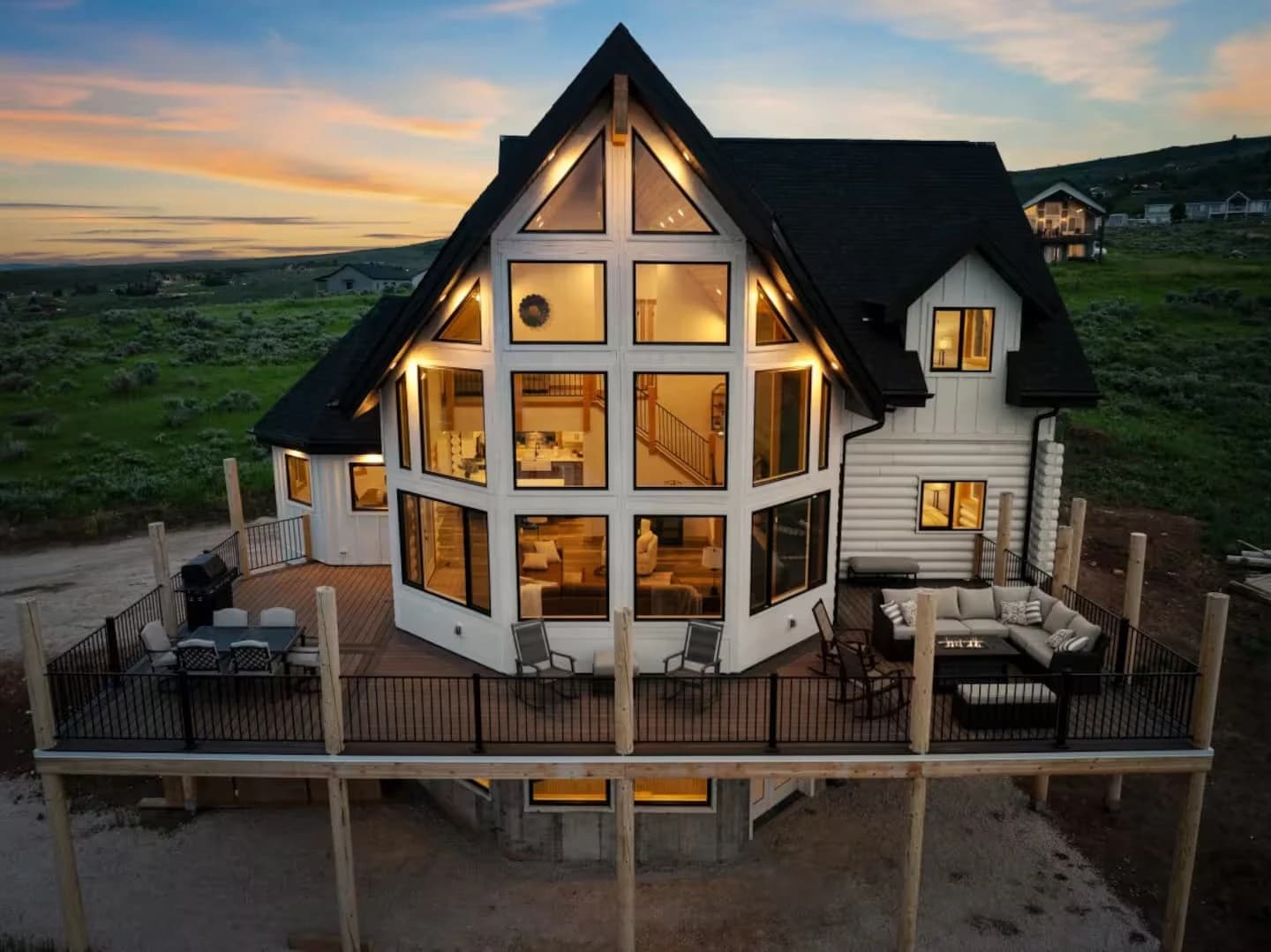
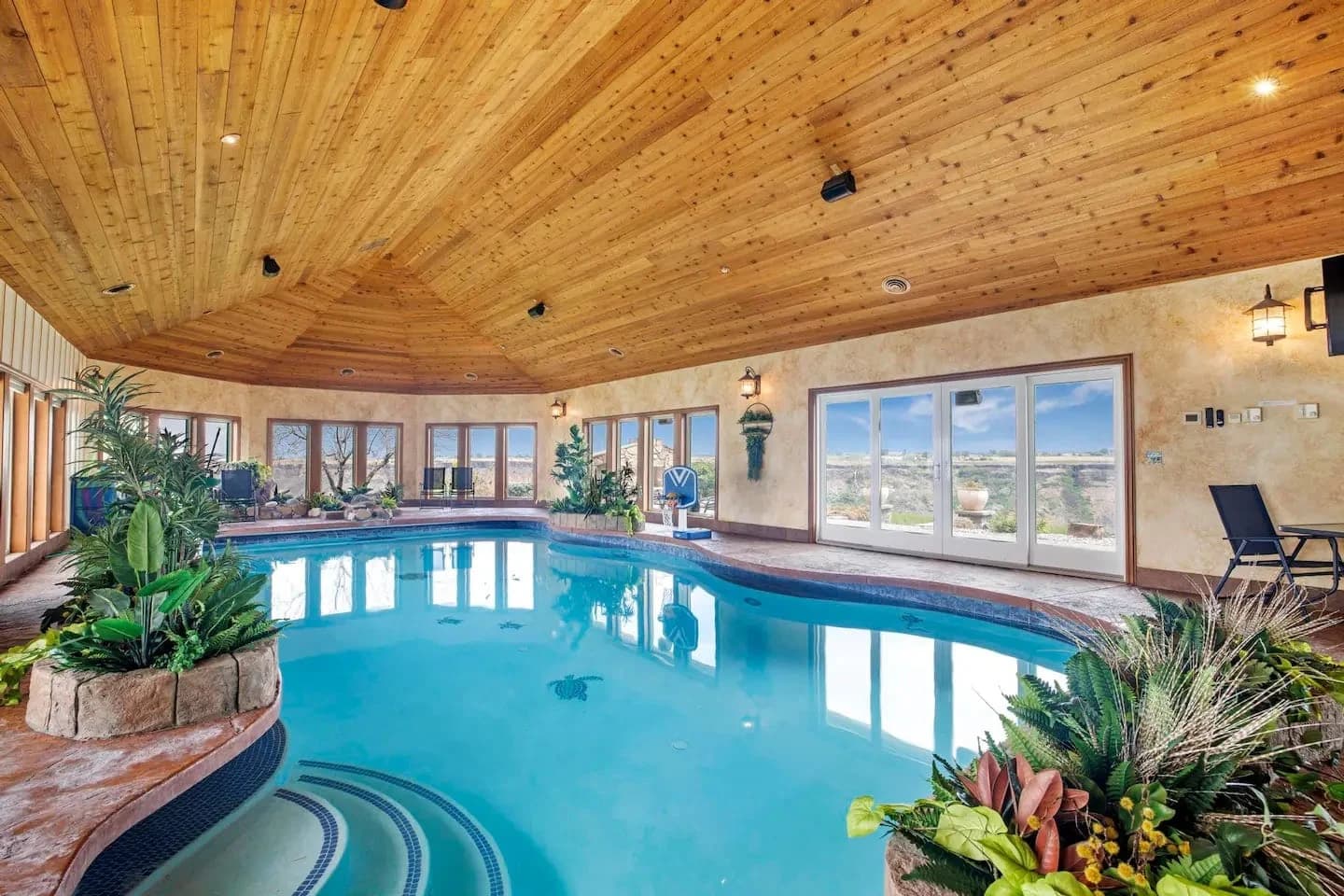
- This Santa Cruz Mountains villa with an infinity pool and a private theater sleeps 12, which sits right in the sweet spot before the bedroom tier jump, and the Monterey Bay views mean the "activity" on day two can genuinely be sitting down.
- For a group that wants Nashville without Broadway pricing, this 14,000 square foot estate near Nashville with an event barn sleeps 24 and sits on rolling hills in Franklin, about half an hour from downtown.
- In Texas, this Austin Hill Country wedding house with a pavilion and flex event barn sleeps 26, which puts a big group firmly in the range where per person costs start dropping again.
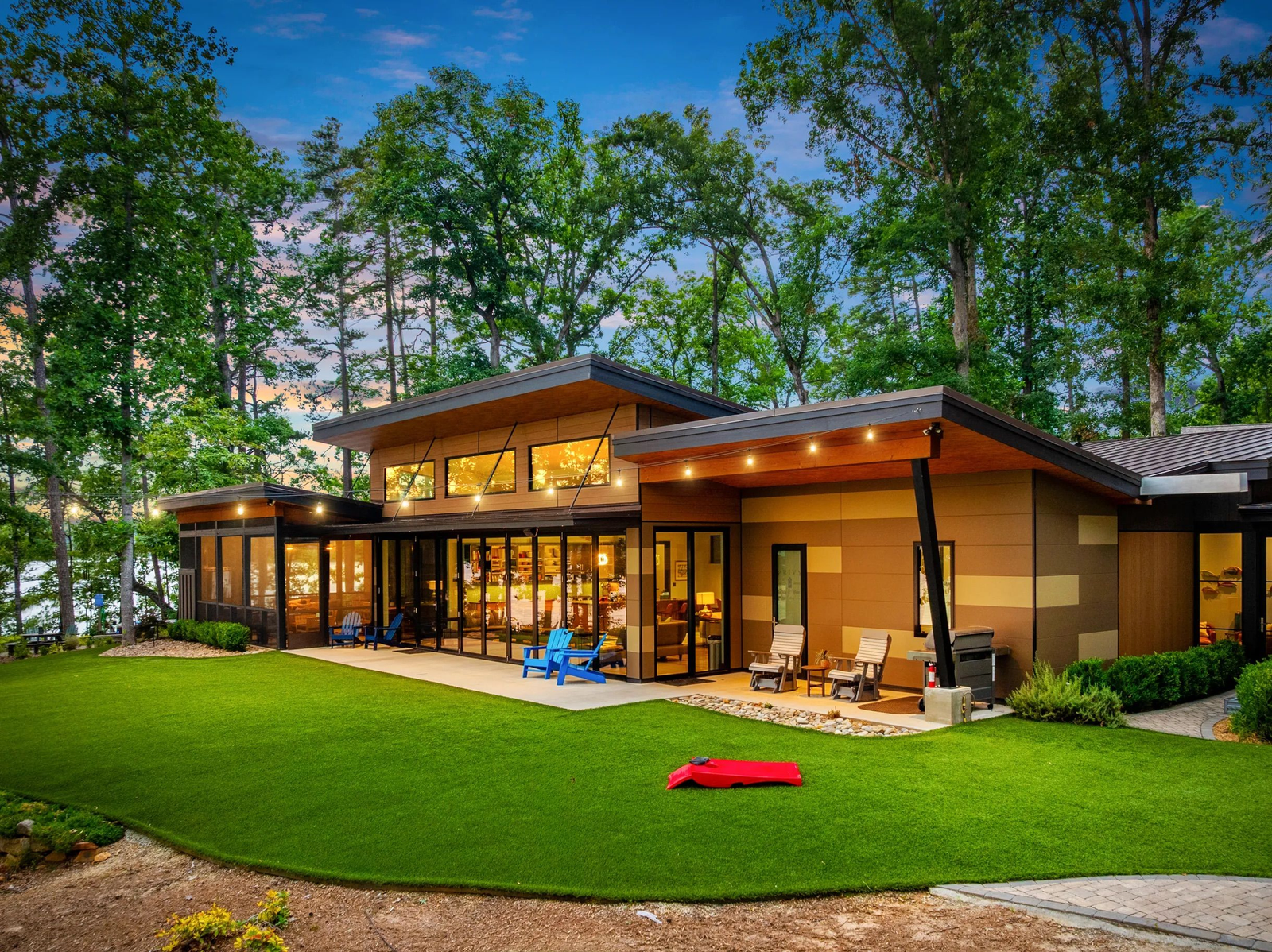
- If the group wants water, this Lake Keowee modern estate with a game room and private dock sleeps 22 in upstate South Carolina, drivable from Atlanta, Charlotte and Greenville.
One booking note that trips people up: whole property rentals are priced as a total for a minimum stay, commonly two nights and sometimes three, so the quoted figure already covers the weekend. Price the actual weekend you want, then divide by your group.

A Realistic Budget Template for Ten Guests
Let me build the honest version of the number, using a drivable destination and a three night weekend for ten guests. This is the structure, not a quote, because your house and your city will move these lines.
The bookable third:
- Travel: $0 to $150 if driving, roughly $428 if flying (2026 modeled average)
- Lodging share: varies by property, but budget $150 to $300 per person for the weekend total divided by the group
- Two booked activities: $120 to $200 per person
The invisible two thirds:
- Groceries and the first big store run: $60 to $100 per person
- Restaurant meals (two dinners, one brunch): $150 to $250
- Bar and drinks: $100 to $250, and be honest with yourself here
- Rideshares and local transport: $40 to $80
- Decor, theme items, matching anything: $30 to $80
- Gift for the bride: $50 to $100
- Bride's share, split across the group: $28 to $118
- Buffer for the thing nobody planned: $100
Run those ranges and a drivable three night weekend lands somewhere around $850 to $1,500 per person. Which brackets The Knot's $900 driving average neatly, and tells you that the average is not a floor. It is achievable if you build the trip deliberately and it is easy to exceed if you do not.
For a fly-in version of the same weekend, add the airfare and then add a little more, because flying changes behavior as well as cost. The $2,000 figure in the survey data is not an outlier. It is what happens.
How to Cut the Cost Without Cutting the Fun
There are exactly two levers that move the number meaningfully, and everything else is rounding.
Lever one: cut a day. Going from three or four days to one or two dropped average spend from $1,630 to $1,135 in the survey data. Nothing else you do will save $495 per person.
Lever two: pick a drivable destination. Driving instead of flying is the difference between $900 and $2,000 per attendee. Again, nothing else comes close.
After that, the smaller moves, in rough order of how much they actually help:
- Stay under the bed threshold. If you can do it with eight or fewer, or go big enough to be well past it, you avoid the 20% to 37% per head penalty of squeezing into the next house tier.
- Cook two meals in. A house kitchen plus one grocery run replaces two restaurant bills for ten people. That is real money, and brunch at the house is usually nicer anyway.
- Pick one paid activity, not four. The group will remember the one good thing. They will not remember the third thing.
- Skip the custom swag or make it, not buy it. Nearly half of bachelorette parties buy favors and personalized items. It is one of the easiest lines to cut and one of the least missed.
- Book together, once. One house on one card, split among the people chipping in, avoids ten separate bookings and ten separate cancellation policies.
And one last thing, because I think it gets lost in cost guides like this one. The Knot found that 4 in 5 bach party attendees were genuinely excited to go, mostly because they wanted to see their friends. The spending is not the point and was never the point. It is just the thing that gets in the way.
Plan the weekend your group can actually afford without flinching, say the numbers out loud early, and the rest of it takes care of itself.
Free Tools to Plan Your Budget
Take the guesswork out of wedding finances with tools built on real pricing data and trusted by thousands of couples.
🎯 Start PlanningWedding Budget Planner, AI-powered allocations based on your city, guest count, and style. Real-time tracking, cloud sync, and export, free forever.Wedding Venue Cost Calculator, Compare all-inclusive estate pricing vs. traditional venues. See what a wedding costs in your region with real data.Browse Vetted Vendors, 500+ vetted professionals across 11 categories. Filter by location, compare portfolios, connect directly, no fees.Get the Free WedStay App, browse venues, plan, and book on the go.
- A Private Estate Wedding House Just Outside Nashville, Complete with an Event Barn, Scenic Views, and Room to Celebrate All Weekend Long
- Texas Hill Country Wedding Cost Guide: Real Numbers from 12 Venues (2026)
- Top 10 Things Couples Look For at Your Property for Their Estate Wedding
Frequently Asked Questions
How much should each guest budget for a bachelorette party if the group drives instead of flies?
Plan for around $900 per person, which is what The Knot found drive-in guests actually spent versus $2,000 for guests who flew. Since the drive-in number already includes the invisible spending the post covers (groceries, bar tabs, rideshares, swag, the bride's share), treat it as an all-in figure, not a starting point. If your house and activities quote comes to roughly $350 per head, tell people to expect about double that. A drivable destination with a two day trip is the cheapest realistic version of this weekend at under $1,000 per person.
Is it rude to tell someone they cannot come to the bachelorette party because of the bed threshold?
You are not disinviting anyone, you are telling them what it costs. The honest framing is the numbers: going from 8 guests to 10 raised lodging per head by 20.5% in Austin, 21.6% in Nashville, 24.9% in Miami and 37.2% in Scottsdale, because the eleventh body forces a jump from a five bedroom house into a six bedroom tier. Say it directly to the whole group, not just the two people asking. Some groups solve this by having the late adds cover the lodging difference, which is fair and keeps the original eight from absorbing a surprise.
What is a realistic bachelorette party budget for a group of 14?
Larger groups are where the math finally works in your favor. The big house spreads across more people, and the bride's share drops to $87 per guest, a 7.1% markup, versus $260 each and a 25% markup at four guests. The tradeoff is coordination: 14 people means more rideshares, longer restaurant waits, and more chances someone feels unheard. If you are chasing a lower per person number, a 14 guest drivable weekend beats a six person fly-in almost every time, even though the small trip sounds cheaper.
How do you politely ask people to drop out of a bachelorette party they cannot afford?
Do not ask in the group chat. Direct message each person individually with the real all-in number before any group discussion happens, and phrase it as a check, not a test: "Weekend is looking like $1,800 to $2,000 total, no pressure either way, just want to know before I book." A $200 deposit before you book anything does the rest of the filtering for you. The post's point stands: someone dropping out three months ahead costs nothing, and someone resenting a Venmo request afterward costs a friendship.
Should the bride pay for her own flight to her bachelorette party?
Most destination groups now do it this way, and it is the arrangement that keeps the bill sane. When the bride covers her own airfare and the group absorbs only her lodging and activities, it costs each guest about $28 at a group size of 10. If she pays nothing at all, that jumps to $118 each, and on a $2,000 fly-in budget it lands at $182 per guest. Neither is wrong, but the difference is large enough that it needs to be stated out loud before anyone books, not discovered later.
Is a two night bachelorette party long enough?
The data says it is the norm, not a compromise. The average party in The Knot's study lasted 2 days, and only 15% run four days or longer. The cost difference is real: one to two days averages $1,135 per person versus $1,630 for three to four days, a $495 gap. The third day is also the weakest one, since the arrival energy is gone and the big planned thing already happened, so people default to expensive room service and a second bar tab. Cutting a day is invisible in the photos.
Sources
1. 16 Wedding Etiquette Do's and Don'ts - Professional Tips on Proper · townandcountrymag.com
2. According to the experts, the average wedding gift amount for an individual person hovers right... · brides.com
3. Wedding Costs: Who Pays for What Traditionally? · brides.com
4. Wedding Checklists & Timeline · marthastewart.com