Best Domestic Honeymoon Destinations for 2026
I've coordinated weddings in fourteen countries, and here is the confession nobody expects from the destination guy: some of the best honeymoons I've ever helped plan never left the United States. The best domestic honeymoon destinations for 2026 are not consolation prizes. They're the trips couples actually take, actually enjoy, and actually remember, because nobody spent day one of married life in a customs line running on four hours of sleep.
Conde Nast Traveler's latest domestic honeymoon roundup puts the Catskills and Jackson Hole on the same list as Maui, and their editors said the quiet part out loud: most newlyweds are too exhausted to hop on a long-haul flight right after they say "I do." De verdad. I've watched it happen. The couple plans a fifteen-hour trip to paradise, and by the layover they're arguing about who packed the chargers.
So this is my honest guide to honeymooning inside the US in 2026: where to go, when each region actually has good weather (not brochure weather), what it costs, and how to book a stay that feels private instead of generic.
Quick Navigation
- Why Couples Are Staying Stateside in 2026
- What a Domestic Honeymoon Costs in 2026
- The Catskills, New York
- The Mountain West: Montana, Wyoming, and Utah
- The Florida Keys
- Desert Escapes: Sedona and Santa Fe
- Coastal Classics: Kiawah Island and Watch Hill
- The Splurge Picks: Maui and Napa Valley
- When to Go: Timing Your Trip by Season
- Booking Your Stay: Private Rentals vs. Resorts
Key Takeaways
- A five-night domestic honeymoon runs $3,500 to $7,000, versus the $5,300 average that includes international airfare.
- Skipping roughly $2,400 in international airfare funds upgrades like a better room, longer stay, or private chef.
- Couples increasingly split honeymoons in 2026, taking a short domestic trip now and the big international trip on their first anniversary.
- Whole-property buyouts start around $5,250 to $5,555 for two nights, like a five-suite Catskills inn three hours from Manhattan.
- The Florida Keys peak December through April, and hurricane risk runs highest August through October, so book four to six months ahead.
Why Couples Are Staying Stateside in 2026
Let me back up and explain why the domestic honeymoon stopped being the backup plan.
First, the exhaustion factor is real. A wedding weekend takes more out of you than a marathon. I planned a three-day celebration in Tulum once where the couple built their entire vendor timeline through WhatsApp voice notes, and by Sunday night they could barely form sentences. When your flight home is two hours instead of eleven, you start your honeymoon as a human being instead of a zombie in a "Just Married" hat.
Second, the logistics are simply easier. No passports to renew (you would be shocked how many couples discover an expired passport six weeks before the wedding). No name-change headaches at international check-in counters, because your ticket has to match the passport, and the passport still says your old name. No currency math, no international phone plans, no figuring out whether your travel insurance covers that catamaran.
Third, and this is the part I care about as a planner: the money goes further into the experience. When you're not spending $2,400 on two international airfares, that budget becomes a better room, a longer stay, a private chef one night, a hot air balloon at sunrise. The trip gets richer, not smaller.
And one more thing. The 2026 pattern I keep seeing with my own couples is the split honeymoon: a short, close-to-home trip immediately after the wedding, then the big international adventure on the first anniversary, booked without a wedding deadline breathing down their necks. The domestic trip isn't replacing the dream trip. It's protecting it.
What a Domestic Honeymoon Costs in 2026
Okay, real talk about numbers, because I refuse to write a destination guide that pretends money is not part of the decision.
The average honeymoon runs about $5,300, and most couples land somewhere between $3,000 and $8,000 all in. That average includes international trips with their airfare attached. Go domestic and the flight line item drops dramatically, sometimes to zero if you're driving, which means the same total budget buys you a noticeably better trip.
Here's how I'd sketch a realistic domestic honeymoon budget for 2026:
- Flights: $0 to $900 for two, depending on whether you drive, fly regional, or cross the country
- Lodging: $1,250 to $3,500 for a five-night boutique hotel or resort stay, or a private whole-property rental starting around $5,000 to $6,000 for a multi-night stay
- Food and drink: $150 to $400 a day for two if you're eating like it's your honeymoon (you should)
- Experiences: $300 to $1,500 total, from spa days to guided park tours to wine tastings
A five-night domestic honeymoon lands comfortably in the $3,500 to $7,000 range for most couples. That's the same money a mid-tier international trip costs before you've eaten a single meal.
Un consejo: whatever number you pick, build in a 10 percent cushion. Every honeymoon has one glorious, unplanned splurge. Budget for it and it becomes a memory instead of a fight.
The Catskills, New York
If I had to pick one region that captures what 2026 honeymooners actually want, it's the Catskills. Conde Nast Traveler's editors chose it for their domestic list for good reason: spectacular mountain scenery, cozy accommodations, and a pace that forces you to slow down. Fall foliage season here is genuinely world class, and winter turns the whole region into a fireplace-and-cider postcard.
The move that most couples miss? Skip the hotel entirely and take a whole property for just the two of you.
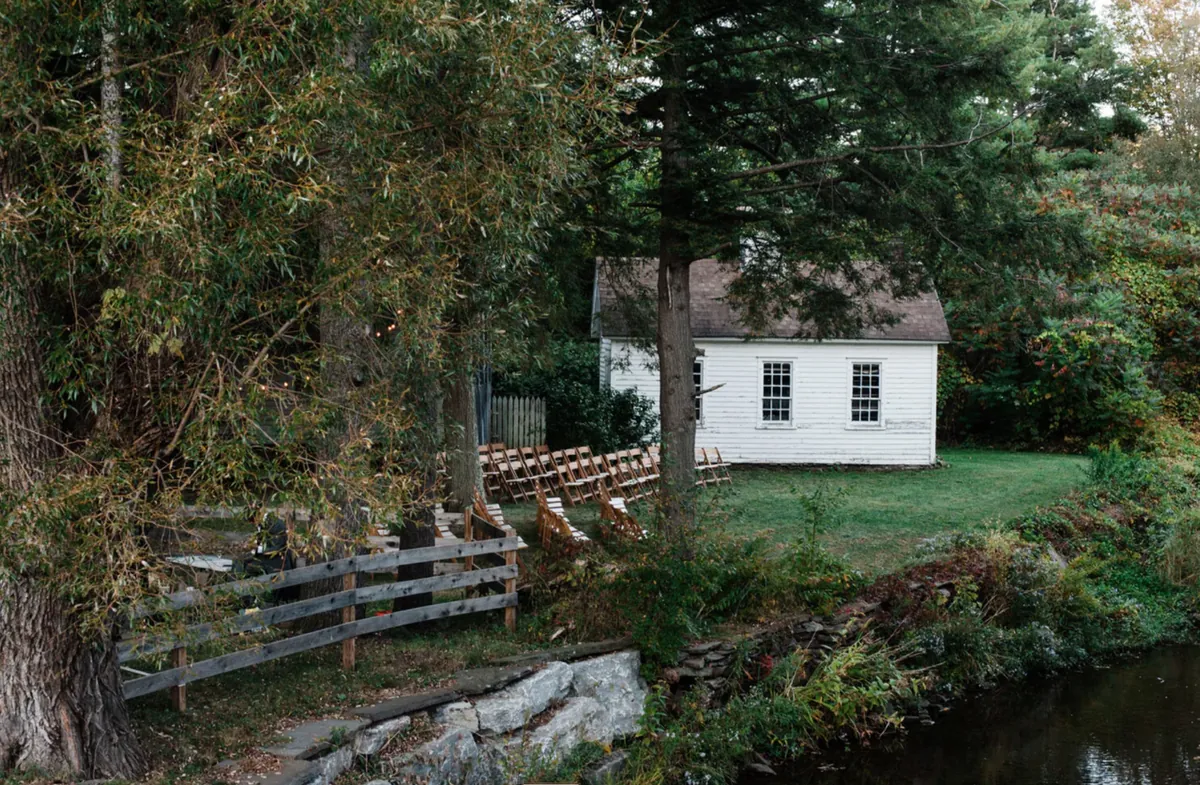
Case in point: this 1890 literary inn in Hobart, where each of the five suites channels a different literary legend. It starts at $5,555 for a 2-night minimum, which sounds like a lot until you realize that's the entire inn. Every suite, every fireplace, every reading nook, yours. Three hours from Manhattan. Some couples book it as their wedding venue and simply... stay. The guests leave Sunday, and Monday morning it's two people, one historic inn, and nowhere to be. I have seen resort suites in Cabo cost more for less privacy.
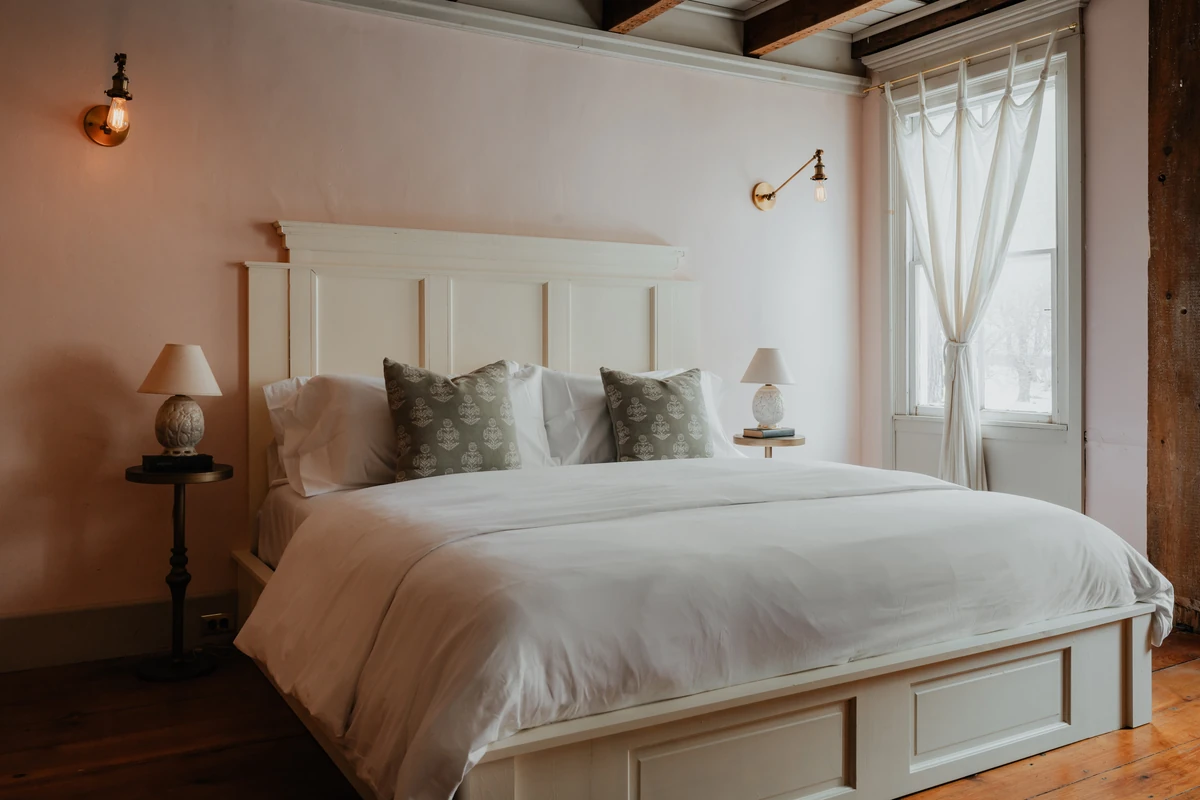
What to do here: hike Kaaterskill Falls before the day-trippers arrive, browse the used bookstores in Hobart (it's a village of them, a real one), and eat at the kind of farm-to-table places that were doing farm-to-table before it had a name.
Best months: late September through mid October for foliage, or January and February if your idea of romance is snow outside and nowhere to go.
The Mountain West: Montana, Wyoming, and Utah
Jackson Hole made Conde Nast Traveler's domestic honeymoon list as a winter sports mecca and a gateway to some of the country's most beautiful national parks, and I won't argue. But I'll widen the lens, because the whole Mountain West corridor from Grand Teton up through Glacier is the strongest adventure-honeymoon play in the country right now.
Wait, I should mention my bias here. I once spent a week scouting venues near Whitefish, Montana in June and came home telling my partner we should move. The light at 9 p.m. does something unfair to the mountains.

For couples who bring their favorite people along (the buddymoon is alive and well in 2026), this lodge near Glacier National Park in Whitefish sleeps 28 across five king bedrooms with a theater and saunas on site, starting at $12,751 for a 2-night minimum buyout. Split among a group, that math gets friendly fast. It's also a wedding venue, which means the stay-where-you-marry play works here too: get married Saturday, wave everyone off Sunday, spend the week hiking Going-to-the-Sun Road.
Utah deserves its own paragraph. The Heber Valley sits about 20 minutes from Park City with none of the Park City price tag, and this modern mountain cabin with 360-degree views in Heber City starts at $5,250 for a 2-night stay: five bedrooms, panoramic decks, and yes, a private pickleball court, because it's 2026 and honeymoon pickleball is apparently a thing now. (I played. I lost. The views made it fine.)
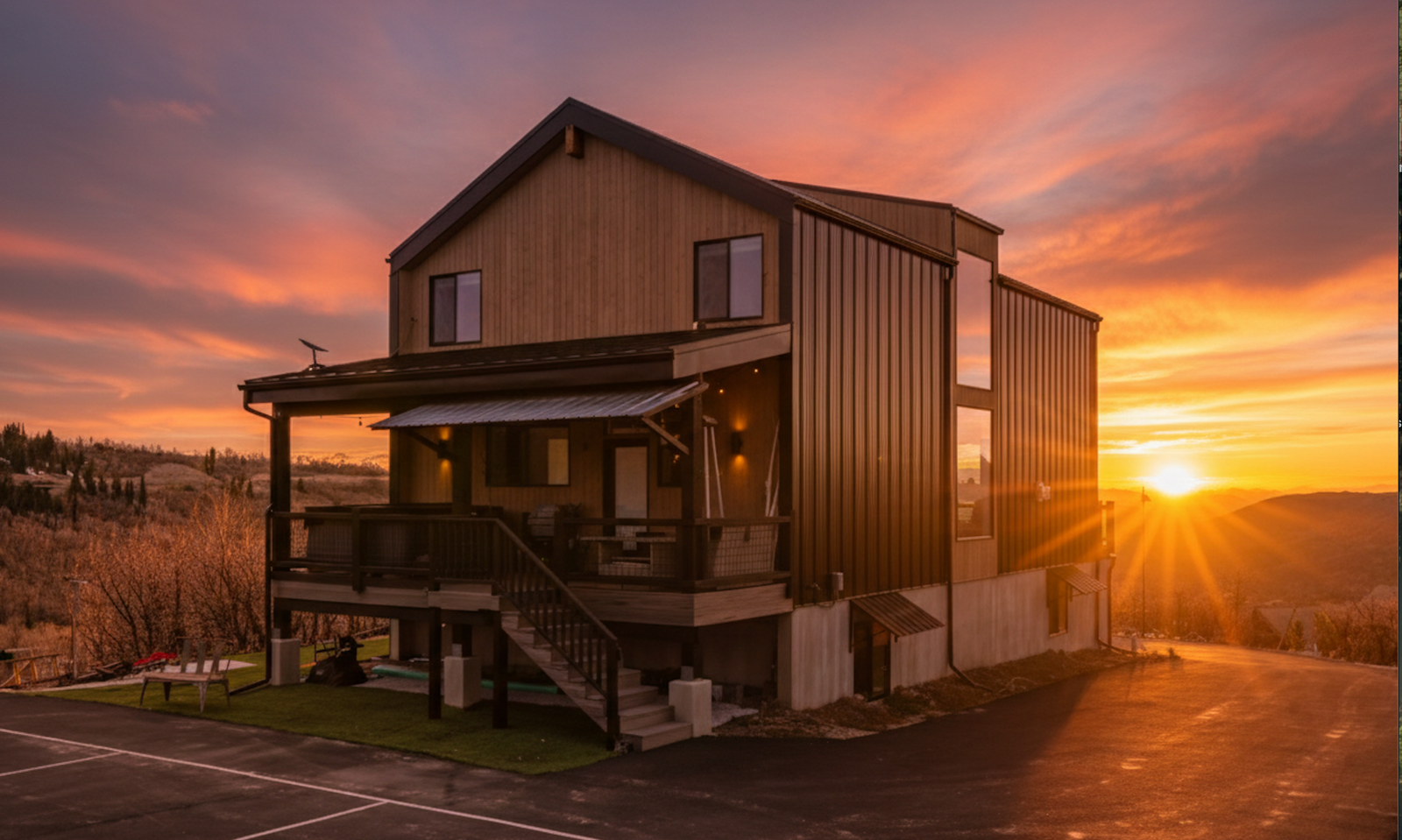
Best months: ski destinations across the US mountain corridor peak November through February. For hiking and that golden alpine summer, aim for late June through September.

The Florida Keys
For Caribbean vibes without a passport, the Keys remain undefeated. Conde Nast Traveler singled out Islamorada, the village of islands about halfway between Miami and Key West, and it's an inspired pick: water sports, laid-back live music, and the Holiday Isle Tiki Bar, the original home of the Rum Runner. You drive there on the Overseas Highway with the ocean on both sides of the car, which is the single best "we just got married" drive in America.
Key West is the louder, livelier anchor at the end of the road: sunset celebrations at Mallory Square, conch fritters, six-toed cats at the Hemingway House. If your crew is coming along for a wedding first, there's even a 26-villa wedding village in Key West that hosts entire celebrations, and couples can linger in their own villa after the crowd flies home.
The timing rule here matters more than anywhere else in this guide: hurricane season runs June through November, with August through October the riskiest stretch. The Keys shine brightest December through April, when the rest of the country is scraping ice off windshields. That's high season, so book four to six months out.
Desert Escapes: Sedona and Santa Fe
Two desert towns made Conde Nast Traveler's domestic honeymoon list, and they solve two very different honeymoon briefs.
Sedona, Arizona is the wellness play. Red-rock hikes bookended by morning yoga and evening stargazing, with chakra-balancing massages scattered through the itinerary. Even if you roll your eyes at the vortex talk (I did, quietly), the space converts you by day two. Sunrise at Cathedral Rock with coffee in a thermos is worth the entire trip.
Santa Fe, New Mexico is the culture play. The Georgia O'Keeffe Museum, the New Mexico Museum of Art, green chile on everything, and adobe architecture that makes every third photo look like a gallery print. And here's the fact that surprises people: Ski Santa Fe sits just 30 minutes from downtown, so a winter honeymoon here does art museums in the morning and slopes in the afternoon.
Best months for the desert: September through November and March through April. You want the shoulder light and the mild days, not the July furnace.
Coastal Classics: Kiawah Island and Watch Hill
Confession time: for years I dismissed the "quiet beach town" honeymoon as boring, and I was wrong. I messed this up with a couple I was advising back in my Barcelona days. I pushed them toward a packed European itinerary when what they kept describing, in every conversation, was a porch, an ocean, and no plans. They course-corrected. I learned.
Kiawah Island, South Carolina delivers exactly that. Twenty miles south of Charleston, it's a barrier island of dreamy marshes and moss-draped roads, the Lowcountry romance everyone is chasing. Golf and kayaking if you want activity, ten miles of beach if you don't, and Charleston's food scene one easy day trip away.
Watch Hill, Rhode Island is the northern mirror image: a coastal village of Victorian cottages and miles of beach, like Newport with fewer crowds and less pretension. Ride the Flying Horse Carousel, which claims to be the oldest in the country, eat lobster rolls with sandy feet, repeat. The US Northeast coast peaks May through September, and early fall here is a well-kept secret with warm water and empty beaches.

The Splurge Picks: Maui and Napa Valley
When couples ask me for the domestic trips that feel most like a classic international honeymoon, these are the two.
Maui remains the crown of US honeymoon destinations. Whale watching, the sunrise at Haleakala National Park, road-tripping the Hana Highway, and resorts engineered for exactly this occasion. Because Hawaii stays temperate year-round, its high season (January through April) is driven by demand rather than weather, which means May and the early fall shoulder months buy you the same island with better rates and thinner crowds. Budget honestly here: Maui is the one domestic destination where costs can rival Europe. It's worth it. Just walk in with your eyes open.
Napa Valley is the eat-and-drink honeymoon perfected. Storied vineyards, world-class restaurants, and hot air balloons drifting over the vines at dawn. There's no need to reinvent anything: grab your partner's hand, book three tastings a day maximum (trust me, three is the ceiling), and let the valley do the work. Harvest season, roughly late August through October, is the most atmospheric window and the busiest, so reserve dinners and tastings well ahead.
When to Go: Timing Your Trip by Season
The single biggest domestic honeymoon mistake I see is matching the destination to the dream instead of the calendar. Here's the cheat sheet, built on the same seasonal logic The Knot's weather guides use:
- Winter weddings (December to February): Florida Keys, US ski destinations (Jackson Hole, Park City, Whitefish), Sedona and the Southwest. This is their prime time.
- Spring weddings (March to May): Hawaii, the Carolinas and the Southeast coast, Santa Fe, the Mid-Atlantic. The Northeast coast comes online in May.
- Summer weddings (June to August): The Catskills, New England coast (Watch Hill), Alaska, the northern Rockies. Skip the desert; skip peak-hurricane-exposure beach bets in the late-summer Atlantic.
- Fall weddings (September to November): Catskills foliage, Napa harvest, Sedona and Santa Fe in their best light, and Hawaii's quiet shoulder.
Two principles behind all of it. One: shoulder season, the months just before and after a destination's peak, usually delivers nearly identical weather at lower rates. Two: high season isn't always about weather. Hawaii is packed January through April mostly because the rest of the country is cold, and Orlando swells in summer because school is out. Read the demand, not just the forecast.
Booking Your Stay: Private Rentals vs. Resorts
Last section, and it's the one where I'll editorialize, because after 80 plus destination events I have opinions about where couples actually sleep.
Resorts are turnkey romance. Daily housekeeping, a concierge who arranges the beach picnic, a spa elevator ride away. If you want zero decisions for a week, a great resort earns its rate, and the classic picks in this guide (Maui, Kiawah, Napa) have some of the best in the country.
But the private whole-property stay is the honeymoon move more couples should consider in 2026, and not just because I work around these properties. The math and the experience both argue for it:
- Total privacy. No elevator small talk, no pool chair competition, no waiting for a table at breakfast. An entire inn or estate where the only itinerary is yours.
- Transparent pricing. Properties on marketplaces like WedStay price as a total for a 2-night minimum stay (some run 3-night minimums), so you see the real number up front instead of a rate that balloons with resort fees at checkout.
- The stay-where-you-marry play. If you're already celebrating at a private venue, extending two more nights turns the venue into the honeymoon. Zero travel on the most tired day of your life. Eso es todo. That alone sells it.
- Room for the buddymoon. If your honeymoon includes your six best friends for the first three days (no judgment, it's a real 2026 pattern), a large private property splits the cost in a way no resort can match.
Whichever direction you choose, book lodging four to six months ahead for peak windows, confirm the minimum-stay requirement before you fall in love with a property, and put the money you saved on airfare into one absurd, unforgettable experience. The balloon ride. The private chef. The extra two nights.
You can chase paradise across an ocean, and someday you should. But in 2026, some of the best first chapters are being written three hours from home, in a valley or on a key or up a mountain, by couples who skipped the jet lag and went straight to the good part.
Free Tools to Plan Your Budget
Take the guesswork out of wedding finances with tools built on real pricing data and trusted by thousands of couples.
🎯 Start PlanningWedding Budget Planner, AI-powered allocations based on your city, guest count, and style. Real-time tracking, cloud sync, and export, free forever.Wedding Venue Cost Calculator, Compare all-inclusive estate pricing vs. traditional venues. See what a wedding costs in your region with real data.Browse Vetted Vendors, 500+ vetted professionals across 11 categories. Filter by location, compare portfolios, connect directly, no fees.Get the Free WedStay App, browse venues, plan, and book on the go.
Frequently Asked Questions
Do you need a passport for a honeymoon in Hawaii or the Florida Keys?
No. Hawaii and the Florida Keys are both US destinations, so a standard government-issued photo ID is all you need to fly there, the same as any domestic flight. That is a big part of the appeal if your passport is expired or your name change is still in progress. One thing to check: starting with REAL ID enforcement, your driver's license needs the REAL ID star to board domestic flights, so confirm yours qualifies before booking. If you plan to add a cruise or a hop to a nearby country later, that is when a passport comes back into play.
Should you book your honeymoon under your maiden name or married name?
Book under whatever name is on the ID you will actually carry on the trip. Legal name changes take weeks to process, and your ticket must match your ID exactly, so most couples marrying and honeymooning within the same month should book under the current legal name and change documents afterward. This is one of the quiet advantages of a domestic honeymoon: a driver's license mismatch is far easier to sort out at a US airport than a passport mismatch at an international counter. Handle the name change when you are back, rested, and not on a deadline.
How far in advance should you book a domestic honeymoon?
Four to six months out is the safe window for high-demand spots, which is the same lead time the guide recommends for the Florida Keys in their December through April peak. For whole-property buyouts like the Hobart inn or the Whitefish lodge, stretch that to six to nine months, since one booking blocks the entire calendar and weekends go first. Foliage season in the Catskills and harvest season in Napa also sell out early. Shoulder-season trips, like Maui in May or the desert in November, are more forgiving and can often be booked eight to twelve weeks out.
How many nights is ideal for a domestic honeymoon?
Five to seven nights hits the sweet spot for most couples. The budget ranges in the guide, roughly $3,500 to $7,000 all in, are built around a five-night stay, and that length gives you time to decompress after the wedding without burning excessive PTO. Shorter than four nights starts to feel like a weekend getaway, especially with a drive or flight on each end. If you are doing the split honeymoon approach, three to five nights close to home works well, since the bigger anniversary trip later carries the longer itinerary.
Is a buddymoon actually cheaper than a traditional honeymoon?
Per couple, it can be dramatically cheaper. The Whitefish lodge near Glacier National Park starts at $12,751 for a two-night buyout but sleeps 28 across five king bedrooms, so a full group brings the lodging cost per person below many mid-range hotels. The tradeoff is privacy, which is why buddymoon couples usually carve out structure: a private suite, one or two couples-only days, and clear expectations set before anyone books flights. It works best when the group already traveled together well before the wedding. If you are on the fence, a hybrid works too, a group weekend followed by two nights alone.
Do you need travel insurance for a honeymoon inside the US?
You can skip the medical portion since your regular health insurance generally works across state lines, which is one more cost a domestic trip trims. What is still worth considering is trip-cancellation or interruption coverage, especially for the big nonrefundable pieces like a $5,555 inn buyout or a peak-season Maui resort deposit. It matters most for the Florida Keys between June and November, when hurricane season can scrub a trip entirely. Check your credit card first, as many travel cards include cancellation protection automatically when you book the trip on the card.
Sources
1. The 9 Best Honeymoon Destinations in the U.S., cntraveler.com
2. How to Book a Honeymoon Along the California Coast Using Points, cntraveler.com
3. 12 Affordable Honeymoon Destinations That Don't Skimp on Romance, travelandleisure.com
4. This U.S. State Is No. 1 in the Country for Weddings, travelandleisure.com
5. The Complete Guide to Planning a Wedding, brides.com
6. Summer Wedding Tips for the Perfect Warm Weather Celebration, vogue.com